
360-Degree Feedback: When It Works and When It Doesn’t
PERFORMANCE & DEVELOPMENT

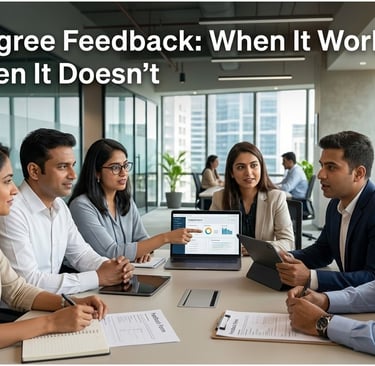
360-degree feedback is frequently introduced as a way to provide well-rounded performance insights. However, when poorly designed or misused, it can create confusion, defensiveness, and mistrust. In Indian workplaces, its effectiveness depends largely on intent, maturity, and execution.
This article explains when 360-degree feedback adds value—and when HR should reconsider its use.
What 360-Degree Feedback Is (and Is Not)
360-degree feedback collects input from:
Managers
Peers
Direct reports
Sometimes internal stakeholders
It is not a replacement for performance evaluation. It is a developmental feedback tool, not a rating mechanism.
When 360-Degree Feedback Works Well
360-degree feedback can be effective when:
The organisation has a basic feedback culture
Managers are trained to receive and interpret feedback
Feedback is used for development, not pay decisions
Anonymity and confidentiality are protected
Trust is a prerequisite for meaningful participation.
When 360-Degree Feedback Fails
Common failure scenarios include:
Linking feedback directly to ratings or compensation
Poorly designed questionnaires
Lack of context or follow-up conversations
Introducing it in low-trust or hierarchical cultures
In such cases, feedback becomes performative rather than honest.
HR’s Role in Responsible Implementation
HR must:
Clarify the purpose of the exercise upfront
Keep questionnaires focused and relevant
Train managers on interpretation and response
Ensure feedback leads to development actions
Without structure, 360-degree feedback loses credibility quickly.
Practical Alternatives to Full 360 Models
In some contexts, simpler options may work better:
Manager–employee feedback conversations
Peer feedback during projects
Development-focused pulse feedback
Coaching-led assessments
Complex tools are not always the right solution.
360-Degree Feedback Readiness Checklist
☐ Clear developmental intent defined
☐ Feedback not linked to pay or ratings
☐ Managers trained on interpretation
☐ Anonymity and confidentiality ensured
☐ Follow-up development plans created
Conclusion
360-degree feedback can be powerful when used thoughtfully—but harmful when rushed or misapplied. HR’s responsibility is to assess readiness, design responsibly, and ensure feedback supports growth rather than judgement.
Related Articles
HireDesk India © 2026 | All Rights Reserved
"Thoughtful guidance for everyday HR"


Quick Links
Topics
Connect
_______________________________________________________________________________________________________________________________________________________________________________________
HireDesk is a free HR knowledge platform focused on practical, India-specific workplace guidance. We help HR professionals, managers, and learners navigate people practices with clarity, responsibility, and real-world relevance.