
Absenteeism, Abandonment of Service and Attendance Discipline in Factories
INDUSTRIAL RELATIONS & FACTORY HR
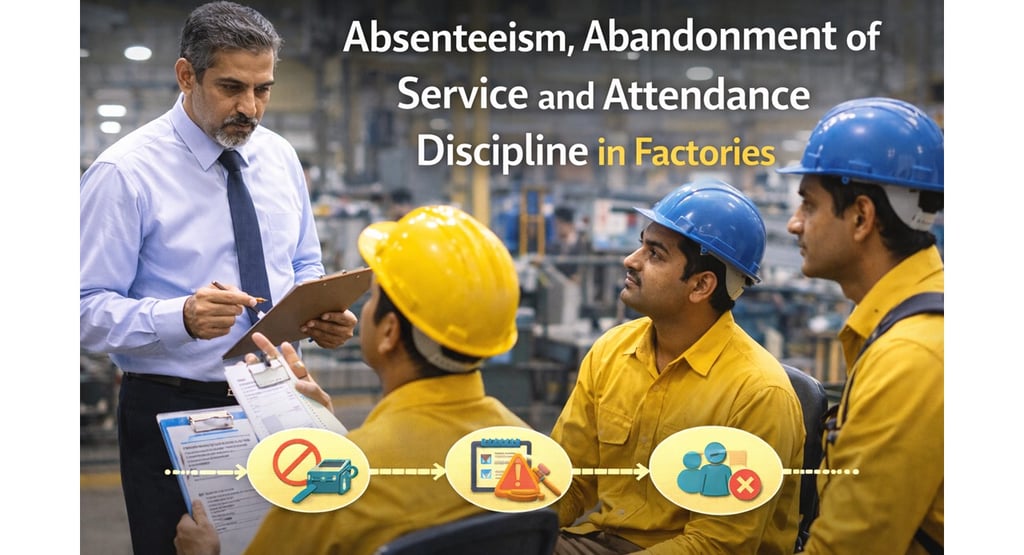
Attendance discipline is a core operational requirement in factories. Chronic absenteeism, sudden disappearances, and unauthorised absence directly affect production planning, safety, and workforce morale. In Indian factories, many disputes arise not from absence itself, but from how HR handles absenteeism and treats it as abandonment of service without due process.
For Factory HR teams, attendance management must balance discipline, fairness, and legal defensibility. Knee-jerk actions such as immediate termination often fail when tested before labour authorities.
This article explains how HR should manage absenteeism and abandonment of service in factories in a structured and compliant manner.
Understanding Absenteeism vs Abandonment
It is critical to distinguish between the two:
Absenteeism: Repeated or prolonged unauthorised absence without permission
Abandonment of Service: Voluntary intention of the employee to sever employment by remaining absent without communication
Indian labour law does not automatically recognise abandonment unless intention is clearly established through due process.
Legal Framework Governing Attendance Discipline
Attendance-related actions are governed by:
Certified Standing Orders or Model Standing Orders
Industrial Disputes Act, 1947
Industrial Relations Code, 2020
Principles of natural justice
HR must rely primarily on Standing Orders, not assumptions or informal practices.
HR Process for Managing Absenteeism
A defensible process typically includes:
Recording unauthorised absence accurately
Issuing counselling or warning letters
Calling for explanation within a defined timeline
Granting reasonable opportunity to respond
Initiating disciplinary action if required
Documentation is critical at every stage.
Handling Abandonment of Service
Before concluding abandonment, HR must:
Issue repeated notices to the employee’s last known address
Ask the employee to report back or explain absence
Allow reasonable response time
Record non-response or refusal
Only after due process can HR close the employment, usually through a formal order.
Common HR Errors in Attendance Cases
Frequent mistakes include:
Treating long absence as automatic resignation
Not issuing show cause notices
Skipping disciplinary enquiry where required
Poor address verification
Inconsistent treatment across employees
These errors weaken the organisation’s position during disputes.
Role of Supervisors and Line Managers
Supervisors play a key role by:
Reporting absences promptly
Counselling workers early
Coordinating with HR on documentation
Avoiding informal assurances
HR must train supervisors on procedural discipline.
Conclusion
Absenteeism and abandonment cases require patience, documentation, and procedural discipline. HR’s role is to ensure fairness while protecting operational continuity.
Factories that follow Standing Orders and natural justice principles manage attendance issues with minimal disputes and stronger legal standing.
🗹 Factory HR Checklist: Attendance Discipline
🗹 Track attendance accurately and consistently
🗹 Distinguish absenteeism from abandonment clearly
🗹 Refer to applicable Standing Orders
🗹 Issue notices and reminders formally
🗹 Allow reasonable opportunity to respond
🗹 Conduct enquiry where required
🗹 Avoid automatic termination assumptions
🗹 Maintain complete records
Absenteeism & Abandonment – HR Reference Table
Conclusion--
Effective labour law compliance depends on how well HR operations, payroll, and business processes work together. When compliance is embedded into everyday workflows, organisations reduce risk, improve accuracy, and build sustainable governance systems. HR teams that prioritise integration over isolation are better positioned to manage compliance confidently and consistently.
HireDesk India © 2026 | All Rights Reserved
"Thoughtful guidance for everyday HR"


Quick Links
Topics
Connect
_______________________________________________________________________________________________________________________________________________________________________________________
HireDesk is a free HR knowledge platform focused on practical, India-specific workplace guidance. We help HR professionals, managers, and learners navigate people practices with clarity, responsibility, and real-world relevance.