
Accident Reporting and Investigation in Factories: HR Procedures and Pitfalls
INDUSTRIAL RELATIONS & FACTORY HR
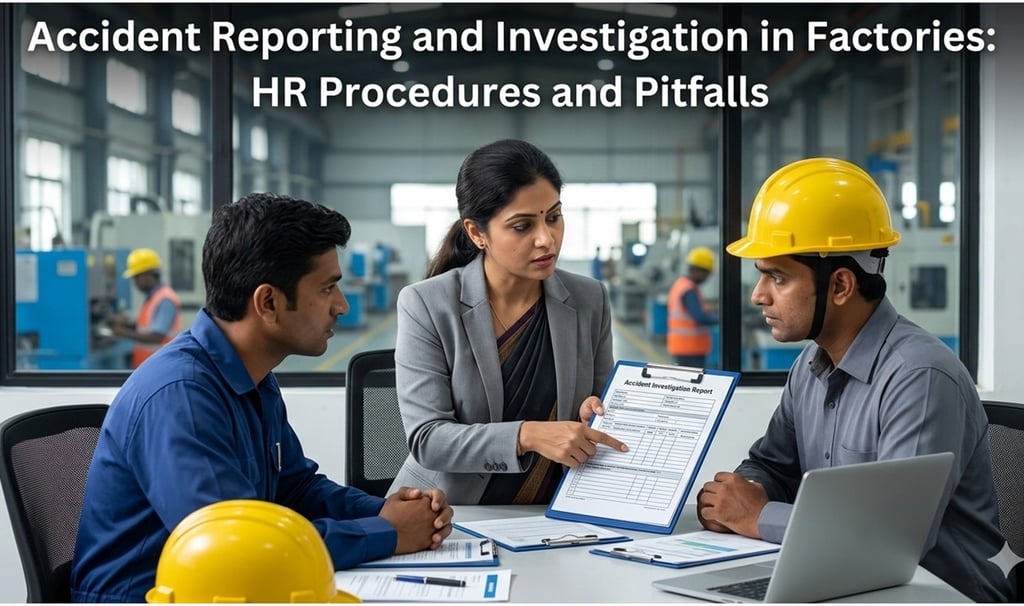
Accidents in factories are inevitable in any production environment, but the way they are reported, recorded, and investigated determines both legal compliance and organisational learning.
For Factory HR teams, accident management is not just about paperwork—it is about ensuring worker safety, maintaining regulatory adherence, protecting the organisation from liability, and preventing recurrence. Mishandling accidents can result in penalties, prosecutions, and industrial unrest.
This article provides a practical guide for HR to manage accident reporting and investigations effectively.
Statutory Framework
Key legal provisions include:
Factories Act, 1948 – Sections on accident reporting, dangerous occurrences, and notices
Workmen’s Compensation Act, 1923 – Compensation obligations for injuries or fatalities
Occupational Safety, Health and Working Conditions Code, 2020 – Modernised guidelines for reporting, investigation, and compliance
HR must integrate these requirements into daily operational processes.
Immediate Actions After an Accident
HR must ensure:
Medical Assistance – Provide first aid or hospitalisation immediately
Emergency Communication – Notify statutory authorities as required
Preserve the Scene – Avoid disturbing evidence unless necessary for safety
Initial Reporting – Record all relevant facts promptly in the accident register
Swift action reduces risk of regulatory non-compliance and supports accurate investigation.
Accident Investigation: HR Role
HR’s responsibilities include:
Collecting witness statements
Coordinating with safety officers and supervisors
Documenting root causes without assigning blame prematurely
Preparing an official investigation report for management and regulators
Recommending preventive measures based on findings
Investigation must be systematic, factual, and timely.
Reporting to Authorities
Under law, HR must report:
Serious accidents and fatalities to the Chief Inspector of Factories
Dangerous occurrences within specified timelines
Workmen’s Compensation claims accurately and promptly
Failure to report or delayed reporting can attract prosecution and fines.
HR Best Practices for Accident Management
Maintain an updated accident register
Conduct periodic mock drills and awareness sessions
Ensure supervisors and contractors are trained in reporting procedures
Review trends to identify systemic risks
Implement corrective actions and track closure
Proactive HR practices reduce repeat accidents and demonstrate compliance commitment.
Conclusion
Accident reporting and investigation is a critical HR function in Indian factories. Timely reporting, accurate documentation, and structured investigation protect employees, the organisation, and its reputation.
A disciplined approach ensures that incidents become learning opportunities, not recurring risks, while keeping factories legally compliant and industrially stable.
🗹 Factory HR Checklist: Accident Reporting & Investigation
🗹 Ensure immediate medical assistance
🗹 Notify statutory authorities promptly
🗹 Preserve accident scene for investigation
🗹 Record incident in accident register
🗹 Collect witness statements accurately
🗹 Coordinate investigation with safety officers
🗹 Submit official reports to management and regulators
🗹 Implement and track corrective actions
Accident Reporting & Investigation – HR Reference Table
Conclusion--
Effective labour law compliance depends on how well HR operations, payroll, and business processes work together. When compliance is embedded into everyday workflows, organisations reduce risk, improve accuracy, and build sustainable governance systems. HR teams that prioritise integration over isolation are better positioned to manage compliance confidently and consistently.
HireDesk India © 2026 | All Rights Reserved
"Thoughtful guidance for everyday HR"


Quick Links
Topics
Connect
_______________________________________________________________________________________________________________________________________________________________________________________
HireDesk is a free HR knowledge platform focused on practical, India-specific workplace guidance. We help HR professionals, managers, and learners navigate people practices with clarity, responsibility, and real-world relevance.