Aligning Hiring with Long-Term Workforce Planning
RECRUITMENT AND HIRING
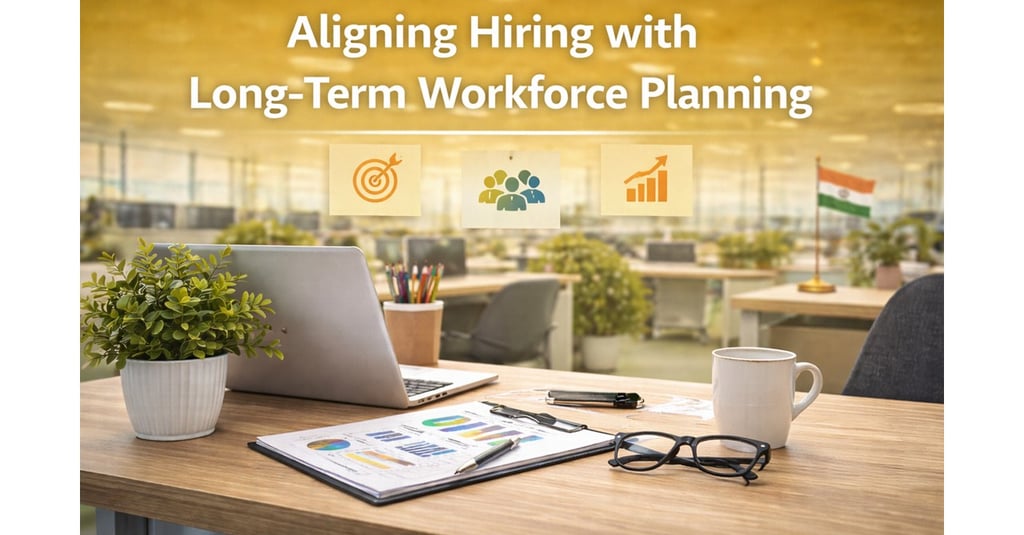
In many Indian organisations, recruitment is often reactive—filling immediate vacancies rather than anticipating future talent needs. This approach increases costs, creates skill gaps, and results in frequent firefighting. Strategic alignment between hiring and workforce planning ensures that talent acquisition supports both short-term operations and long-term organisational goals.
HR’s role is to link business strategy with a forward-looking, structured approach to hiring.
What Workforce Planning Means in the Indian Context
Workforce planning is the process of:
Analysing current talent supply and capability
Forecasting future role and skill requirements
Identifying gaps and succession needs
Aligning recruitment, development, and retention strategies
In India, where talent supply can be uneven and mobility high, proactive workforce planning is critical.
Common Gaps in Hiring Alignment
Reactive Recruitment
HR often reacts to:
Departures or attrition
Sudden business expansion
Project requirements
This leads to rushed hiring, higher costs, and sub-optimal quality.
Lack of Skill Mapping
Organisations frequently lack:
Skills inventory for existing employees
Assessment of capability gaps
Forecasting of emerging skill requirements
Without this, recruitment may not fill the right roles.
Inconsistent Succession Planning
Key positions are often filled ad-hoc, ignoring:
Career pipelines
Internal mobility opportunities
Leadership continuity
This creates risk if experienced employees leave unexpectedly.
Integrating Hiring with Workforce Planning
Forecasting Talent Needs
HR should work with business heads to:
Project future role requirements over 12–24 months
Identify critical skill gaps
Prioritise hires based on business impact
Forecasts guide both internal development and external recruitment.
Balancing Internal and External Hiring
Effective planning considers:
Internal redeployment or promotions
External hires for new or scarce skills
Timing and cost optimisation
This reduces dependency on reactive hiring.
Structured Role and Skill Documentation
HR must ensure:
Job descriptions reflect current and future expectations
Competency frameworks guide recruitment and training
Standardised evaluation criteria for new hires
Documentation improves predictability and fairness.
HR Governance in Long-Term Planning
HR must implement:
Monitoring headcount vs business projections
Review of attrition trends and retention risks
Alignment with succession plans and learning programs
Regular governance ensures recruitment contributes to sustainable growth.
Benefits of Aligned Hiring
Reduced last-minute hiring pressure
Better quality and fit for roles
Optimised recruitment costs
Stronger retention and career pathways
When hiring aligns with workforce planning, recruitment supports organisational stability and growth.
Conclusion
Aligning recruitment with long-term workforce planning is essential for Indian HR teams seeking to move beyond reactive hiring. By forecasting talent needs, balancing internal and external sourcing, and enforcing structured processes, HR can ensure recruitment decisions support sustainable business outcomes.
🗹 Hiring and Workforce Planning Alignment Checklist
🗹 Forecast workforce needs 12–24 months ahead
🗹 Identify critical skills and high-impact roles
🗹 Balance internal promotions with external hires
🗹 Standardise job descriptions and competency frameworks
🗹 Track attrition and retention trends
🗹 Align hiring with succession and development plans
🗹 Review headcount and skill gaps periodically
🗹 Implement governance for recruitment decisions
Workforce Planning and Recruitment Alignment
Conclusion--
Effective labour law compliance depends on how well HR operations, payroll, and business processes work together. When compliance is embedded into everyday workflows, organisations reduce risk, improve accuracy, and build sustainable governance systems. HR teams that prioritise integration over isolation are better positioned to manage compliance confidently and consistently.
HireDesk India © 2026 | All Rights Reserved
"Thoughtful guidance for everyday HR"


Quick Links
Topics
Connect
_______________________________________________________________________________________________________________________________________________________________________________________
HireDesk is a free HR knowledge platform focused on practical, India-specific workplace guidance. We help HR professionals, managers, and learners navigate people practices with clarity, responsibility, and real-world relevance.