
Aligning Workforce Plans with Business Needs
WORKFORCE PLANNING & MANPOWER
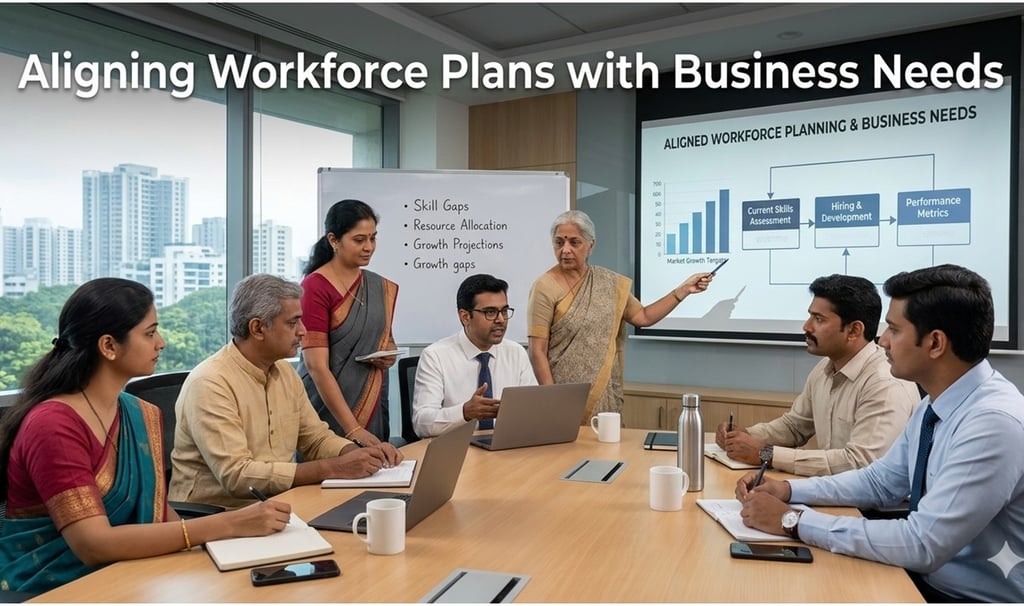
Workforce planning goes beyond estimating headcount — it is about ensuring people plans actively support business goals, priorities, and growth direction. As organisations evolve, HR must continuously align workforce decisions with changing business needs, cost considerations, and capability requirements.
This article focuses on how HR can align workforce plans with business strategy, including translating leadership goals into people plans, balancing growth and efficiency, and reviewing workforce assumptions over time. It is particularly relevant for HR leaders and practitioners involved in strategic planning and cross-functional decision-making.
Why Alignment Matters
Strong alignment helps organisations:
· Deploy people where they create the most value
· Control manpower costs responsibly
· Anticipate capability gaps early
· Support business growth or restructuring smoothly
Without alignment, workforce plans become static documents.
Understanding Business Drivers
HR must clearly understand:
· Business strategy and growth plans
· Revenue models and operational priorities
· Project timelines and capacity requirements
· Risk areas and critical roles
Regular interaction with business leaders is essential.
Translating Business Needs into Workforce Plans
HR can translate business direction into people actions by:
· Mapping roles to business outcomes
· Identifying critical and support roles
· Assessing skill readiness and gaps
· Planning hiring, redeployment, or upskilling
This keeps workforce plans relevant and actionable.
Maintaining Flexibility in Workforce Plans
Given changing market conditions, plans should:
· Allow for phased hiring
· Include contingency options
· Be reviewed periodically
· Adapt to operational realities
Rigid plans often fail under pressure.
HR’s Role in Sustained Alignment
HR supports alignment by:
· Facilitating business–HR planning discussions
· Reviewing manpower plans against actual performance
· Highlighting risks and trade-offs
· Ensuring accountability for workforce decisions
HR’s value lies in continuous course correction.
Workforce Alignment Checklist for HR
· ☐ Understand current and future business priorities
· ☐ Identify roles critical to execution
· ☐ Review skill availability and readiness
· ☐ Build flexibility into manpower plans
· ☐ Revisit alignment regularly
Conclusion
Aligned workforce planning enables organisations to respond to business needs with confidence. When HR integrates people planning into business discussions, manpower decisions become strategic rather than reactive.
Conclusion--
Effective labour law compliance depends on how well HR operations, payroll, and business processes work together. When compliance is embedded into everyday workflows, organisations reduce risk, improve accuracy, and build sustainable governance systems. HR teams that prioritise integration over isolation are better positioned to manage compliance confidently and consistently.
HireDesk India © 2026 | All Rights Reserved
"Thoughtful guidance for everyday HR"


Quick Links
Topics
Connect
_______________________________________________________________________________________________________________________________________________________________________________________
HireDesk is a free HR knowledge platform focused on practical, India-specific workplace guidance. We help HR professionals, managers, and learners navigate people practices with clarity, responsibility, and real-world relevance.