
Appointment Letters and Employment Contracts: Legal Do’s and Don’ts
COMPLIANCE & LABOUR LAWS
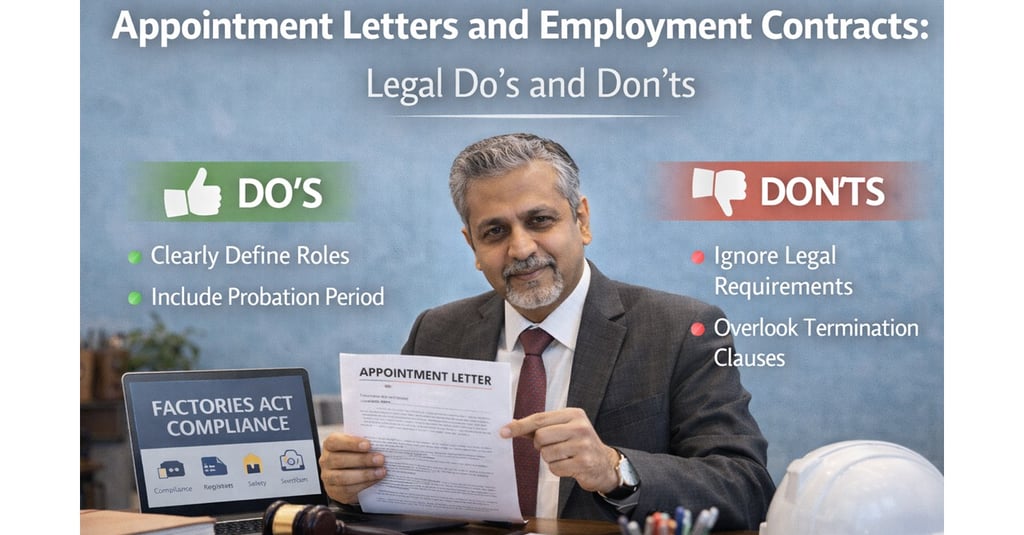
Appointment letters and employment contracts are often treated as routine HR paperwork. In reality, they are primary legal documents that define the employment relationship and are frequently examined during labour inspections, disputes, terminations, and court proceedings.
For Indian organisations, poorly drafted or inconsistent appointment letters can create compliance gaps, employee disputes, and reputational risk. HR’s role is not to make documents overly legalistic, but to ensure they are clear, compliant, and aligned with labour laws and organisational practices.
This article explains the legal do’s and don’ts HR teams must follow while issuing appointment letters and employment contracts in India.
Appointment Letter vs Employment Contract: HR Perspective
In Indian practice:
Appointment letters are commonly used for regular employees
Employment contracts are more detailed and often used for senior roles, fixed-term staff, consultants, or specialised positions
Legally, both are enforceable documents if terms are clear and accepted. HR must ensure consistency between offer terms, HR policies, and statutory requirements.
Mandatory Clauses HR Should Always Include
HR should ensure the following are clearly mentioned:
Designation and nature of employment
Date of joining and place of work
Working hours and weekly offs
Wage structure and payment cycle
Leave entitlements
Notice period and termination conditions
Missing or vague clauses often weaken the employer’s position during disputes.
Key Legal Do’s for HR
1. Align Contracts with Labour Laws
HR must ensure appointment letters are aligned with:
Shops & Establishments Act or Factories Act
Minimum Wages Act
Payment of Wages Act
Standing Orders (where applicable)
Contract terms cannot override statutory rights, even if the employee agrees.
2. Maintain Consistency Across Documents
HR should ensure:
Offer letter, appointment letter, and HR policies are consistent
Salary break-up matches payroll and statutory filings
Role definitions align with actual work performed
Inconsistencies are frequently highlighted during inspections and litigation.
3. Use Clear and Simple Language
Overly complex legal language:
Confuses employees
Increases interpretation disputes
Creates mistrust
Clear, plain Indian English is both practical and legally safer.
Common Legal Don’ts HR Should Avoid
Using one generic appointment letter for all roles
Including unlawful clauses (e.g., excessive notice period penalties)
Misclassifying employees as consultants through wording
Omitting statutory benefits assuming “CTC covers everything”
Issuing appointment letters after joining date
These practices often backfire during disputes or audits.
Handling Probation, Confirmation, and Fixed-Term Clauses
HR must:
Clearly define probation period and extension conditions
Issue confirmation letters where required
Specify tenure and renewal terms for fixed-term employment
Ambiguity here leads to status-related disputes.
Appointment Letters During Inspections and Disputes
Labour authorities typically verify:
Whether appointment letters were issued
Whether terms align with statutory registers
Whether conditions match actual practices
HR should ensure signed copies are available and retrievable.
Conclusion
Appointment letters and employment contracts are foundational compliance tools, not just onboarding documents. For HR teams, the focus should be on clarity, legality, and consistency, rather than legal jargon.
Well-drafted appointment letters protect both the organisation and the employee—and reflect HR’s process maturity and governance strength.
HR Compliance Action Checklist: Appointment Letters
🗹 Issue appointment letters on or before date of joining
🗹 Include all mandatory employment terms
🗹 Align clauses with applicable labour laws
🗹 Ensure salary structure matches payroll and compliance filings
🗹 Avoid unlawful or excessive restrictive clauses
🗹 Customise contracts based on role and employment type
🗹 Obtain employee acceptance and signatures
🗹 Maintain signed copies for audits and disputes
Appointment Letters: Legal Focus Areas for HR
Conclusion--
Effective labour law compliance depends on how well HR operations, payroll, and business processes work together. When compliance is embedded into everyday workflows, organisations reduce risk, improve accuracy, and build sustainable governance systems. HR teams that prioritise integration over isolation are better positioned to manage compliance confidently and consistently.
HireDesk India © 2026 | All Rights Reserved
"Thoughtful guidance for everyday HR"


Quick Links
Topics
Connect
_______________________________________________________________________________________________________________________________________________________________________________________
HireDesk is a free HR knowledge platform focused on practical, India-specific workplace guidance. We help HR professionals, managers, and learners navigate people practices with clarity, responsibility, and real-world relevance.