
Attendance and Leave Management in SMEs: Simple Systems That Work
Introduction--
Once a candidate accepts an offer, the period between acceptance and joining becomes a critical phase in the recruitment lifecycle. This pre-joining window influences whether a candidate actually joins, how prepared they feel on Day One, and how quickly they settle into the organisation. For HR, effective pre-joining engagement and onboarding planning are essential to convert offers into confident, committed employees.
This article outlines practical approaches HR teams can adopt to manage pre-joining engagement and establish strong onboarding foundations—without overcomplicating the process.
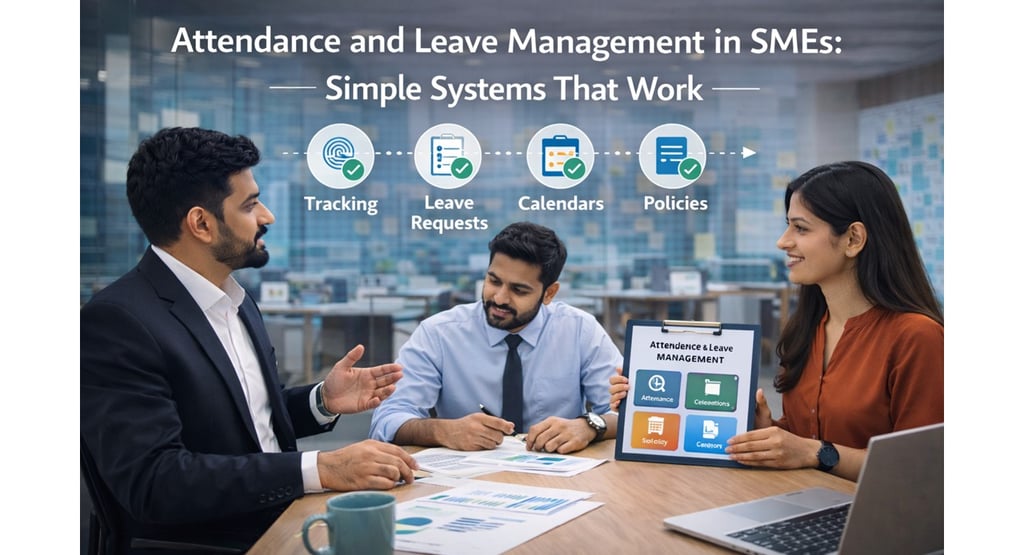
Attendance and leave management is one of the most common sources of friction in Indian SMEs. When systems are unclear or inconsistently followed, it leads to payroll errors, employee dissatisfaction, and avoidable disputes.
For SMEs, the goal is not complex attendance software but clarity, consistency, and compliance. This article explains how HR can set up simple attendance and leave systems that work in small and growing organisations.
Why Attendance and Leave Management Matters in SMEs
In SMEs, attendance data directly affects:
Salary calculations
Leave balances and encashment
Compliance under Shops & Establishments laws
Productivity and discipline
Without clear systems, attendance often becomes a daily operational issue for HR.
Choosing the Right Attendance System
SMEs should choose attendance methods based on workforce type and scale:
Manual registers for very small teams
Excel-based trackers for growing offices
Biometric or app-based systems for larger or shift-based teams
The system should be easy to use, difficult to manipulate, and acceptable to employees.
Designing a Practical Leave Policy
A simple SME leave policy should clearly define:
Types of leave (earned, casual, sick)
Eligibility and accrual rules
Approval process
Carry forward and encashment provisions
Avoid over-complication. Policies should align with statutory minimums and business realities.
Linking Attendance and Leave with Payroll
Attendance and leave data must feed directly into payroll. HR should ensure:
Monthly cut-off dates are defined
Approved leave is accurately recorded
Loss of pay is calculated transparently
This linkage reduces payroll errors and employee queries.
Common Attendance and Leave Challenges in SMEs
HR teams frequently face:
Late coming and early leaving disputes
Manual corrections without approval
Managers bypassing approval workflows
Inconsistent application of rules
Clear documentation and consistent enforcement help address these issues.
HR’s Role in Governance and Discipline
HR should focus on:
Educating managers on attendance rules
Auditing attendance data periodically
Maintaining statutory registers where required
Applying rules uniformly across teams
Attendance systems lose credibility if exceptions become the norm.
Conclusion
Attendance and leave management in SMEs does not require complex systems. What it needs is simple processes, clear rules, and consistent application. When attendance data is accurate and transparent, payroll becomes smoother and employee trust improves.
Checklist: Attendance and Leave Essentials for SMEs
🗹 Define clear working hours and attendance rules
🗹 Select an attendance system suited to workforce size
🗹 Document leave types, eligibility, and approval process
🗹 Align leave policy with statutory requirements
🗹 Fix monthly cut-off dates for attendance finalisation
🗹 Link attendance and leave data with payroll
🗹 Communicate policies clearly to employees
🗹 Train managers on approval responsibilities
🗹 Audit attendance records periodically
Attendance and Leave Management Options for SMEs
Conclusion--
Effective labour law compliance depends on how well HR operations, payroll, and business processes work together. When compliance is embedded into everyday workflows, organisations reduce risk, improve accuracy, and build sustainable governance systems. HR teams that prioritise integration over isolation are better positioned to manage compliance confidently and consistently.
HireDesk India © 2026 | All Rights Reserved
"Thoughtful guidance for everyday HR"


Quick Links
Topics
Connect
_______________________________________________________________________________________________________________________________________________________________________________________
HireDesk is a free HR knowledge platform focused on practical, India-specific workplace guidance. We help HR professionals, managers, and learners navigate people practices with clarity, responsibility, and real-world relevance.