
Avoiding Bias in Performance Appraisal
PERFORMANCE & DEVELOPMENT
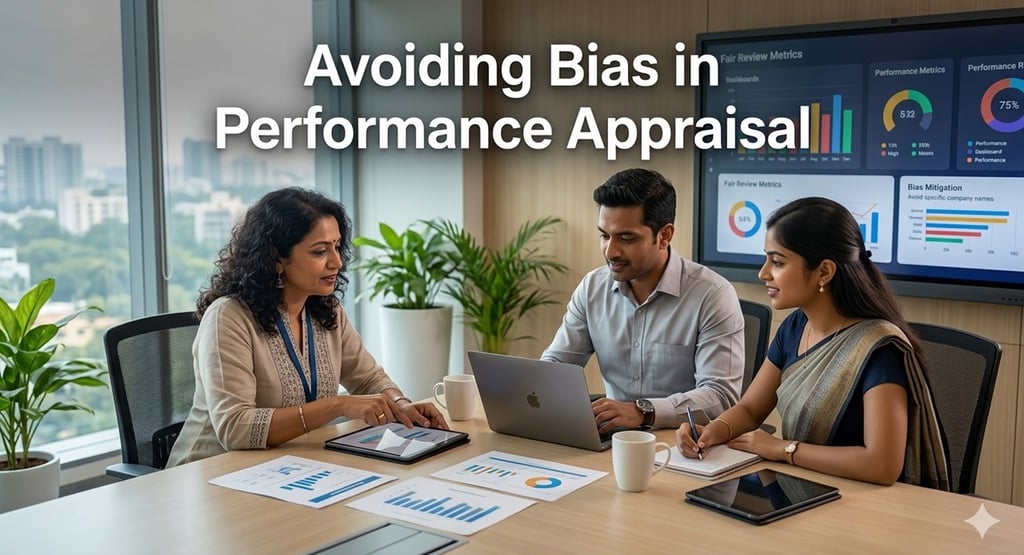
Performance appraisals are intended to be fair, objective, and development-oriented. However, bias—often unintentional—can distort evaluations, affect employee trust, and weaken the credibility of the performance management system.
This article explains common appraisal biases and outlines practical ways organisations can reduce their impact through process design, manager capability, and HR governance.
Why Bias in Appraisals Is a Serious Concern
Unchecked bias can lead to:
Perceived or actual unfairness in ratings
Reduced employee engagement and morale
Talent attrition, especially among high performers
Increased grievances and trust issues
Avoiding bias is not about eliminating judgement, but about making judgement more structured and consistent.
Common Types of Performance Appraisal Bias
1. Recency Bias
Overemphasis on recent events rather than performance across the full review period.
Impact:
Early achievements or challenges are overlooked.
2. Halo and Horns Effect
Allowing one strong (or weak) trait to influence the entire evaluation.
Impact:
Ratings become overly positive or negative without balanced evidence.
3. Leniency and Severity Bias
Some managers consistently rate employees too generously or too harshly.
Impact:
Rating distributions become inconsistent across teams.
4. Similarity Bias
Favouring employees who share similar backgrounds, work styles, or viewpoints.
Impact:
Diversity and inclusion efforts may be undermined.
5. Central Tendency Bias
Avoiding extreme ratings by clustering everyone around the middle.
Impact:
High and low performers are not clearly differentiated.
Approaches to Reduce Bias in Appraisals
1. Clear Performance Criteria
Use well-defined goals and competencies
Ensure expectations are documented and measurable
2. Multiple Inputs
Combine self-assessments, manager reviews, and peer feedback where appropriate
Reduces dependence on a single viewpoint
3. Calibration Discussions
Review ratings across teams and departments
Identify inconsistencies and patterns
4. Manager Training
Train managers to recognise common biases
Reinforce evidence-based evaluation practices
5. HR Oversight and Governance
Monitor rating trends and outliers
Intervene where patterns suggest systemic bias
Sample View: Bias Types and Control Measures
Checklist: Reducing Bias in Performance Appraisals
☐ Performance criteria are clearly defined and documented
☐ Feedback is collected throughout the review period
☐ Managers are trained to recognise common biases
☐ Calibration discussions are conducted regularly
☐ HR reviews rating patterns and outliers
☐ Appraisal decisions are supported by evidence
Role of HR
HR plays a central role by:
Designing bias-resistant appraisal frameworks
Enabling calibration and cross-team reviews
Training managers on fair evaluation practices
Monitoring trends and intervening where required
HR ensures appraisal processes remain credible, consistent, and defensible.
Key Takeaway
Bias in performance appraisals cannot be eliminated entirely, but it can be significantly reduced through structured processes, multiple inputs, and strong governance. Fair appraisals build trust, improve engagement, and support better talent decisions.
Conclusion--
Effective labour law compliance depends on how well HR operations, payroll, and business processes work together. When compliance is embedded into everyday workflows, organisations reduce risk, improve accuracy, and build sustainable governance systems. HR teams that prioritise integration over isolation are better positioned to manage compliance confidently and consistently.
HireDesk India © 2026 | All Rights Reserved
"Thoughtful guidance for everyday HR"


Quick Links
Topics
Connect
_______________________________________________________________________________________________________________________________________________________________________________________
HireDesk is a free HR knowledge platform focused on practical, India-specific workplace guidance. We help HR professionals, managers, and learners navigate people practices with clarity, responsibility, and real-world relevance.