
Avoiding Overstaffing and Understaffing
WORKFORCE PLANNING & MANPOWER
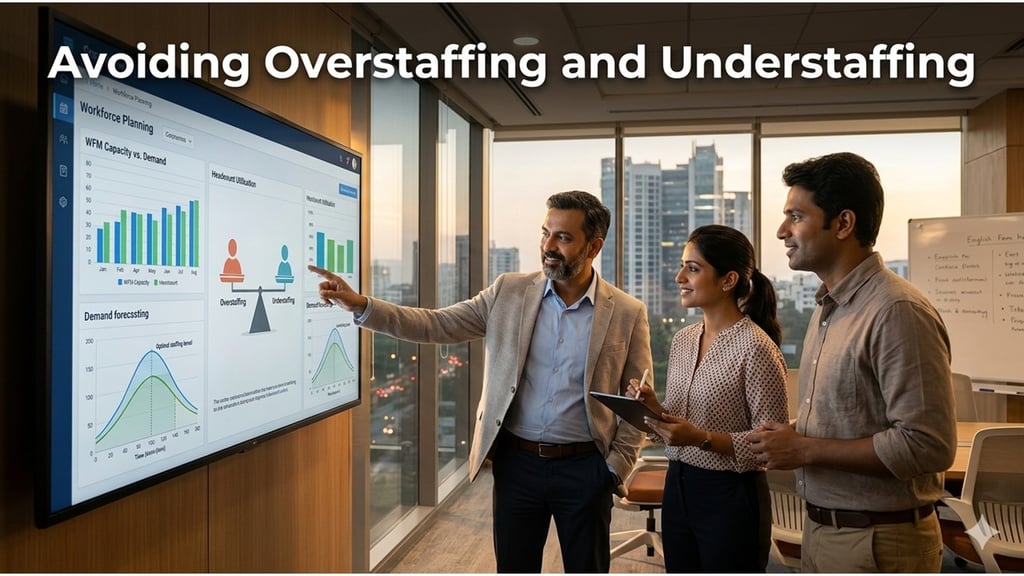
An imbalance in workforce—too many or too few employees—can significantly impact business performance. Overstaffing increases costs and reduces productivity, while understaffing leads to operational bottlenecks, employee burnout, and missed opportunities.
Workforce planning helps organisations maintain the right workforce size to meet current and future business needs.
Understanding Overstaffing and Understaffing
Overstaffing
Occurs when the workforce exceeds operational requirements. Key consequences include:
Increased labour costs
Reduced productivity per employee
Inefficient resource allocation
Understaffing
Occurs when workforce capacity is insufficient to meet demand. Key consequences include:
Delays in service or production
Increased workload and stress on employees
Potential quality or compliance issues
Strategies to Maintain Optimal Workforce
Forecast Workforce Demand Accurately
Use historical data, business projections, and operational plans to anticipate workforce requirements.
Monitor Real-Time Workforce Utilisation
Regularly track employee allocation, workload, and productivity metrics.
Flexible Staffing Models
Leverage temporary, contract, or part-time staff to manage short-term fluctuations.
Periodic Workforce Reviews
Conduct scheduled reviews to adjust headcount, redeploy employees, or reprioritise roles.
Cross-Training Employees
Enable employees to perform multiple roles to absorb unexpected demand or cover absences.
Light Checklist: Maintaining Optimal Workforce
☐ Workforce demand forecasted accurately
☐ Utilisation and productivity monitored
☐ Flexible staffing options available
☐ Periodic workforce reviews conducted
☐ Employees cross-trained for multiple roles
Sample Table: Managing Workforce Balance
Conclusion
Avoiding overstaffing and understaffing requires continuous monitoring, accurate forecasting, and flexible workforce strategies. By balancing capacity with business demand, organisations can control costs, maintain productivity, and enhance employee satisfaction.
Conclusion--
Effective labour law compliance depends on how well HR operations, payroll, and business processes work together. When compliance is embedded into everyday workflows, organisations reduce risk, improve accuracy, and build sustainable governance systems. HR teams that prioritise integration over isolation are better positioned to manage compliance confidently and consistently.
HireDesk India © 2026 | All Rights Reserved
"Thoughtful guidance for everyday HR"


Quick Links
Topics
Connect
_______________________________________________________________________________________________________________________________________________________________________________________
HireDesk is a free HR knowledge platform focused on practical, India-specific workplace guidance. We help HR professionals, managers, and learners navigate people practices with clarity, responsibility, and real-world relevance.