
Balancing Development and Performance Expectations
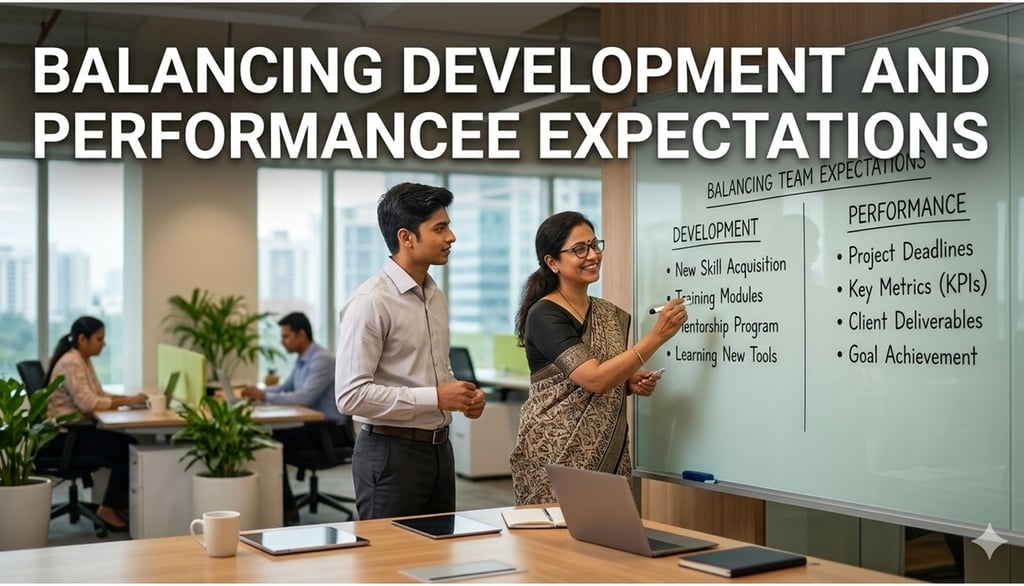
Performance management and employee development are closely linked, yet organisations often struggle to balance immediate performance expectations with long-term development goals. Employees must meet current role objectives while simultaneously building skills for future responsibilities.
A well-structured approach ensures that development does not compromise performance and that performance assessments support growth, creating a sustainable and motivated workforce.
Why Balancing Development and Performance Matters
Maintains productivity: Employees meet key performance targets while learning new skills.
Supports career growth: Development efforts prepare employees for higher responsibilities.
Enhances engagement: Employees feel supported and valued when both performance and growth are recognised.
Strengthens succession planning: Development aligned with performance creates a ready talent pipeline.
Ignoring this balance can lead to overloaded employees, reduced engagement, and missed business outcomes.
Core Principles for Balancing Development and Performance
1. Set Clear Performance Goals
Establish measurable objectives for current roles.
Communicate expectations explicitly, with timelines and standards.
Ensure goals are realistic given employees’ current workload.
2. Align Development Goals with Role Requirements
Identify skills required for future roles and career progression.
Ensure development initiatives complement, not conflict with, daily responsibilities.
Use Individual Development Plans (IDPs) to formalise learning priorities.
3. Integrate Learning with Work
Provide opportunities for on-the-job learning through stretch assignments or cross-functional projects.
Encourage mentoring and coaching that reinforce both performance and skill growth.
Avoid development activities that disrupt critical operational tasks.
4. Monitor Workload and Capacity
Track employee workload to prevent burnout.
Adjust priorities or timelines to accommodate development activities.
Ensure managers provide support and remove obstacles where needed.
5. Provide Continuous Feedback
Recognise achievements in both performance and learning.
Use feedback sessions to adjust development plans and expectations.
Ensure feedback is timely, actionable, and constructive.
Sample View: Balancing Performance and Development
Checklist: Balancing Performance and Development
☐ Set clear, measurable performance objectives
☐ Align development initiatives with role and career goals
☐ Integrate learning into everyday work
☐ Monitor workload to prevent overload
☐ Provide regular, constructive feedback
☐ Adjust development plans based on performance outcomes
Common Pitfalls to Avoid
Overloading employees with development tasks without adjusting performance expectations
Treating development as separate from performance assessment
Lack of manager support or coaching for balancing priorities
Failing to track progress or outcomes of learning initiatives
Role of HR and Managers
HR provides frameworks and guidance to integrate performance and development.
Managers coach employees, monitor workload, and ensure learning activities are practical.
Both collaborate to create a sustainable balance that drives performance, engagement, and growth.
Key Takeaway
Balancing performance and development ensures employees deliver results today while preparing for tomorrow. Structured planning, integration of learning, and continuous feedback create an environment where employees are productive, engaged, and continually growing.
Conclusion--
Effective labour law compliance depends on how well HR operations, payroll, and business processes work together. When compliance is embedded into everyday workflows, organisations reduce risk, improve accuracy, and build sustainable governance systems. HR teams that prioritise integration over isolation are better positioned to manage compliance confidently and consistently.
HireDesk India © 2026 | All Rights Reserved
"Thoughtful guidance for everyday HR"


Quick Links
Topics
Connect
_______________________________________________________________________________________________________________________________________________________________________________________
HireDesk is a free HR knowledge platform focused on practical, India-specific workplace guidance. We help HR professionals, managers, and learners navigate people practices with clarity, responsibility, and real-world relevance.