
Balancing Hierarchy and Openness: Building a Candid Feedback Culture in India
EMPLOYEE EXPERIENCE & CULTURE
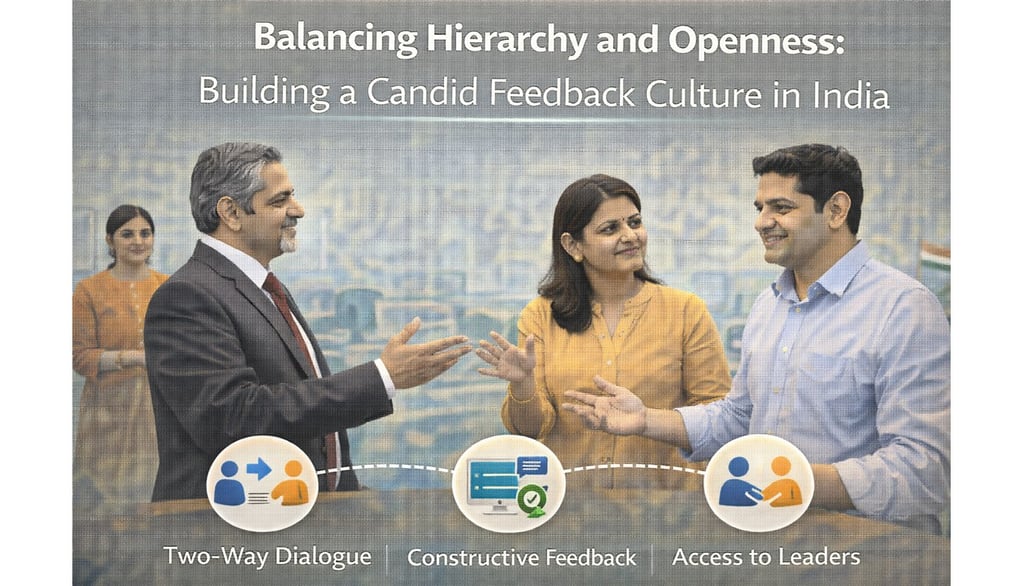
Indian workplaces are traditionally hierarchical. Titles, seniority, and authority carry significant weight in how people interact. While hierarchy brings structure and clarity, it often discourages honest upward feedback and open dialogue.
Building a candid feedback culture in India is not about removing hierarchy, but about balancing respect with openness. This article explains how HR can enable feedback without unsettling organisational stability.
Why Feedback Feels Difficult in Indian Organisations
Employees hesitate to give feedback because:
Disagreement is seen as disrespect
Past feedback has led to negative consequences
Power distance feels real and personal
Managers are not trained to receive feedback
Silence, however, is often misread as alignment.
The Cost of Avoiding Candid Feedback
When feedback is suppressed:
Issues surface late as complaints or attrition
Decision-making becomes one-sided
Psychological safety erodes
HR becomes reactive instead of preventive
A lack of feedback weakens both performance and trust.
Designing Feedback Channels That Feel Safe
Effective feedback systems in India:
Offer multiple ways to share input
Allow anonymity where appropriate
Focus on improvement, not fault-finding
Set clear boundaries on how feedback will be used
Trust grows when employees see feedback handled responsibly.
Preparing Managers to Receive Feedback
Feedback culture improves when managers:
Separate intent from tone
Listen without defensiveness
Respond with action or explanation
Thank employees for speaking up
HR must coach managers to treat feedback as input, not insubordination.
HR’s Role in Sustaining Feedback Culture
HR sustains openness by:
Setting norms for respectful dialogue
Monitoring retaliation or subtle backlash
Closing the loop on feedback outcomes
Reinforcing feedback during reviews and check-ins
Consistency matters more than sophistication.
Conclusion
Candid feedback and hierarchy can coexist in Indian organisations. The goal is not confrontation, but clarity.
When employees feel safe to speak up and managers learn to listen, organisations benefit from better decisions and stronger trust.
HR Checklist: Building a Safe Feedback Culture
🗹 Acknowledge hierarchy without reinforcing fear
🗹 Define what feedback is encouraged and why
🗹 Offer multiple feedback channels
🗹 Protect employees from retaliation
🗹 Train managers to receive feedback calmly
🗹 Close the loop on feedback shared
🗹 Reinforce feedback norms regularly
🗹 Use feedback for improvement, not blame
🗹 Track recurring themes and risks
Feedback Culture Elements and HR Interventions
Conclusion--
Effective labour law compliance depends on how well HR operations, payroll, and business processes work together. When compliance is embedded into everyday workflows, organisations reduce risk, improve accuracy, and build sustainable governance systems. HR teams that prioritise integration over isolation are better positioned to manage compliance confidently and consistently.
HireDesk India © 2026 | All Rights Reserved
"Thoughtful guidance for everyday HR"


Quick Links
Topics
Connect
_______________________________________________________________________________________________________________________________________________________________________________________
HireDesk is a free HR knowledge platform focused on practical, India-specific workplace guidance. We help HR professionals, managers, and learners navigate people practices with clarity, responsibility, and real-world relevance.