Bridging Generations at Work: Managing Gen Z, Millennials, and Senior Leaders Together
EMPLOYEE EXPERIENCE & CULTURE
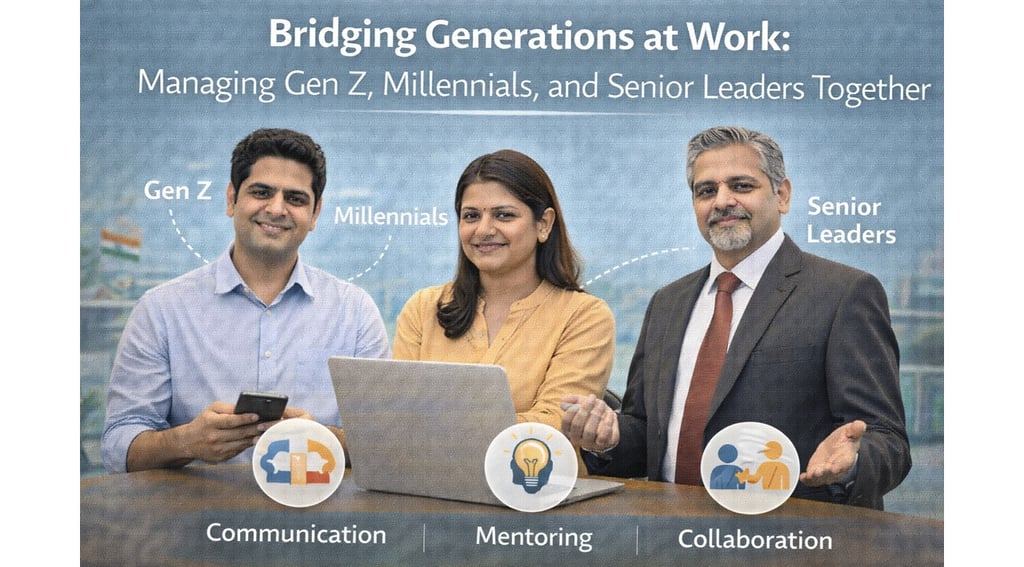
Indian workplaces today often bring together three or more generations working side by side. Gen Z, Millennials, and senior leaders frequently differ in communication styles, expectations, and approaches to work. When unmanaged, these differences can lead to misunderstanding, frustration, and disengagement.
This article explains how HR can bridge generational differences and create a cohesive, respectful, and productive workplace culture.
Understanding Generational Differences in Indian Context
While individuals vary, common patterns include:
Senior leaders valuing stability, hierarchy, and experience
Millennials seeking growth, feedback, and work-life balance
Gen Z prioritising purpose, flexibility, and transparency
Problems arise when these preferences are judged rather than understood.
Common Workplace Friction Points
Generational friction typically shows up in:
Communication style and tone
Attitudes towards authority and hierarchy
Feedback expectations and frequency
Comfort with technology and change
Perceptions of commitment and loyalty
Without guidance, teams may stereotype rather than collaborate.
HR’s Role in Bridging Generations
HR must move beyond labels and focus on behaviour:
Set shared expectations for professionalism and respect
Train managers to lead mixed-age teams
Encourage mutual learning and mentoring
Design policies that balance flexibility with fairness
Address age-based bias promptly
Generational harmony improves when differences are normalised, not polarised.
Practical Practices That Work
India-relevant, practical approaches include:
Reverse mentoring between senior leaders and younger employees
Clear communication norms across levels
Flexible learning formats for different preferences
Objective performance criteria focused on outcomes
Team forums to discuss expectations openly
Structure reduces misunderstanding.
Avoiding Common Mistakes
HR should avoid:
Assuming all Gen Z or Millennials think alike
Favouring one generation in policies or perks
Dismissing senior experience as resistance
Allowing age-based jokes or stereotypes
Respect across age groups must be actively reinforced.
Conclusion
Bridging generations in Indian workplaces requires empathy, structure, and clear norms. HR’s role is to create systems where different generations learn from each other while working towards shared goals.
When managed well, generational diversity becomes a cultural strength.
HR Checklist: Managing Multi-Generational Teams
🗹 Set shared expectations for behaviour and performance
🗹 Train managers on generational awareness
🗹 Encourage reverse and cross-generational mentoring
🗹 Use outcome-based performance criteria
🗹 Standardise communication and feedback norms
🗹 Address age-related bias or stereotyping
🗹 Offer flexible learning and engagement formats
🗹 Reinforce respect across all age groups
Generational Differences and HR Interventions
Conclusion--
Effective labour law compliance depends on how well HR operations, payroll, and business processes work together. When compliance is embedded into everyday workflows, organisations reduce risk, improve accuracy, and build sustainable governance systems. HR teams that prioritise integration over isolation are better positioned to manage compliance confidently and consistently.
HireDesk India © 2026 | All Rights Reserved
"Thoughtful guidance for everyday HR"

Quick Links
Topics
Connect
_______________________________________________________________________________________________________________________________________________________________________________________
HireDesk is a free HR knowledge platform focused on practical, India-specific workplace guidance. We help HR professionals, managers, and learners navigate people practices with clarity, responsibility, and real-world relevance.