
Building a Culture of Accountability and Ownership in SMEs
SME HR OPERATIONS
Introduction--
Once a candidate accepts an offer, the period between acceptance and joining becomes a critical phase in the recruitment lifecycle. This pre-joining window influences whether a candidate actually joins, how prepared they feel on Day One, and how quickly they settle into the organisation. For HR, effective pre-joining engagement and onboarding planning are essential to convert offers into confident, committed employees.
This article outlines practical approaches HR teams can adopt to manage pre-joining engagement and establish strong onboarding foundations—without overcomplicating the process.
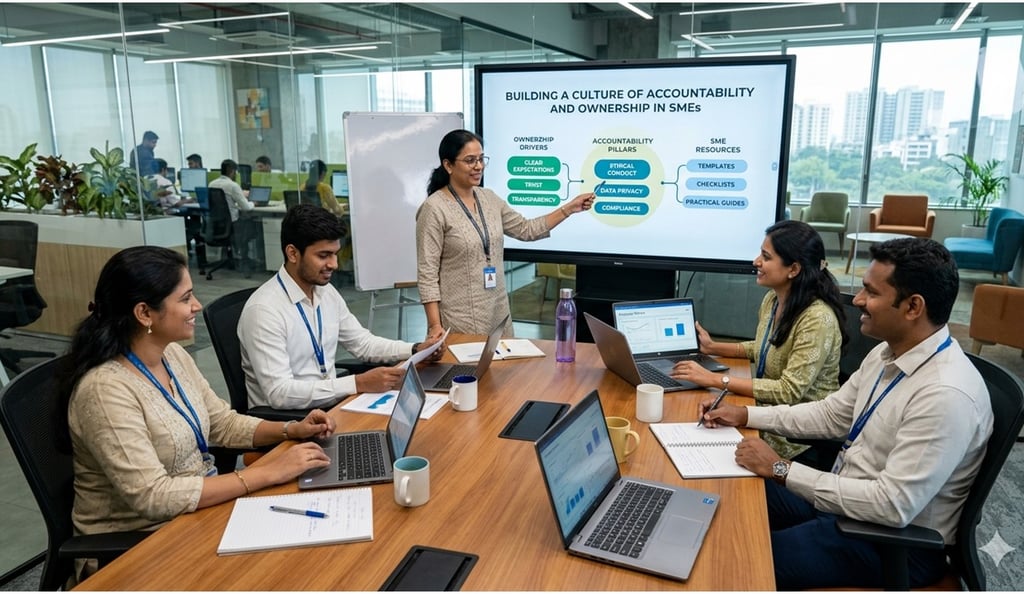
In Indian SMEs, performance issues are often described as “people problems”, but in reality they are usually accountability problems. Tasks slip, decisions get delayed, and responsibility gets passed around — not because employees don’t care, but because expectations are unclear and follow-through is weak.
A culture of accountability and ownership does not come from slogans or values posters. It comes from daily managerial behaviour, role clarity, and consistent consequences. This article explains how SMEs can practically build accountability without creating fear or bureaucracy.
What Accountability Really Means in SMEs
In an SME context, accountability means:
Knowing what you are responsible for
Owning outcomes, not just effort
Following timelines and processes
Accepting feedback and correction
Ownership grows when employees see a clear link between actions and outcomes.
Why Accountability Breaks Down in SMEs
Common reasons include:
Vague roles and overlapping responsibilities
Founders stepping in and fixing everything
No follow-up after instructions
Inconsistent handling of mistakes
Performance discussions focused only on results
When accountability is optional, ownership disappears.
Role Clarity Is the Foundation
Accountability cannot exist without clarity.
HR should ensure:
Every role has defined responsibilities
Decision-making authority is clear
Reporting lines are unambiguous
Employees know what “done” looks like
Even simple role notes are better than assumptions.
Manager Behaviour Shapes Ownership
Employees take cues from managers.
Managers who build ownership:
Set clear expectations upfront
Follow up regularly, not only when problems arise
Address issues early and calmly
Recognise ownership publicly
Take responsibility for team outcomes
Managers who bypass systems or excuse poor behaviour weaken accountability instantly.
Linking Accountability to Performance and Discipline
Accountability must reflect in HR decisions.
SMEs should:
Include ownership and discipline in performance reviews
Address repeated lapses through counselling or warnings
Avoid selective enforcement
Document patterns, not one-off mistakes
Fairness and consistency matter more than severity.
Founder and Leadership Influence
In SMEs, founders play a disproportionate role.
To build accountability, leadership must:
Stop rescuing unfinished work repeatedly
Respect defined roles and processes
Back HR and managers on discipline
Demonstrate ownership themselves
Culture flows from the top, especially in smaller organisations.
Conclusion
A culture of accountability and ownership in SMEs is built through clarity, consistency, and courage — not complex frameworks. When expectations are clear and follow-up is fair, employees naturally step up. SMEs that invest in accountability early scale faster and with fewer people problems.
Checklist: Building Accountability and Ownership in SMEs
🗹 Define clear responsibilities for every role
🗹 Set expectations and timelines upfront
🗹 Ensure managers follow up consistently
🗹 Recognise employees who show ownership
🗹 Address accountability lapses early
🗹 Apply rules consistently across teams
🗹 Document repeated issues objectively
🗹 Demonstrate ownership at leadership level
Practical Levers to Build Accountability in SMEs
Conclusion--
Effective labour law compliance depends on how well HR operations, payroll, and business processes work together. When compliance is embedded into everyday workflows, organisations reduce risk, improve accuracy, and build sustainable governance systems. HR teams that prioritise integration over isolation are better positioned to manage compliance confidently and consistently.
HireDesk India © 2026 | All Rights Reserved
"Thoughtful guidance for everyday HR"


Quick Links
Topics
Connect
_______________________________________________________________________________________________________________________________________________________________________________________
HireDesk is a free HR knowledge platform focused on practical, India-specific workplace guidance. We help HR professionals, managers, and learners navigate people practices with clarity, responsibility, and real-world relevance.