
Building a Learning Culture: Making Development a Daily Employee Experience
EMPLOYEE EXPERIENCE & CULTURE
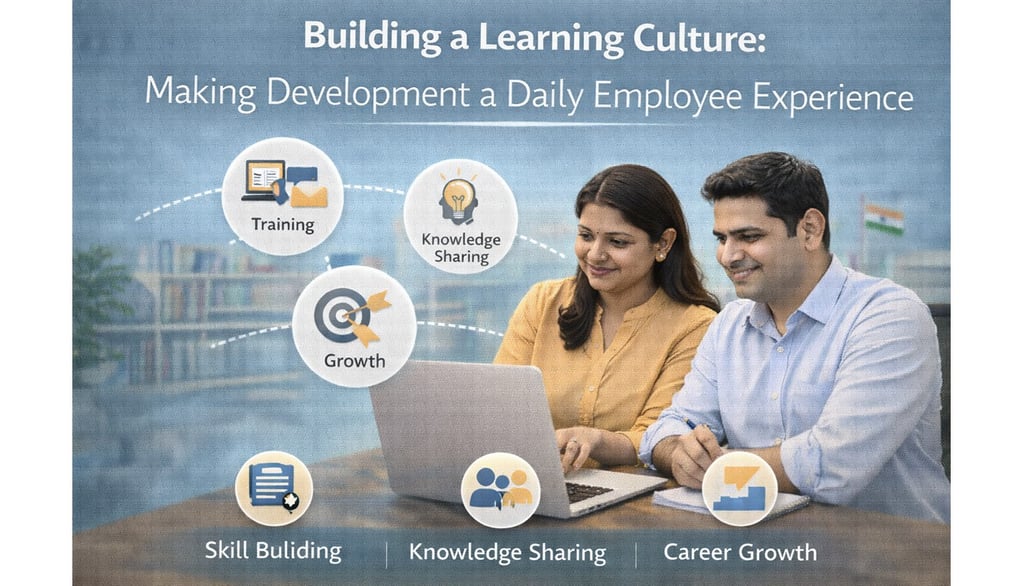
In many Indian organisations, learning is treated as an event — a training programme, a workshop, or an annual calendar item. Once completed, work resumes as usual. Over time, employees stop associating learning with growth and see it as a formality.
A true learning culture is different. It makes development part of everyday work, manager behaviour, and employee expectations. This article explains how HR can build such a culture in practical, sustainable ways suited to Indian workplaces.
Why Learning Cultures Struggle in India
Common challenges include:
Overdependence on classroom or external training
Managers prioritising delivery over development
Limited time and budget, especially in SMEs
Learning seen as HR-owned, not manager-owned
No linkage between learning and career movement
As a result, employees attend programmes but rarely apply learning.
What a Learning Culture Looks Like in Practice
In organisations with a strong learning culture:
Managers coach, not just supervise
Mistakes are discussed, not hidden
Knowledge sharing is encouraged
Employees learn from daily work situations
Development conversations happen regularly
Learning becomes continuous, informal, and relevant.
Shifting from Training Programmes to Learning Experiences
HR must move beyond training calendars and focus on:
On-the-job learning opportunities
Peer learning and mentoring
Job rotations and stretch assignments
Learning from customer issues and failures
Reflection after projects and reviews
Small, frequent learning moments work better than occasional big programmes.
Manager’s Role in Everyday Learning
Managers play the biggest role in shaping learning culture. HR should enable managers to:
Ask reflective questions instead of giving answers
Give developmental feedback, not just ratings
Share their own learning openly
Encourage experimentation within boundaries
Make time for skill discussions
Without manager involvement, learning initiatives will stall.
HR’s Practical Role in Building Learning Culture
HR should focus on:
Embedding learning into performance discussions
Recognising and rewarding learning behaviours
Creating simple learning frameworks, not complex systems
Providing accessible learning resources
Tracking application of learning, not attendance
The goal is consistency, not sophistication.
Conclusion
A learning culture is built through everyday actions, not annual programmes. Indian organisations that embed development into daily work see higher engagement, stronger internal talent, and better adaptability.
HR’s role is to design the environment where learning happens naturally — through work, conversations, and reflection.
HR Checklist: Building a Daily Learning Culture
🗹 Shift focus from training events to on-the-job learning
🗹 Enable managers to act as coaches
🗹 Encourage learning from mistakes and failures
🗹 Integrate development into performance conversations
🗹 Promote peer learning and knowledge sharing
🗹 Recognise learning behaviours, not just outcomes
🗹 Keep learning resources simple and accessible
🗹 Track learning application, not just participation
Learning Approaches and Their Cultural Impact
Conclusion--
Effective labour law compliance depends on how well HR operations, payroll, and business processes work together. When compliance is embedded into everyday workflows, organisations reduce risk, improve accuracy, and build sustainable governance systems. HR teams that prioritise integration over isolation are better positioned to manage compliance confidently and consistently.
HireDesk India © 2026 | All Rights Reserved
"Thoughtful guidance for everyday HR"


Quick Links
Topics
Connect
_______________________________________________________________________________________________________________________________________________________________________________________
HireDesk is a free HR knowledge platform focused on practical, India-specific workplace guidance. We help HR professionals, managers, and learners navigate people practices with clarity, responsibility, and real-world relevance.