
Building a Positive Workplace Culture: Practical HR Considerations
EMPLOYEE EXPERIENCE & CULTURE
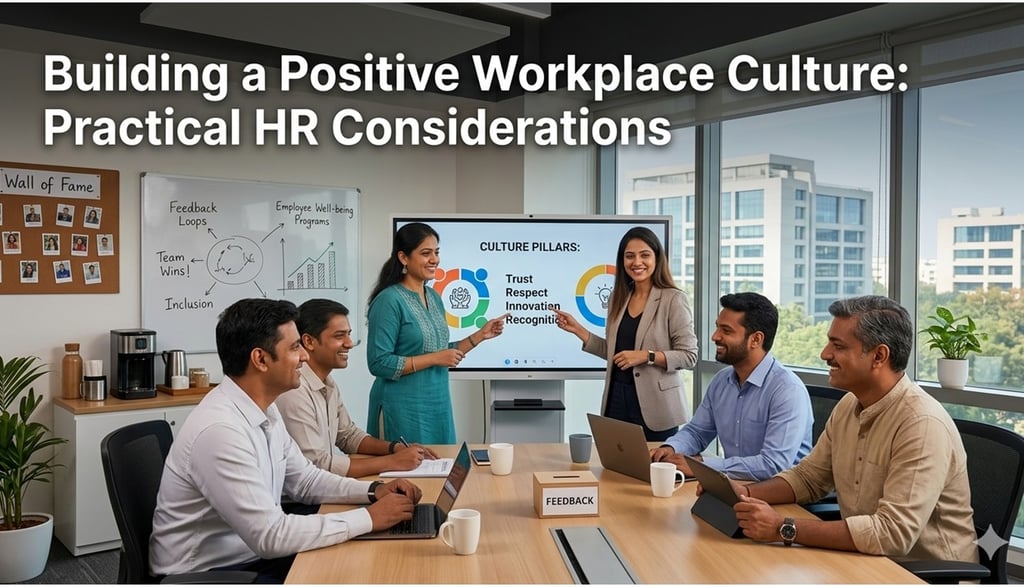
Workplace culture is often described in abstract terms, but employees experience culture through daily behaviours, decisions, and norms. In Indian organisations, culture is shaped less by stated values and more by what is consistently practiced and reinforced.
This article explores how HR can influence workplace culture in practical, credible ways.
What Workplace Culture Really Means
Workplace culture reflects:
How decisions are made
How people are treated under pressure
What behaviours are rewarded or ignored
How leaders and managers act in everyday situations
Culture exists whether it is intentionally designed or not.
HR’s Role in Shaping Culture
HR influences culture through:
Policy design and interpretation
Leadership expectations and accountability
Performance and reward frameworks
Communication tone and consistency
While HR does not “own” culture, it plays a critical enabling role.
Practical Culture-Building Levers
1. Clear Behavioural Expectations
Values become meaningful only when translated into observable behaviours.
2. Manager Capability and Accountability
Managers reinforce culture daily. HR must support and challenge them where needed.
3. Fairness and Consistency
Perceived fairness in policies, promotions, and discipline strongly influences cultural trust.
4. Handling of Conflict and Misconduct
How issues are addressed sends stronger cultural signals than formal statements.
Common Cultural Gaps HR Should Watch
Values not reflected in leadership behaviour
Tolerance of inconsistent manager practices
Silence around inappropriate behaviour
Culture initiatives without operational backing
Ignoring these gaps weakens credibility.
Culture Alignment Checklist for HR
☐ Translate values into behavioural expectations
☐ Review policy and practice consistency
☐ Enable managers through training and guidance
☐ Address cultural issues promptly and visibly
☐ Reinforce culture through performance systems
Conclusion
A positive workplace culture is built through everyday actions, not slogans. HR’s effectiveness lies in ensuring that policies, leadership behaviour, and people practices consistently reinforce the culture the organisation claims to value.
Conclusion--
Effective labour law compliance depends on how well HR operations, payroll, and business processes work together. When compliance is embedded into everyday workflows, organisations reduce risk, improve accuracy, and build sustainable governance systems. HR teams that prioritise integration over isolation are better positioned to manage compliance confidently and consistently.
HireDesk India © 2026 | All Rights Reserved
"Thoughtful guidance for everyday HR"


Quick Links
Topics
Connect
_______________________________________________________________________________________________________________________________________________________________________________________
HireDesk is a free HR knowledge platform focused on practical, India-specific workplace guidance. We help HR professionals, managers, and learners navigate people practices with clarity, responsibility, and real-world relevance.