Building and Sharing HR Knowledge: Resources, Community, and Contribution
HR knowledge develops through experience, reflection, and collective learning. Communities, curated resources, and shared perspectives play an important role in strengthening HR practice across organisations.
RESOURCES, COMMUNITY & CONTRIBUTION
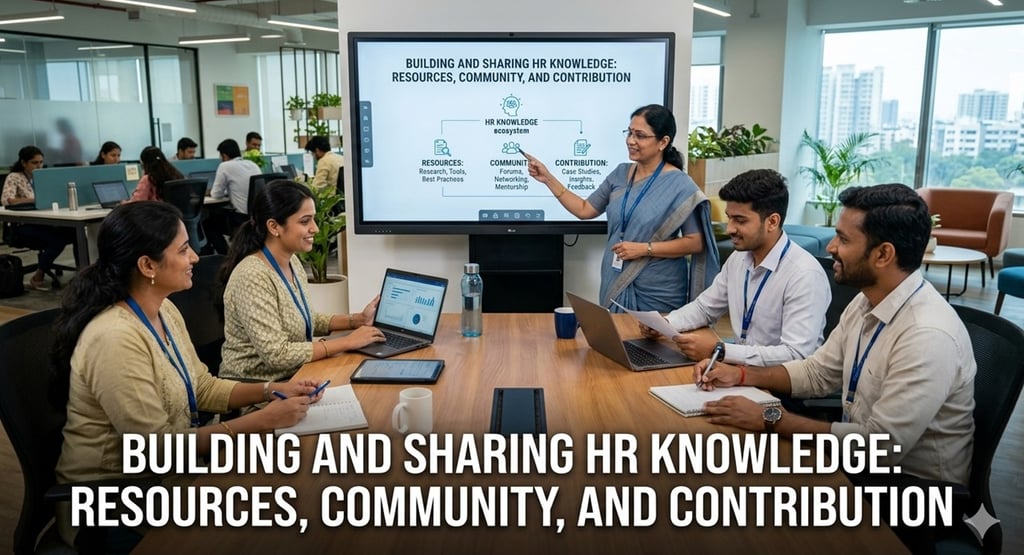
This article explores how HR professionals can benefit from resources and professional communities, and how thoughtful knowledge-sharing contributes to stronger HR practices.
The Role of HR Resources in Professional Practice
HR resources such as articles, templates, checklists, and guides support everyday decision-making. When used appropriately, they help HR professionals:
Save time
Improve consistency
Strengthen understanding of processes
Build confidence in execution
However, resources are starting points—not substitutes for judgement.
Responsible Use of Templates and Guides
Templates and checklists should be applied with care. HR professionals must:
Adapt resources to organisational context
Consider applicable laws and policies
Avoid copying without understanding purpose
Responsible usage ensures that tools support good practice rather than create risk.
Learning Through Community Knowledge
Community-driven learning enables HR professionals to:
Gain practical perspectives
Learn from shared experiences
Understand varied workplace realities
Open knowledge platforms help bridge gaps between theory and practice—especially in diverse environments like India.
Contribution as a Professional Responsibility
Contributing to HR knowledge is not about authority or perfection. Meaningful contributions can include:
Practical insights from experience
Process explanations
Lessons learned
Contextual observations
Such contributions help others navigate real-world HR challenges.
Inclusiveness for Students and Early-Career Professionals
HR students and interns benefit greatly from:
Clear explanations
Practical examples
Structured learning resources
Knowledge platforms create accessible entry points that support learning beyond textbooks and classrooms.
Maintaining Quality and Credibility
Responsible knowledge sharing requires:
Accuracy and clarity
Neutral and professional tone
Awareness of limitations
Clear distinction between guidance and advice
Editorial discipline strengthens trust across the community.
Ethical Considerations in Knowledge Sharing
HR content must be shared ethically, with respect for:
Confidentiality
Diversity and inclusion
Legal boundaries
Transparency about purpose and scope helps readers use content appropriately.
Building Sustainable HR Knowledge Ecosystems
When resources, contributors, and readers engage thoughtfully, HR knowledge platforms become:
Living repositories
Learning communities
Reference points for evolving practice
Sustainability depends on trust, responsibility, and continuous learning.
Conclusion
HR knowledge thrives when it is shared responsibly, applied thoughtfully, and continuously refined. By contributing practical insights and using resources with care, the HR community can collectively strengthen people practices across organisations.
Platforms that support responsible learning and contribution play a meaningful role in shaping informed and ethical HR practice.
Related Articles
Using HR Resources Responsibly: Templates, Checklists, and Practical Guides
Contributing to HR Knowledge Platforms: What Practitioners Should Know
This article is published for educational purposes as part of HireDesk’s knowledge-sharing initiative.
Related Articles
HireDesk India © 2026 | All Rights Reserved
"Thoughtful guidance for everyday HR"


Quick Links
Topics
Connect
_______________________________________________________________________________________________________________________________________________________________________________________
HireDesk is a free HR knowledge platform focused on practical, India-specific workplace guidance. We help HR professionals, managers, and learners navigate people practices with clarity, responsibility, and real-world relevance.