
Building Flexibility into Workforce Plans
WORKFORCE PLANNING & MANPOWER
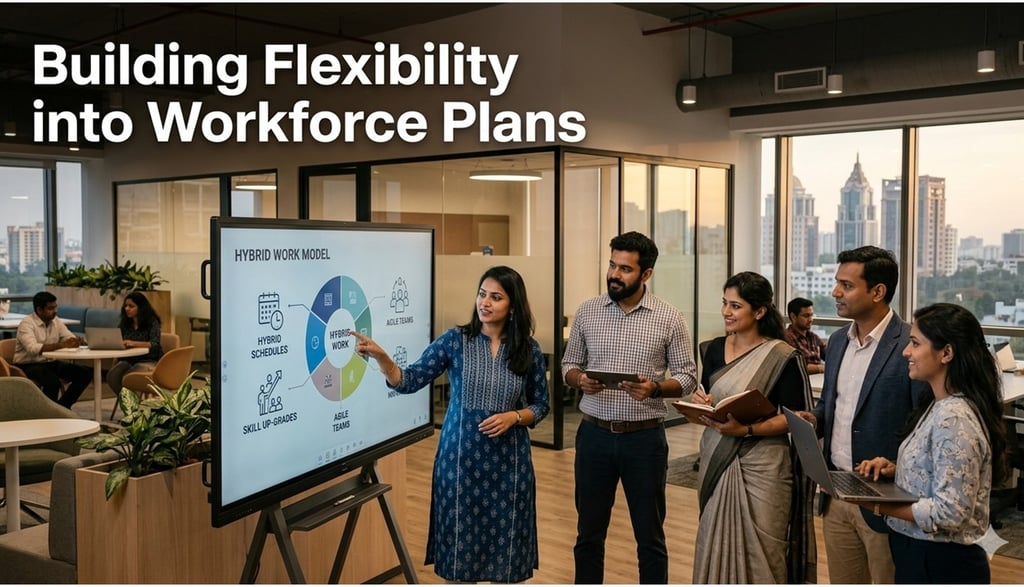
Business conditions rarely remain stable for long. Changes in demand, project volumes, technology, or market conditions require organisations to adjust workforce capacity without frequent disruption.
Building flexibility into workforce plans helps organisations respond to these changes while maintaining cost control and operational continuity. This article focuses on planning-level flexibility, not employment models or staffing contracts.
What Workforce Flexibility Means in Planning
From a workforce planning perspective, flexibility refers to the ability of manpower plans to adapt to demand variations without repeated rework or emergency hiring.
Planning flexibility is achieved through:
Headcount buffers
Skill overlap
Capacity alternatives
Scenario-based manpower planning
It is about designing plans that can stretch or contract within defined limits.
Why Workforce Plans Need Built-in Flexibility
Demand Uncertainty
Sales volumes, project pipelines, and customer requirements may change faster than hiring cycles.
Hiring and Exit Lead Times
Recruitment, onboarding, and exits take time, making rigid plans difficult to execute.
Cost Control
Frequent hiring and downsizing increase costs and affect workforce stability.
Business Continuity
Flexible plans reduce dependency on last-minute decisions and short-term fixes.
Key Planning Levers to Build Flexibility
Buffer Headcount
Maintain limited buffers in critical roles to absorb short-term demand spikes.
Skill-Based Planning
Plan roles based on skills and capabilities, not only job titles, enabling redeployment.
Phased Hiring Plans
Break annual manpower plans into quarterly or project-linked phases.
Internal Redeployment Scenarios
Include internal movement options before approving new hires.
Demand Scenarios
Prepare alternate manpower views for high, moderate, and low demand situations.
Light Checklist: Building Flexibility into Workforce Plans
☐ Critical roles with demand variability identified
☐ Buffer headcount defined with clear limits
☐ Skill overlap mapped across key functions
☐ Phased hiring plan created instead of fixed annual numbers
☐ Alternative demand scenarios documented
Sample Table: Workforce Planning Flexibility Levers
How HR Supports Flexible Workforce Planning
HR plays a key role by:
Providing realistic hiring timelines
Maintaining updated skill inventories
Highlighting attrition and mobility trends
Facilitating periodic plan reviews with business leaders
This ensures flexibility is planned, governed, and controlled, not reactive.
Conclusion
Building flexibility into workforce plans allows organisations to respond to change without compromising stability. By using buffers, skill-based planning, phased hiring, and scenario analysis, HR and business leaders can create manpower plans that remain relevant across varying business conditions.
Flexible workforce planning supports resilience, efficiency, and sustained growth.
Conclusion--
Effective labour law compliance depends on how well HR operations, payroll, and business processes work together. When compliance is embedded into everyday workflows, organisations reduce risk, improve accuracy, and build sustainable governance systems. HR teams that prioritise integration over isolation are better positioned to manage compliance confidently and consistently.
HireDesk India © 2026 | All Rights Reserved
"Thoughtful guidance for everyday HR"


Quick Links
Topics
Connect
_______________________________________________________________________________________________________________________________________________________________________________________
HireDesk is a free HR knowledge platform focused on practical, India-specific workplace guidance. We help HR professionals, managers, and learners navigate people practices with clarity, responsibility, and real-world relevance.