
Calibration of Performance Ratings: Ensuring Fairness and Consistency
PERFORMANCE & DEVELOPMENT
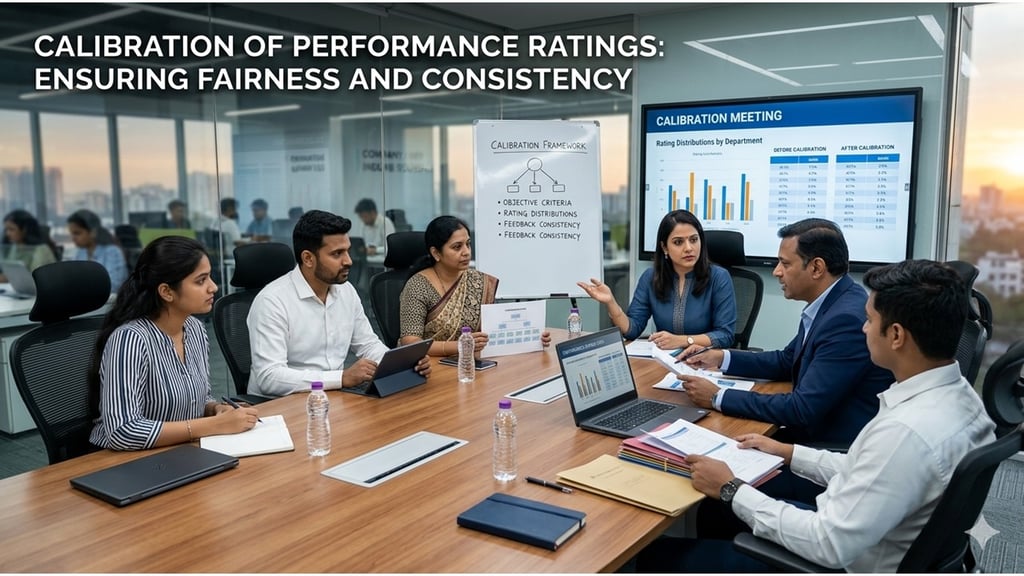
Even well-designed performance review cycles can produce inconsistent ratings if managers interpret standards differently. Performance calibration ensures fairness, consistency, and alignment across teams, functions, and geographies.
Calibration is a critical step in creating a credible and equitable performance management system that employees trust.
Why Calibration Matters
Without calibration:
Ratings vary widely across teams despite similar performance
High performers may be overlooked, and average performers over-rewarded
Decisions on promotions, rewards, and development become subjective
Employee engagement and trust in the system decline
Calibration balances manager judgement with organisational standards.
Core Principles of Effective Calibration
1. Standardised Rating Guidelines
Define clear performance criteria and rating scales
Provide examples for each rating to reduce interpretation gaps
2. Multi-Level Review
Include managers, HR, and senior leaders in calibration discussions
Align ratings across similar roles or functions
3. Data-Informed Discussions
Use performance data and trend analysis to support decisions
Include quantitative results and qualitative observations
4. Documentation and Transparency
Maintain records of calibration decisions
Ensure employees understand the rationale behind ratings
Sample View: Performance Calibration Process
Checklist: Ensuring Calibration Effectiveness
☐ Rating criteria are clearly defined
☐ All managers submit preliminary ratings on time
☐ Calibration meetings include cross-functional input
☐ Data is reviewed to detect rating anomalies
☐ Final decisions are documented and communicated
☐ HR monitors for fairness and consistency
Role of HR in Calibration
HR ensures:
Rating standards are applied consistently
Managers are trained on bias and rating interpretation
Performance outcomes remain credible for promotions, rewards, and development
Data-driven insights support fair decision-making
HR acts as the process custodian, not the decision-maker.
Key Takeaway
Performance calibration strengthens fairness, credibility, and trust in the performance management system. It ensures that ratings reflect true contribution rather than managerial bias or variability.
Conclusion--
Effective labour law compliance depends on how well HR operations, payroll, and business processes work together. When compliance is embedded into everyday workflows, organisations reduce risk, improve accuracy, and build sustainable governance systems. HR teams that prioritise integration over isolation are better positioned to manage compliance confidently and consistently.
HireDesk India © 2026 | All Rights Reserved
"Thoughtful guidance for everyday HR"


Quick Links
Topics
Connect
_______________________________________________________________________________________________________________________________________________________________________________________
HireDesk is a free HR knowledge platform focused on practical, India-specific workplace guidance. We help HR professionals, managers, and learners navigate people practices with clarity, responsibility, and real-world relevance.