
Campus Hiring and Graduate Recruitment in India
RECRUITMENT AND HIRING
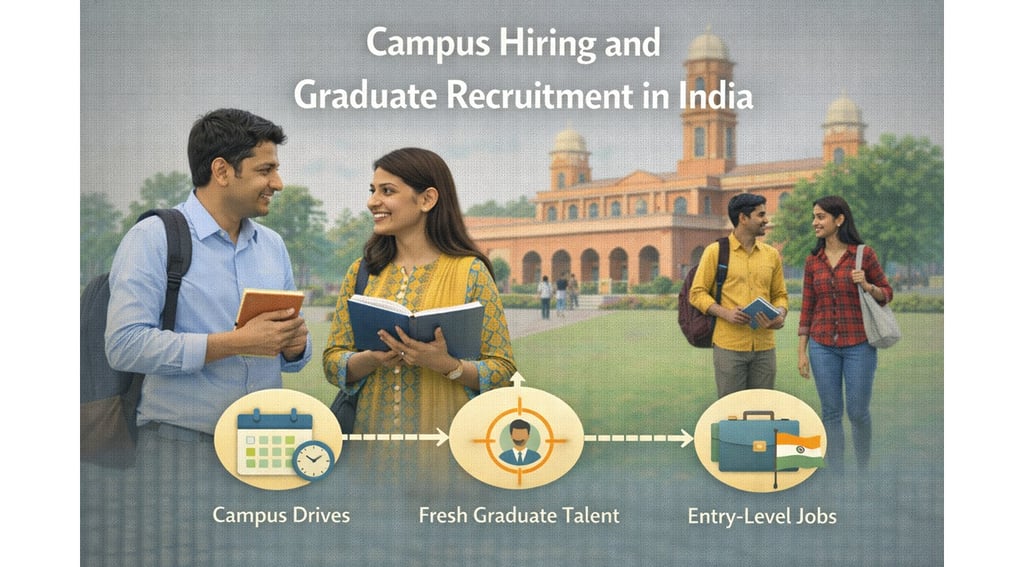
Campus hiring is a cornerstone of talent acquisition for many Indian organisations, particularly in IT, BFSI, manufacturing, and FMCG sectors. Hiring fresh graduates not only builds a talent pipeline for the future but also helps organisations cultivate a culture of learning and innovation from the ground up.
However, in India, campus hiring is often approached inconsistently — with last-minute drives, poor engagement with institutes, or generic assessments — leading to low quality of hires and high early attrition. A structured campus recruitment strategy ensures timely access to quality talent and long-term organisational benefit.
Indian Campus Hiring Context
Campus recruitment in India presents unique realities:
Large graduate pool: India produces millions of graduates yearly, but skill quality varies significantly
Regional diversity: Language, cultural differences, and local hiring preferences affect selection
Industry competition: IT, consulting, and BFSI sectors often compete aggressively for top candidates
Cost sensitivity: Recruitment drives and internships require budget planning
Early talent development: Organisations often use campus hiring to groom future leaders
Understanding these realities helps HR plan targeted, efficient, and value-driven campus programmes.
Core Components of Campus Recruitment
1. University and College Engagement
Long-term relationships with institutes improve access to top talent:
Identify target colleges based on program relevance and past placement success
Maintain consistent engagement through seminars, workshops, and career fairs
Build brand awareness as a preferred employer
2. Internship and Trainee Programmes
Internships act as a testing ground for potential hires:
Offer structured internship projects aligned with real business needs
Evaluate candidates’ learning ability, problem-solving, and cultural fit
Convert high-performing interns into full-time hires
This approach reduces hiring risk and accelerates onboarding.
3. Selection Process Design
Campus candidates require a different selection approach than experienced hires:
Include aptitude, domain knowledge, and problem-solving assessments
Use group exercises, case studies, or simulations for practical evaluation
Conduct structured interviews to gauge motivation, learning mindset, and alignment with company culture
4. Offer Management and Onboarding
Offer management for campus candidates is sensitive to timing and communication:
Align offers with graduation schedules and notice periods
Communicate compensation, joining timelines, and probation clearly
Provide pre-joining engagement to reduce dropouts
Early onboarding preparation sets expectations and improves retention.
HR’s Practical Perspective
HR must act as both planner and executor:
Develop an annual campus recruitment calendar
Maintain relationships with institutes and faculty
Standardise selection assessments and interview protocols
Track metrics like offers made vs accepted, joining rates, and performance of campus hires
Integrate campus recruitment with broader workforce planning and manpower requirements
Structured HR oversight ensures campus hiring supports both immediate needs and long-term talent pipelines.
Conclusion
Campus hiring in India is more than filling entry-level roles; it is a strategic investment in future workforce capability. By engaging colleges proactively, offering meaningful internships, designing structured selection processes, and managing offers effectively, HR teams can secure high-potential talent and strengthen organisational growth pipelines.
🗹 Campus Hiring Checklist
🗹 Identify target colleges and programmes relevant to business needs
🗹 Maintain long-term engagement with institutes and faculty
🗹 Design internships aligned with real business projects
🗹 Evaluate candidates using structured assessments and interviews
🗹 Track and manage offers in line with academic calendars
🗹 Communicate compensation and joining details clearly
🗹 Monitor early performance of campus hires for conversion decisions
🗹 Integrate campus recruitment outcomes with manpower planning
🗹 Review and refine campus hiring strategy annually
Campus Hiring Framework
Conclusion--
Effective labour law compliance depends on how well HR operations, payroll, and business processes work together. When compliance is embedded into everyday workflows, organisations reduce risk, improve accuracy, and build sustainable governance systems. HR teams that prioritise integration over isolation are better positioned to manage compliance confidently and consistently.
HireDesk India © 2026 | All Rights Reserved
"Thoughtful guidance for everyday HR"


Quick Links
Topics
Connect
_______________________________________________________________________________________________________________________________________________________________________________________
HireDesk is a free HR knowledge platform focused on practical, India-specific workplace guidance. We help HR professionals, managers, and learners navigate people practices with clarity, responsibility, and real-world relevance.