
Candidate Experience: What Indian Employers Get Right and Wrong
RECRUITMENT AND HIRING
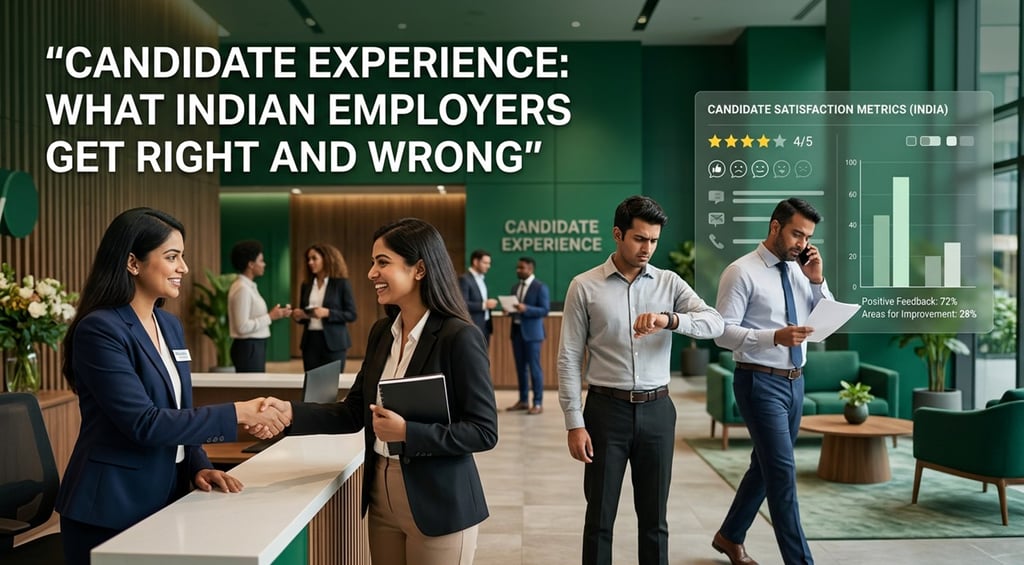
Candidate experience has become a visible reflection of an organisation’s culture and HR maturity in India. With social media, job portals, and informal networks, candidates quickly share their hiring experiences—good or bad. While many Indian employers have improved speed and reach, gaps remain in consistency, communication, and respect for candidates’ time.
HR’s role is to ensure that candidate experience is not left to chance or individual recruiter behaviour.
What Candidate Experience Means in the Indian Context
Candidate experience covers the entire interaction a candidate has with the organisation, including:
Job advertisements and application process
Communication during screening and interviews
Interview conduct and feedback
Offer communication and closure
In India, high application volumes and resource constraints often shape how this experience plays out.
What Indian Employers Commonly Get Right
High Responsiveness in Early Stages
Many organisations are effective at:
Quick initial screening
Fast interview scheduling
Multiple touchpoints through recruiters
This creates early engagement, especially in competitive talent markets.
Relationship-Based Engagement
Indian recruiters often:
Build personal rapport
Provide informal guidance
Stay connected through calls or messages
This human touch is appreciated by candidates.
Flexibility and Practical Adjustments
Employers frequently accommodate:
Interview timing constraints
Location or virtual interview needs
Short-notice discussions
This flexibility improves accessibility.
Where Candidate Experience Breaks Down
Lack of Communication and Closure
Common complaints include:
No feedback after interviews
Silence after final rounds
No closure after offer discussions
This damages employer credibility.
Unstructured Interviews
Candidates often face:
Repetitive or irrelevant questions
Unprepared interviewers
Inconsistent evaluation standards
This signals weak hiring discipline.
Overpromising and Mismatched Expectations
Some recruiters:
Overstate role scope or growth
Downplay organisational challenges
Provide unclear compensation details
This leads to early attrition and distrust.
HR’s Role in Improving Candidate Experience
Standardising Recruitment Communication
HR should define:
Clear response timelines
Standard rejection and feedback communication
Ownership for candidate follow-ups
Even rejections must be handled professionally.
Interviewer Readiness and Accountability
HR must ensure:
Interviewers are trained and briefed
Interview panels respect candidate time
Evaluation criteria are applied consistently
Candidate experience is a shared responsibility.
Honest and Realistic Hiring Conversations
HR should encourage:
Accurate role previews
Transparent compensation discussions
Clear joining timelines
Clarity builds trust, even if the outcome is negative.
Balancing Efficiency and Respect
High-volume hiring pressures are real in India. However, efficiency should not come at the cost of basic respect. Simple practices—timely updates, prepared interviewers, and proper closure—make a significant difference without increasing cost.
Conclusion
Candidate experience reflects the discipline and values of Indian employers. While speed and relationship-building are strengths, gaps in communication, structure, and honesty weaken trust. HR can significantly improve candidate experience by enforcing basic process discipline and accountability across the hiring lifecycle.
🗹 Candidate Experience Improvement Checklist
🗹 Define response timelines for each hiring stage
🗹 Ensure interviewers are prepared and briefed
🗹 Communicate clearly with shortlisted and rejected candidates
🗹 Avoid overpromising role scope or growth
🗹 Provide realistic compensation and joining clarity
🗹 Respect candidate time during interviews
🗹 Track candidate feedback and complaints
🗹 Hold recruiters and managers accountable
Hiring Practices and Employer Brand Impact
Conclusion--
Effective labour law compliance depends on how well HR operations, payroll, and business processes work together. When compliance is embedded into everyday workflows, organisations reduce risk, improve accuracy, and build sustainable governance systems. HR teams that prioritise integration over isolation are better positioned to manage compliance confidently and consistently.
HireDesk India © 2026 | All Rights Reserved
"Thoughtful guidance for everyday HR"


Quick Links
Topics
Connect
_______________________________________________________________________________________________________________________________________________________________________________________
HireDesk is a free HR knowledge platform focused on practical, India-specific workplace guidance. We help HR professionals, managers, and learners navigate people practices with clarity, responsibility, and real-world relevance.