
Career Development Conversations in HR Practice
PERFORMANCE & DEVELOPMENT
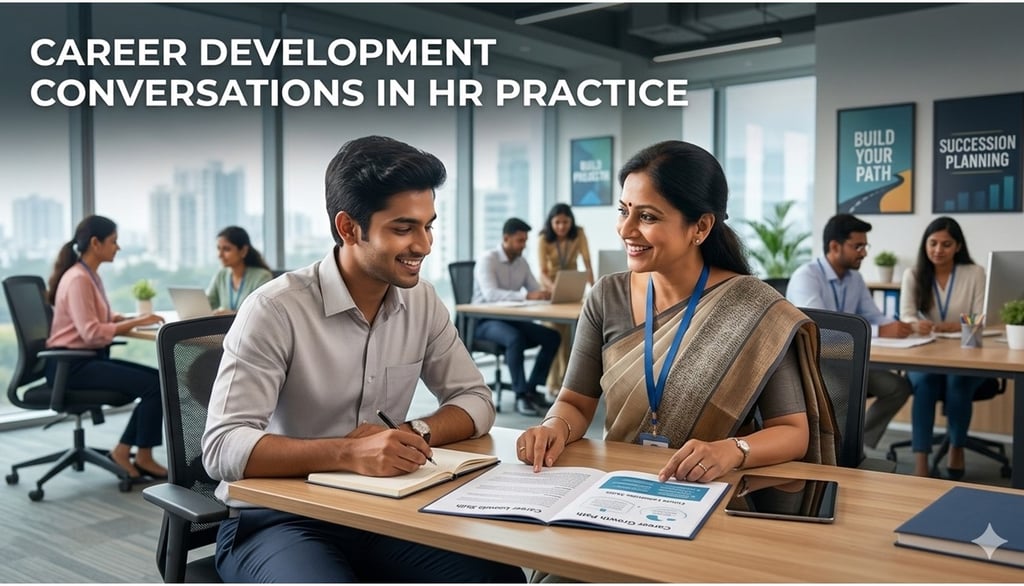
Career development conversations are structured discussions between employees and managers that focus on long-term growth, skill development, and future role possibilities. Unlike performance reviews, these conversations are forward-looking and aim to align individual aspirations with organisational needs.
When handled well, career conversations improve engagement, retention, and internal talent mobility while helping organisations build a sustainable leadership pipeline.
Why Career Development Conversations Matter
Encourage employee ownership of career growth
Improve retention by clarifying growth opportunities
Support internal mobility and succession planning
Align individual aspirations with business needs
Without structured career conversations, employees may feel uncertain about growth paths, leading to disengagement or attrition.
Key Elements of Effective Career Development Conversations
1. Clarifying Career Aspirations
Encourage employees to share long-term career interests and preferred directions.
Discuss both vertical growth and lateral or skill-based progression.
Avoid promising specific roles; focus on readiness and development.
2. Assessing Current Capabilities
Review current performance, strengths, and development areas.
Identify skills required for potential future roles.
Use performance data and feedback as reference points.
3. Identifying Development Actions
Agree on specific skills, experiences, or exposure needed.
Link development actions to real work opportunities such as projects, mentoring, or role rotations.
Document outcomes in Individual Development Plans (IDPs).
4. Aligning with Organisational Needs
Ensure aspirations are discussed in the context of business priorities.
Highlight critical skills and roles that the organisation is developing.
Balance individual preferences with realistic opportunities.
5. Setting Review and Follow-up Cadence
Decide how often career conversations will be revisited.
Track progress on agreed development actions.
Adjust plans as roles, priorities, or employee interests evolve.
Sample View: Career Development Conversation Framework
Checklist: Conducting Effective Career Development Conversations
☐ Schedule conversations separate from performance reviews
☐ Encourage open discussion on career aspirations
☐ Use performance data to assess readiness
☐ Link development actions to real work opportunities
☐ Align aspirations with organisational priorities
☐ Document outcomes and follow up regularly
Common Pitfalls to Avoid
Treating career conversations as one-time discussions
Making role promises without clarity on readiness or business need
Focusing only on promotions and ignoring lateral growth
Lack of follow-up on agreed development actions
Role of HR and Managers
HR provides frameworks, conversation guides, and consistency across teams.
Managers facilitate meaningful discussions, offer realistic guidance, and support development actions.
Together, they ensure career conversations are structured, fair, and aligned with workforce planning.
Key Takeaway
Career development conversations help organisations retain talent, build internal capability, and prepare future leaders. When structured and regularly revisited, they create clarity for employees while supporting long-term organisational growth.
Conclusion--
Effective labour law compliance depends on how well HR operations, payroll, and business processes work together. When compliance is embedded into everyday workflows, organisations reduce risk, improve accuracy, and build sustainable governance systems. HR teams that prioritise integration over isolation are better positioned to manage compliance confidently and consistently.
HireDesk India © 2026 | All Rights Reserved
"Thoughtful guidance for everyday HR"


Quick Links
Topics
Connect
_______________________________________________________________________________________________________________________________________________________________________________________
HireDesk is a free HR knowledge platform focused on practical, India-specific workplace guidance. We help HR professionals, managers, and learners navigate people practices with clarity, responsibility, and real-world relevance.