
Choosing the Right HRIS for Your Organisation
HR TECH & ANALYTICS
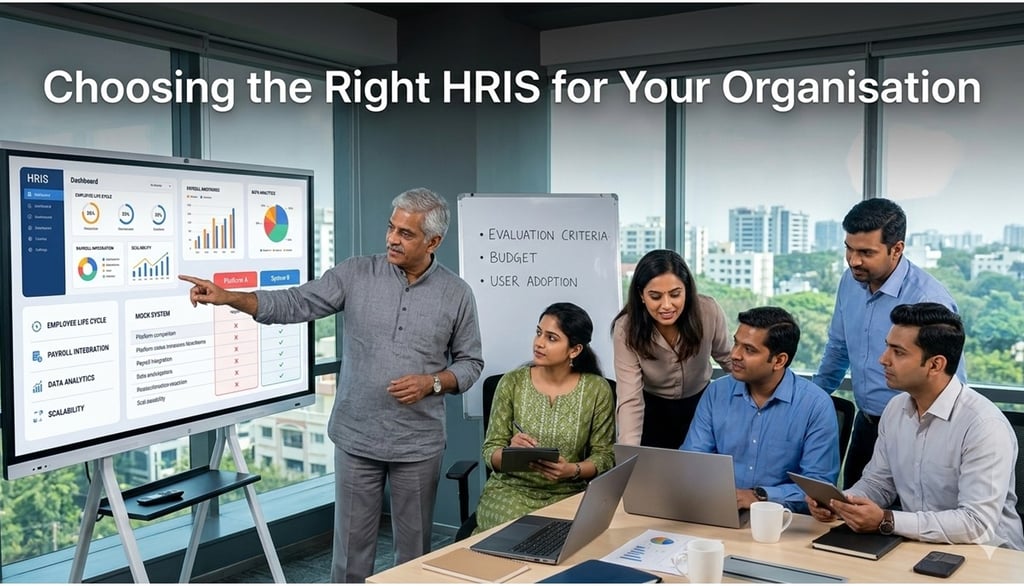

A Human Resource Information System (HRIS) is the backbone of modern HR operations. It centralises employee data, automates routine processes, and enables analytics for better decision-making.
Choosing the right HRIS is critical: a poorly selected system can complicate workflows, reduce adoption, and fail to deliver the expected benefits. For Indian organisations, the right HRIS balances functionality, cost, compliance, and scalability.
1. Understand Your Organisational Needs
Before evaluating systems, HR must clearly define:
Process requirements: Payroll, attendance, recruitment, performance management, learning & development
User needs: Accessibility for managers, employees, and HR teams
Scalability: Support for current workforce size and future growth
Integration: Compatibility with existing systems and third-party tools
Tip: Document current pain points and desired outcomes to guide your selection.
2. Key Features to Consider
An effective HRIS should offer:
Employee Data Management: Centralised and up-to-date employee records
Payroll & Compliance: Automated salary processing, statutory compliance (PF, ESIC, TDS)
Time & Attendance Tracking: Integration with biometric or cloud-based systems
Recruitment Module: Applicant tracking, interview scheduling, onboarding workflow
Performance & Learning Management: Appraisal tracking, PIP management, LMS integration
Self-Service Portals: Access for employees to view payslips, leave balances, and submit requests
Analytics & Reporting: Dashboards for workforce trends, attrition, cost, and productivity
3. Evaluation Criteria
When shortlisting HRIS solutions, consider:
Ease of Use: Intuitive interface for HR, managers, and employees
Vendor Support: Training, troubleshooting, and ongoing updates
Customization: Flexibility to adapt workflows to your organisation
Cost vs Value: Total cost of ownership (licensing, implementation, maintenance)
Data Security: Compliance with data privacy regulations and access controls
Sample View: HRIS Evaluation Checklist
Checklist: Selecting the Right HRIS
☐ Document organisational HR processes and pain points
☐ Identify must-have features vs nice-to-have features
☐ Shortlist vendors based on functionality, cost, and scalability
☐ Evaluate usability and user adoption potential
☐ Check integration capabilities with existing systems
☐ Assess data security and compliance features
☐ Request demos and trial runs before final decision
Common Pitfalls to Avoid
Choosing a system based solely on brand or popularity
Ignoring the importance of user adoption and training
Overlooking integration with existing HR and payroll systems
Selecting an overly complex solution for a small workforce
Neglecting long-term support and upgrade considerations
Key Takeaway
Selecting the right HRIS ensures HR processes are streamlined, data-driven, and employee-friendly. HR’s active role in evaluation, adoption, and monitoring is crucial to maximise return on investment and achieve organisational efficiency.
Conclusion--
Effective labour law compliance depends on how well HR operations, payroll, and business processes work together. When compliance is embedded into everyday workflows, organisations reduce risk, improve accuracy, and build sustainable governance systems. HR teams that prioritise integration over isolation are better positioned to manage compliance confidently and consistently.
HireDesk India © 2026 | All Rights Reserved
"Thoughtful guidance for everyday HR"


Quick Links
Topics
Connect
_______________________________________________________________________________________________________________________________________________________________________________________
HireDesk is a free HR knowledge platform focused on practical, India-specific workplace guidance. We help HR professionals, managers, and learners navigate people practices with clarity, responsibility, and real-world relevance.