
Collective Bargaining in Indian Factories: HR Strategy and Execution
INDUSTRIAL RELATIONS & FACTORY HR
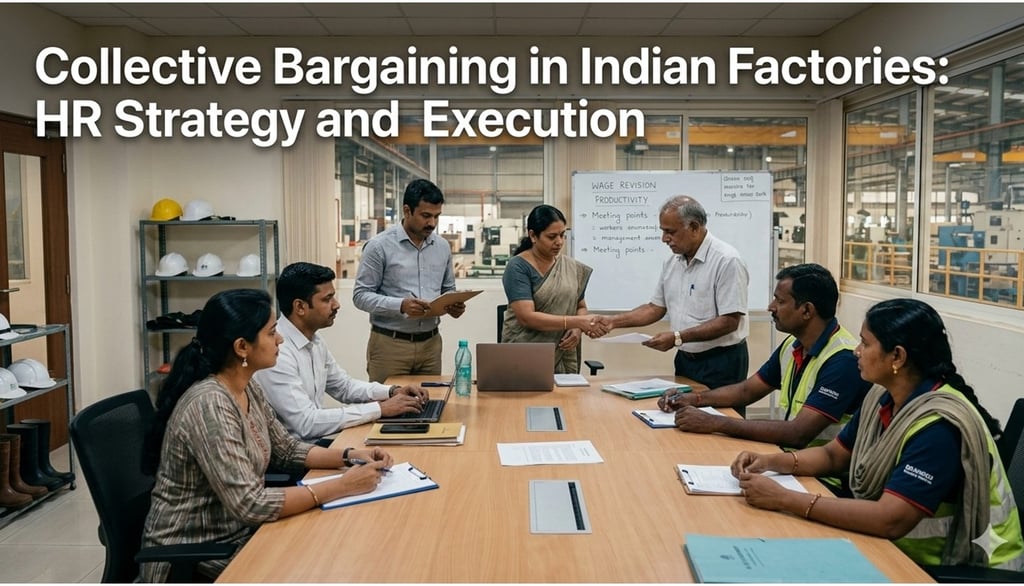
Collective bargaining is a cornerstone of industrial relations in Indian factories. It is the structured process through which management and worker representatives negotiate terms of employment such as wages, benefits, working conditions, and productivity norms.
For Factory HR teams, collective bargaining is not a legal formality or a once-in-a-year event. It is a strategic process that directly impacts cost control, industrial peace, employee morale, and long-term business continuity.
What Collective Bargaining Means in Indian Factories
Collective bargaining refers to negotiations between employer representatives and recognised trade unions to arrive at mutually acceptable agreements. These negotiations typically cover:
Wage revisions and allowances
Working hours, shifts, and leave
Productivity norms and incentives
Welfare measures and facilities
Disciplinary procedures and dispute handling
In Indian factories, collective bargaining is often governed by custom, practice, and legal precedents, even when formal recognition procedures vary by state.
Legal Context for Collective Bargaining
Indian labour laws recognise and encourage collective bargaining as a preferred mechanism for dispute resolution:
Industrial Disputes Act / Industrial Relations Code – Provides legal recognition to settlements arrived through collective bargaining
Trade Unions Act, 1926 – Governs union registration and representation
Standing Orders – Often define negotiation and consultation mechanisms
Labour Department Oversight – May intervene if negotiations fail or disputes escalate
Settlements reached through lawful collective bargaining are binding on parties and carry legal enforceability.
Typical Collective Bargaining Subjects in Factories
Factory-level negotiations usually focus on practical, operational matters:
Basic wages, DA, and variable pay
Overtime rates and attendance incentives
Contract labour conditions
Shift patterns and manpower deployment
Safety measures and welfare amenities
Productivity-linked incentives and targets
HR must ensure that negotiated terms are financially sustainable and legally compliant.
Role of Factory HR in Collective Bargaining
HR acts as the anchor and integrator of the bargaining process:
Preparing management’s negotiation strategy
Coordinating data on wages, productivity, and costs
Ensuring compliance with labour laws and standing orders
Facilitating structured dialogue with unions
Recording discussions and drafting settlement documents
Strong HR involvement prevents emotional, ad-hoc decision-making and ensures continuity across bargaining cycles.
Key Phases of the Collective Bargaining Process
1. Preparation
This is the most critical phase. HR must analyse:
Past settlements and precedents
Financial capacity of the organisation
Industry benchmarks
Union demands and internal expectations
2. Negotiation
Formal discussions are held with union representatives. HR must balance firmness with openness, ensuring respectful and transparent dialogue.
3. Settlement Drafting
Once agreement is reached, HR prepares a written settlement or MoU, clearly defining terms, timelines, and applicability.
4. Implementation
Settlement clauses must be implemented strictly as agreed. Delays or deviations often trigger fresh disputes.
5. Monitoring
HR tracks compliance, interprets clauses, and addresses ambiguities proactively.
Common Challenges in Factory-Level Bargaining
Multiple unions with competing agendas
Politically influenced union leadership
Unrealistic or non-sustainable demands
Communication gaps between shop floor and management
Delays in implementing agreed terms
HR must act as a stabilising force, keeping discussions fact-based and future-oriented.
HR’s Practical Strategies for Effective Bargaining
Maintain consistent engagement with unions beyond bargaining cycles
Share data transparently to build credibility
Avoid last-minute negotiations under pressure
Document all discussions carefully
Involve operational leaders without letting emotions dominate
Effective collective bargaining is built on trust, predictability, and discipline.
Conclusion
Collective bargaining in Indian factories is a powerful mechanism for achieving industrial harmony and sustainable growth. When handled professionally, it strengthens trust, aligns workforce expectations, and reduces conflict.
Factory HR teams play a central role in converting collective bargaining from a confrontation-driven exercise into a collaborative, outcome-oriented process that supports both business goals and employee welfare.
🗹 HR Checklist: Managing Collective Bargaining Effectively
🗹 Study past settlements and industry benchmarks
🗹 Prepare a clear management negotiation strategy
🗹 Ensure union recognition and representation clarity
🗹 Maintain structured and respectful dialogue
🗹 Document all negotiation discussions accurately
🗹 Draft clear, enforceable settlement terms
🗹 Implement agreed clauses without delay
🗹 Monitor compliance and address ambiguities early
Collective Bargaining – HR Reference Table
Conclusion--
Effective labour law compliance depends on how well HR operations, payroll, and business processes work together. When compliance is embedded into everyday workflows, organisations reduce risk, improve accuracy, and build sustainable governance systems. HR teams that prioritise integration over isolation are better positioned to manage compliance confidently and consistently.
HireDesk India © 2026 | All Rights Reserved
"Thoughtful guidance for everyday HR"


Quick Links
Topics
Connect
_______________________________________________________________________________________________________________________________________________________________________________________
HireDesk is a free HR knowledge platform focused on practical, India-specific workplace guidance. We help HR professionals, managers, and learners navigate people practices with clarity, responsibility, and real-world relevance.