
Collective Bargaining in Indian Factories: Process, Pitfalls and HR Best Practices
INDUSTRIAL RELATIONS & FACTORY HR
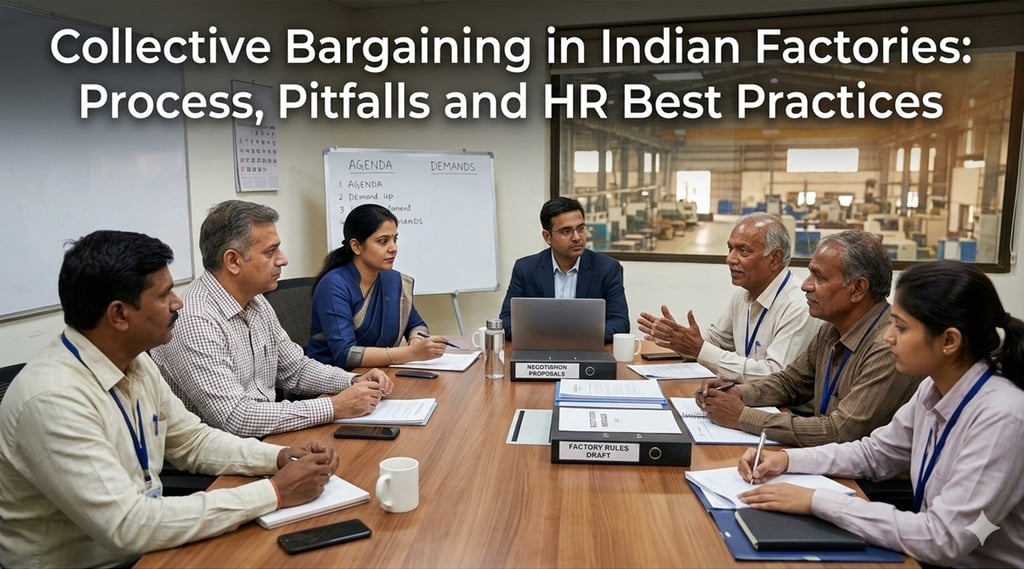

Collective bargaining is one of the most critical processes in industrial relations within Indian factories. It determines wages, allowances, working conditions, productivity norms, and welfare commitments, directly impacting cost, morale, and continuity of operations.
For factory HR teams, collective bargaining is not merely a negotiation exercise. It is a structured, legally sensitive process that requires preparation, neutrality, documentation, and long-term relationship management. Poorly handled bargaining can lead to disputes, strikes, and trust erosion, while effective bargaining strengthens stability and cooperation.
This article explains how collective bargaining works in Indian factories, the typical process, common mistakes HR must avoid, and practical best practices.
What Is Collective Bargaining in the Indian Context
Collective bargaining refers to the formal negotiation process between management and recognised trade unions to arrive at mutually acceptable agreements on employment-related matters.
In Indian factories, collective bargaining typically covers:
Wages and allowances
Working hours, shifts, and overtime
Productivity norms and incentives
Leave, holidays, and benefits
Safety, welfare, and canteen facilities
Settlements reached through collective bargaining are legally binding and enforceable under labour laws.
Legal Framework Governing Collective Bargaining
HR teams must anchor collective bargaining within India’s legal framework:
Industrial Relations Code, 2020
Recognises negotiating unions or negotiating councils
Governs disputes, settlements, and industrial action
Industrial Disputes Principles (legacy laws & case law)
Define fair negotiation practices and binding settlements
Trade Unions Act, 1926
Governs registration and lawful functioning of unions
Factories Act, 1948
Influences bargaining on safety, welfare, and working conditions
HR must ensure that bargaining outcomes do not violate statutory minimums such as minimum wages, working hours, or safety provisions.
The Collective Bargaining Process in Factories
1. Preparation Phase
This is the most critical stage and often determines success.
Analyse existing wage structures and cost implications
Review productivity data, attendance trends, and overtime usage
Study industry benchmarks and regional practices
Understand union demands and underlying concerns
Obtain management approval on negotiation limits
2. Negotiation Phase
Formal meetings between management representatives and union leaders
Discussion on demands, counter-proposals, and trade-offs
HR acts as facilitator, advisor, and documentation custodian
Emphasis on facts, feasibility, and mutual sustainability
3. Settlement and Agreement
Mutually agreed terms documented clearly
Duration of settlement specified (commonly 2–3 years)
Signed by authorised union and management representatives
Filed with labour authorities where required
4. Implementation and Monitoring
Communicate settlement terms clearly to employees
Update payroll, policies, and SOPs
Monitor compliance and address interpretation issues
Common Pitfalls HR Must Avoid
Inadequate preparation: Entering negotiations without data or cost clarity
Informal commitments: Making verbal assurances without approvals
Ignoring statutory limits: Agreeing to terms that violate labour laws
Management bias: Appearing rigid or dismissive of union concerns
Poor documentation: Vague clauses leading to future disputes
Delayed implementation: Eroding trust after settlement
These mistakes often result in escalation, grievances, or legal challenges.
HR’s Role in Collective Bargaining
Factory HR plays a central, balancing role:
Prepare negotiation briefs and cost models
Advise management on legal and operational implications
Maintain neutrality and procedural fairness
Ensure accurate documentation and record-keeping
Act as the primary interface with unions and labour authorities
Monitor post-settlement compliance and interpretation
HR Best Practices for Effective Bargaining
Focus on long-term sustainability, not short-term wins
Use data to support proposals and counter demands
Encourage problem-solving rather than positional bargaining
Build trust through transparency and consistency
Train supervisors to implement settlement terms correctly
Conclusion
Collective bargaining is a cornerstone of industrial relations in Indian factories. When handled professionally, it creates predictability, trust, and operational stability. When mishandled, it becomes a major source of conflict and disruption.
For HR teams, success lies in preparation, neutrality, legal awareness, and disciplined execution. A structured approach to collective bargaining enables factories to balance employee expectations with business realities while maintaining long-term industrial harmony.
🗹 Collective Bargaining – HR Action Checklist
🗹 Prepare detailed cost and productivity data before negotiations
🗹 Understand union demands and underlying workforce concerns
🗹 Ensure compliance with statutory wage and working condition norms
🗹 Obtain management approvals on negotiation boundaries
🗹 Maintain neutrality and procedural fairness during discussions
🗹 Document settlement terms clearly and unambiguously
🗹 Communicate agreements effectively to all employees
🗹 Monitor implementation and address interpretation issues promptly
Collective Bargaining – HR Reference Table
Conclusion--
Effective labour law compliance depends on how well HR operations, payroll, and business processes work together. When compliance is embedded into everyday workflows, organisations reduce risk, improve accuracy, and build sustainable governance systems. HR teams that prioritise integration over isolation are better positioned to manage compliance confidently and consistently.
HireDesk India © 2026 | All Rights Reserved
"Thoughtful guidance for everyday HR"


Quick Links
Topics
Connect
_______________________________________________________________________________________________________________________________________________________________________________________
HireDesk is a free HR knowledge platform focused on practical, India-specific workplace guidance. We help HR professionals, managers, and learners navigate people practices with clarity, responsibility, and real-world relevance.