
Common Labour Law Compliance Gaps in Indian Companies
COMPLIANCE & LABOUR LAWS
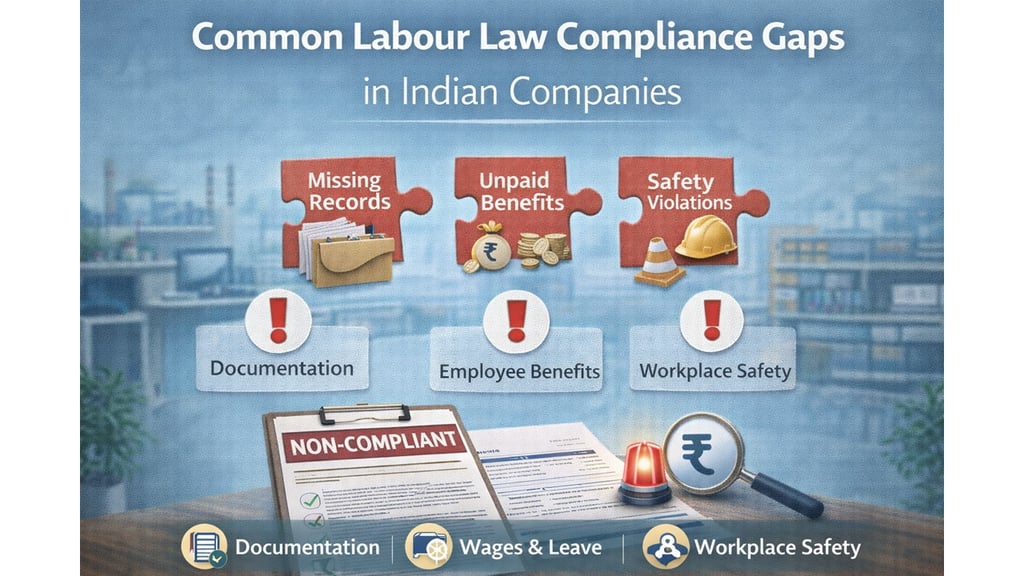
Despite increased awareness and digitisation, labour law compliance gaps remain common across Indian organisations. These gaps are rarely intentional. They usually arise from complex regulations, state-wise variations, process ownership issues, and over-reliance on external vendors.
For HR teams, identifying these gaps early is critical. Most penalties, inspections, and disputes stem not from absence of policies, but from inconsistent execution and weak documentation.
This article highlights the most frequent labour law compliance gaps seen in Indian companies and explains how HR can address them proactively.
Why Compliance Gaps Occur
Before addressing specific gaps, HR must understand the underlying causes:
Rapid organisational growth without compliance scale-up
Multi-state operations managed with uniform templates
Dependence on payroll vendors without internal verification
Poor coordination between HR, finance, admin, and procurement
Lack of periodic compliance reviews
Recognising these patterns helps HR focus on prevention rather than firefighting.
Common Compliance Gaps HR Should Watch For
1. Incorrect Applicability Mapping
Many organisations:
Miss applicability thresholds for PF, ESIC, bonus, or gratuity
Apply the wrong state law to a location
Fail to reassess applicability after headcount or business changes
This leads to foundational compliance failures.
2. Gaps in Wages and Payroll Compliance
Typical issues include:
Non-alignment with revised minimum wages
Incorrect wage structuring affecting statutory contributions
Delays in wage payments or statutory remittances
Payroll errors are high-risk due to automated scrutiny by authorities.
3. Weak Contract Labour Oversight
Common lapses:
Engaging unlicensed contractors
Inadequate verification of wage and statutory payments
Missing registers and records for contract workers
As the principal employer, organisations remain exposed even if contractors default.
4. Incomplete Documentation and Registers
HR often struggles with:
Missing or outdated statutory registers
Incorrect formats as per state rules
Poor record retention practices
During inspections, documentation gaps attract penalties even if intent is genuine.
5. Policy–Practice Mismatch
Organisations may have:
Well-drafted policies that are not followed on the ground
Attendance or leave practices contradicting written policies
Disciplinary actions taken without due process
Such mismatches weaken the organisation’s legal position.
6. Poor Inspection Preparedness
Many organisations:
Scramble for documents during inspections
Lack clarity on who interfaces with inspectors
Miss follow-up actions post-inspection
This creates unnecessary stress and reputational risk.
HR’s Role in Closing Compliance Gaps
HR must shift from reactive compliance to systematic gap management:
Conduct periodic internal compliance audits
Validate vendor and contractor outputs regularly
Align policies, payroll, and practices continuously
Build location-level accountability
Ownership and discipline are more effective than legal complexity.
Conclusion
Labour law compliance gaps in Indian companies are often predictable and preventable. HR teams that proactively identify weak spots, review processes periodically, and document decisions are better equipped to handle inspections, audits, and workforce issues.
Closing these gaps strengthens not just legal compliance, but also organisational credibility and employee trust.
HR Action Checklist: Preventing Common Compliance Gaps
🗹 Review applicability of labour laws annually and on major changes
🗹 Track minimum wage revisions and update payroll inputs
🗹 Verify PF, ESIC, and statutory remittances independently
🗹 Conduct regular contractor compliance audits
🗹 Maintain updated registers and prescribed formats
🗹 Align HR policies with actual workplace practices
🗹 Prepare inspection-ready documentation at all locations
🗹 Assign clear ownership for follow-ups and corrective actions
🗹 Perform periodic internal compliance audits
Common Labour Law Compliance Gaps and HR Controls
Conclusion--
Effective labour law compliance depends on how well HR operations, payroll, and business processes work together. When compliance is embedded into everyday workflows, organisations reduce risk, improve accuracy, and build sustainable governance systems. HR teams that prioritise integration over isolation are better positioned to manage compliance confidently and consistently.
HireDesk India © 2026 | All Rights Reserved
"Thoughtful guidance for everyday HR"


Quick Links
Topics
Connect
_______________________________________________________________________________________________________________________________________________________________________________________
HireDesk is a free HR knowledge platform focused on practical, India-specific workplace guidance. We help HR professionals, managers, and learners navigate people practices with clarity, responsibility, and real-world relevance.