
Compliance & Labour Laws in India: A Practical HR Guide for Organisations
COMPLIANCE & LABOUR LAWS
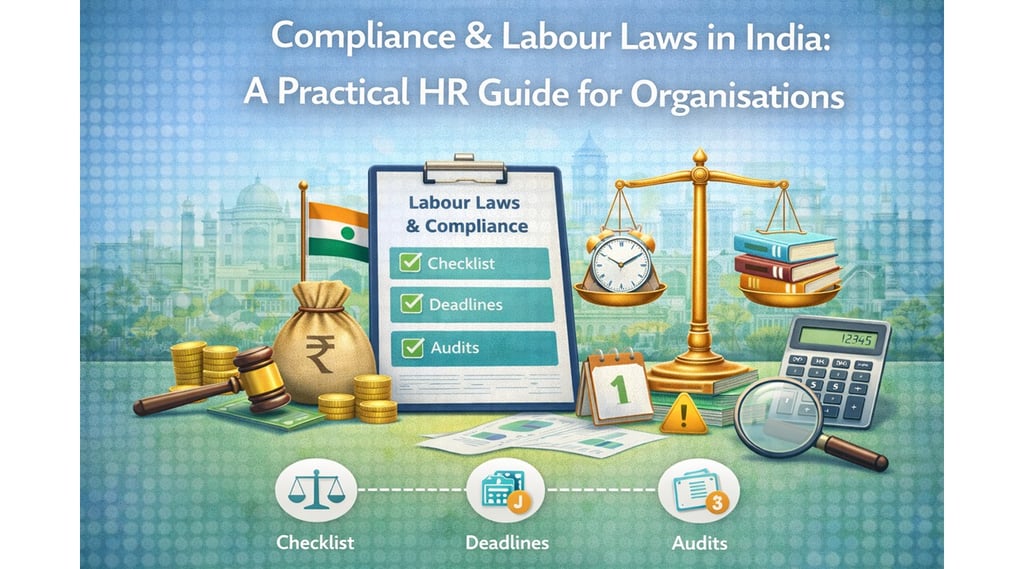
Labour law compliance is one of the most critical — and sensitive — responsibilities of HR in India. Unlike many global contexts, Indian organisations operate under a dense mix of central and state laws, frequent inspections, evolving codes, and high employee expectations.
For HR teams, compliance is not just about avoiding penalties. It directly affects employee trust, industrial relations, audit readiness, and business continuity. This article provides a practical, HR-centric overview of compliance and labour laws in India, focusing on execution rather than legal theory.
Understanding Compliance in the Indian Context
In India, labour law compliance covers a wide spectrum — from wages and working hours to social security, contract labour, and workplace conduct.
Key realities HR must recognise:
Multiple laws apply simultaneously to the same employee
State-specific rules override central provisions in many areas
Compliance expectations vary based on headcount, industry, and location
Inspectors and authorities still rely heavily on documentation and registers
Compliance therefore cannot be treated as a one-time legal exercise. It requires ongoing HR governance and discipline.
Core Areas of Labour Law Compliance
1. Employment and Working Conditions
HR must ensure compliance relating to:
Appointment letters and service conditions
Working hours, overtime, weekly offs, and holidays
Leave entitlements under applicable state laws
Display of statutory notices and abstracts
These form the foundation of lawful employment and are often the first areas checked during inspections.
2. Wages, Payments, and Statutory Benefits
Indian labour laws place strong emphasis on timely and correct payments. HR plays a central role in ensuring:
Payment of wages within prescribed timelines
Adherence to minimum wage notifications
Correct calculation of bonus and gratuity
Gender-neutral and non-discriminatory pay practices
Errors here can quickly escalate into legal disputes and employee complaints.
3. Social Security Compliance
Social security laws are heavily process-driven and digitally monitored. HR must manage:
PF enrolment, contributions, and exits
ESIC coverage, contributions, and benefits
Labour Welfare Fund compliance (state-wise)
Even minor lapses can trigger notices due to system-based scrutiny.
4. Contract Labour and Third-Party Workforce
Where contract workers are engaged, the principal employer carries significant responsibility. HR must ensure:
Valid contractor registrations and licences
Wage and statutory payment verification
Maintenance of contractor records and returns
This is a high-risk area for many organisations, especially SMEs and factories.
5. Inspections, Audits, and Dispute Readiness
Despite digitisation, labour inspections remain a reality. HR must be prepared with:
Updated registers and returns
Clear documentation and approvals
Knowledge of escalation and response protocols
Proactive readiness significantly reduces disruption and reputational risk.
HR’s Practical Role in Labour Law Compliance
HR is not expected to be a legal expert, but cannot outsource accountability. Effective HR compliance involves:
Translating legal provisions into workable HR processes
Coordinating with payroll, finance, admin, and contractors
Tracking state-specific amendments and notifications
Balancing legal compliance with employee relations
Strong compliance cultures are built through consistency, documentation, and judgement, not fear of penalties alone.
Conclusion
Compliance and labour laws in India demand structured attention, not reactive fixes. For HR, the goal is not perfect legal interpretation, but sound execution, timely action, and defensible processes.
Organisations that treat compliance as part of everyday HR operations — rather than an annual audit item — are better positioned to manage growth, inspections, and workforce trust.
HR Compliance Action Checklist
🗹 Map all applicable central and state labour laws for your locations
🗹 Issue compliant appointment letters and employment documents
🗹 Maintain a statutory compliance calendar with clear ownership
🗹 Ensure timely and accurate wage and statutory payments
🗹 Track PF, ESIC, and LWF coverage regularly
🗹 Verify contractor licences and statutory remittances
🗹 Maintain required registers, records, and returns
🗹 Display mandatory notices and abstracts at workplaces
🗹 Prepare inspection-ready documentation at all times
🗹 Review compliance gaps annually and close them proactively
Key Labour Law Compliance Areas for HR (India)
Conclusion--
Effective labour law compliance depends on how well HR operations, payroll, and business processes work together. When compliance is embedded into everyday workflows, organisations reduce risk, improve accuracy, and build sustainable governance systems. HR teams that prioritise integration over isolation are better positioned to manage compliance confidently and consistently.
HireDesk India © 2026 | All Rights Reserved
"Thoughtful guidance for everyday HR"


Quick Links
Topics
Connect
_______________________________________________________________________________________________________________________________________________________________________________________
HireDesk is a free HR knowledge platform focused on practical, India-specific workplace guidance. We help HR professionals, managers, and learners navigate people practices with clarity, responsibility, and real-world relevance.