
Conducting Internal Investigations in Small Organisations
SME HR OPERATIONS
Introduction--
Once a candidate accepts an offer, the period between acceptance and joining becomes a critical phase in the recruitment lifecycle. This pre-joining window influences whether a candidate actually joins, how prepared they feel on Day One, and how quickly they settle into the organisation. For HR, effective pre-joining engagement and onboarding planning are essential to convert offers into confident, committed employees.
This article outlines practical approaches HR teams can adopt to manage pre-joining engagement and establish strong onboarding foundations—without overcomplicating the process.
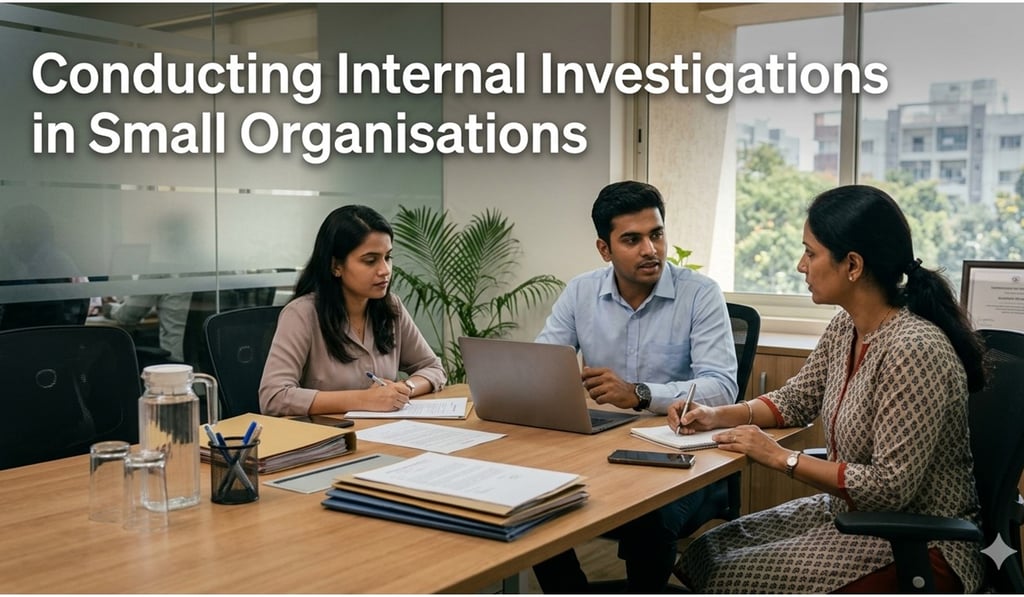
Internal investigations are often viewed as “big company” processes. In Indian SMEs, issues are usually handled informally, based on trust and proximity. However, when allegations involve misconduct, harassment, fraud, or serious disputes, informality becomes a risk.
This article explains how HR in small organisations can conduct simple, fair, and defensible internal investigations — without turning them into legal trials or ignoring principles of natural justice.
What Triggers an Internal Investigation in SMEs
Not every complaint requires an investigation. HR should consider investigation when there are:
Allegations of serious misconduct
Repeated complaints against the same employee
Complaints involving managers or founders
Issues with legal or reputational impact
POSH-related or integrity-related concerns
The goal is fact-finding, not fault-finding.
Why SMEs Struggle With Investigations
Common challenges include:
Close personal relationships affecting neutrality
Pressure from founders or senior managers
Fear of escalation or legal exposure
No clarity on process or documentation
Attempting “quick fixes” without evidence
HR’s role is to introduce process discipline without bureaucracy.
Principles of a Fair Investigation
Even in small organisations, investigations must follow basic fairness.
Key principles include:
Neutrality – investigator should not be involved in the incident
Confidentiality – restrict information strictly on need-to-know basis
Opportunity to be heard – both sides must explain
Evidence-based conclusions – not assumptions or opinions
Timeliness – avoid unnecessary delays
These principles protect the organisation and HR personally.
Step-by-Step Investigation Approach for SMEs
A practical SME-friendly investigation flow:
Receive complaint and acknowledge it
Decide if investigation is required
Appoint an internal investigator (or external, if needed)
Collect statements and evidence
Conduct interviews objectively
Prepare findings and recommendations
Management decides on action
HR should manage the process end-to-end.
Who Should Act as Investigator in Small Organisations
Ideal investigator options in SMEs:
HR Head or senior HR professional
Neutral senior manager not connected to parties
External HR consultant or advisor (for sensitive cases)
Avoid appointing direct reporting managers or founders as investigators.
Documentation and Records
Investigation documentation should be adequate, not excessive.
Maintain records of:
Complaint or trigger note
Interview summaries
Evidence reviewed
Investigation findings
Final decision note
These records are critical if actions are later questioned.
Conclusion
Internal investigations in SMEs do not need legal theatrics — but they must be fair, neutral, and documented. A simple investigation framework helps HR handle difficult situations calmly, protects leadership from impulsive decisions, and reinforces organisational credibility.
Checklist: Conducting Internal Investigations in SMEs
🗹 Assess whether investigation is actually required
🗹 Appoint a neutral investigator
🗹 Maintain confidentiality throughout
🗹 Give all parties a fair hearing
🗹 Base findings on facts and evidence
🗹 Document each stage of the process
🗹 Separate investigation findings from final decision
🗹 Close the case formally and clearly
Simple Internal Investigation Framework for SMEs
Conclusion--
Effective labour law compliance depends on how well HR operations, payroll, and business processes work together. When compliance is embedded into everyday workflows, organisations reduce risk, improve accuracy, and build sustainable governance systems. HR teams that prioritise integration over isolation are better positioned to manage compliance confidently and consistently.
HireDesk India © 2026 | All Rights Reserved
"Thoughtful guidance for everyday HR"


Quick Links
Topics
Connect
_______________________________________________________________________________________________________________________________________________________________________________________
HireDesk is a free HR knowledge platform focused on practical, India-specific workplace guidance. We help HR professionals, managers, and learners navigate people practices with clarity, responsibility, and real-world relevance.