
Crafting a Meaningful Employee Value Proposition (EVP) for the Indian Talent Market
EMPLOYEE EXPERIENCE & CULTURE
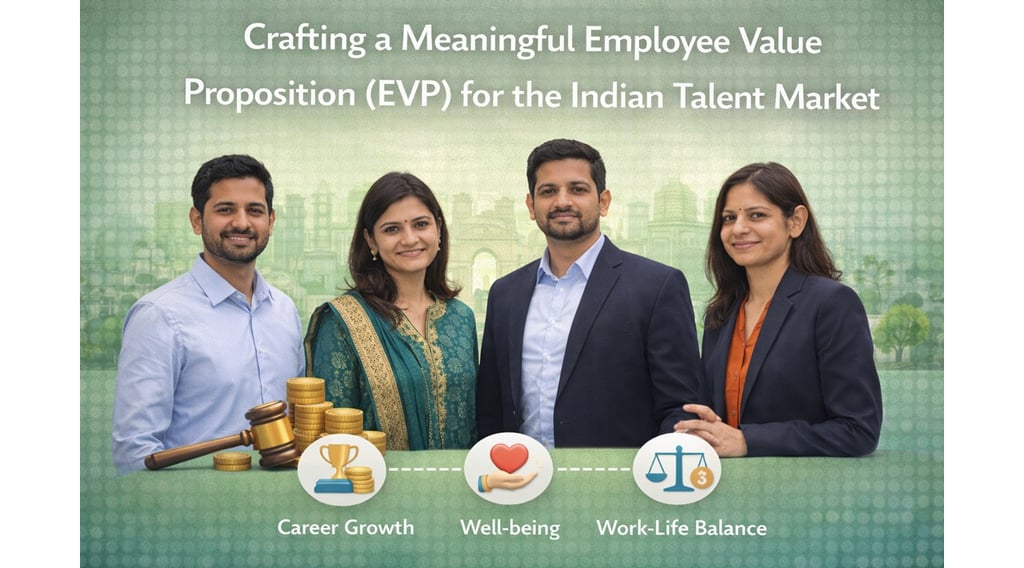
In India’s competitive talent market, many organisations talk about EVP, but few define it clearly. EVPs often exist as attractive statements on career pages, disconnected from the actual employee experience.
A meaningful EVP reflects what employees genuinely experience at work — not what organisations wish to project. This article explains how HR can craft an EVP that is realistic, credible, and relevant to Indian workplaces.
What EVP Really Means in Indian Context
An EVP is the total set of experiences, benefits, and expectations that shape why employees join, stay, and perform.
In Indian organisations, EVP typically includes:
Job security and growth prospects
Manager quality and leadership behaviour
Fairness, respect, and stability
Learning and career progression
Work-life balance within cultural realities
EVP is not a slogan — it is a promise tested daily.
Why EVPs Fail in Practice
Common reasons EVPs fail include:
Copying global or competitor messaging
Overpromising on flexibility or growth
Misalignment between HR and business leaders
Ignoring ground realities of operations
Not involving managers in delivery
When EVP and reality differ, trust erodes quickly.
Building Blocks of a Strong Indian EVP
A credible EVP should be built on:
Actual employee experience data
Consistent manager behaviour
Clear career and skill pathways
Transparent rewards and recognition
Respectful workplace practices
HR must validate every EVP element against real practices.
HR’s Role in Designing and Sustaining EVP
HR’s responsibilities include:
Gathering honest employee feedback
Aligning EVP with culture and values
Translating EVP into policies and practices
Enabling managers to deliver EVP daily
Reviewing EVP as the organisation evolves
EVP ownership is ongoing, not a one-time project.
EVP Beyond Hiring and Branding
EVP should guide:
Onboarding experience
Performance and development conversations
Recognition practices
Leadership behaviour
Exit and alumni experience
When EVP shapes internal decisions, it becomes authentic.
Conclusion
A meaningful EVP in India is built through consistency, honesty, and everyday delivery. Organisations do not need flashy promises — they need credible ones.
HR’s role is to ensure the EVP reflects lived experience and evolves responsibly as the business grows.
HR Checklist: Crafting a Credible EVP
🗹 Base EVP on real employee experience data
🗹 Avoid copying generic or global messaging
🗹 Align EVP with culture and leadership behaviour
🗹 Ensure managers understand their EVP role
🗹 Translate EVP into policies and processes
🗹 Review EVP regularly as organisation evolves
🗹 Communicate EVP clearly and consistently
🗹 Validate EVP against actual employee feedback
EVP Elements and Practical Validation
Conclusion--
Effective labour law compliance depends on how well HR operations, payroll, and business processes work together. When compliance is embedded into everyday workflows, organisations reduce risk, improve accuracy, and build sustainable governance systems. HR teams that prioritise integration over isolation are better positioned to manage compliance confidently and consistently.
HireDesk India © 2026 | All Rights Reserved
"Thoughtful guidance for everyday HR"


Quick Links
Topics
Connect
_______________________________________________________________________________________________________________________________________________________________________________________
HireDesk is a free HR knowledge platform focused on practical, India-specific workplace guidance. We help HR professionals, managers, and learners navigate people practices with clarity, responsibility, and real-world relevance.