
Creating an Employee Handbook for Indian SMEs
SME HR OPERATIONS
Introduction--
Once a candidate accepts an offer, the period between acceptance and joining becomes a critical phase in the recruitment lifecycle. This pre-joining window influences whether a candidate actually joins, how prepared they feel on Day One, and how quickly they settle into the organisation. For HR, effective pre-joining engagement and onboarding planning are essential to convert offers into confident, committed employees.
This article outlines practical approaches HR teams can adopt to manage pre-joining engagement and establish strong onboarding foundations—without overcomplicating the process.
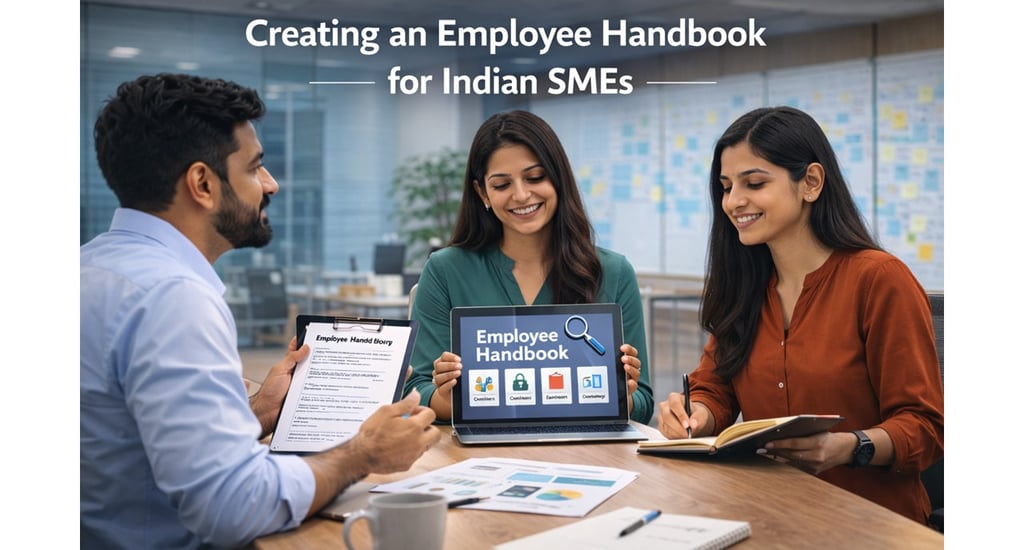
In many Indian SMEs, policies exist in bits and pieces — an appointment letter here, a WhatsApp instruction there, and verbal rules passed down by managers. This lack of clarity often leads to confusion, inconsistent decisions, and avoidable employee disputes.
An employee handbook helps SMEs bring structure, consistency, and transparency to people practices. It does not need to be legal-heavy or corporate in tone. A well-designed SME handbook simply explains “how things work here” in clear language. This article explains how Indian SMEs can create a practical, usable employee handbook.
Why SMEs Need an Employee Handbook
For SMEs, an employee handbook serves multiple purposes:
Sets clear expectations for employees
Reduces dependency on verbal instructions
Supports fair and consistent HR decisions
Acts as a reference during disputes or audits
Builds credibility and professionalism
Most SME conflicts arise not due to bad intent, but due to unclear rules.
What an SME Employee Handbook Is (and Is Not)
An employee handbook is:
A guidance document
A summary of policies and practices
Written in simple, understandable language
It is not:
A replacement for employment contracts
A legal treatise
A rigid rulebook with no flexibility
The tone should be informative, not threatening.
Core Sections Every SME Handbook Should Include
Indian SMEs should focus on essential sections only, such as:
Organisation overview and values
Employment basics (working hours, attendance, leave)
Compensation and payroll basics
Statutory benefits overview
Workplace conduct and discipline
POSH and grievance mechanism
Exit and separation basics
Avoid adding policies that the organisation cannot realistically follow.
Aligning the Handbook with Indian Laws
While drafting the handbook, SMEs should ensure alignment with:
Shops and Establishments Act (state-specific)
Minimum Wages and Payment of Wages laws
EPF, ESI, Gratuity applicability
POSH Act requirements
The handbook should reflect current practice and compliance, not aspirational policies.
Keeping the Handbook Practical and SME-Friendly
To make the handbook effective:
Use plain Indian English
Avoid legal jargon
Explain intent, not just rules
Allow room for managerial discretion
Keep it concise and readable
A 15–20 page handbook is usually sufficient for most SMEs.
HR’s Role in Managing the Handbook
HR should act as the owner and custodian of the handbook by:
Drafting and updating content periodically
Ensuring alignment with actual practices
Rolling it out during onboarding
Obtaining employee acknowledgements
A handbook that is not communicated has little value.
Updating and Revising the Handbook
SMEs should review the handbook:
When laws change
When business practices evolve
When new risks emerge
Version control and clear communication of changes are important.
Conclusion
For Indian SMEs, an employee handbook is a stability tool, not a formality. By documenting key policies in simple language and aligning them with actual practices, SMEs can reduce disputes, improve consistency, and create a more predictable work environment — without over-complicating HR.
Checklist: Creating an Effective Employee Handbook for SMEs
🗹 Define the purpose and scope of the handbook
🗹 Include only policies relevant to current SME operations
🗹 Align content with Indian labour laws
🗹 Use clear, simple, non-legal language
🗹 Cover conduct, leave, payroll, and grievance basics
🗹 Include POSH and disciplinary principles
🗹 Obtain employee acknowledgements
🗹 Review and update periodically
Essential Sections of an SME Employee Handbook
Conclusion--
Effective labour law compliance depends on how well HR operations, payroll, and business processes work together. When compliance is embedded into everyday workflows, organisations reduce risk, improve accuracy, and build sustainable governance systems. HR teams that prioritise integration over isolation are better positioned to manage compliance confidently and consistently.
HireDesk India © 2026 | All Rights Reserved
"Thoughtful guidance for everyday HR"


Quick Links
Topics
Connect
_______________________________________________________________________________________________________________________________________________________________________________________
HireDesk is a free HR knowledge platform focused on practical, India-specific workplace guidance. We help HR professionals, managers, and learners navigate people practices with clarity, responsibility, and real-world relevance.