
Creating Inclusive Festive and Celebration Practices in Diverse Indian Teams
EMPLOYEE EXPERIENCE & CULTURE
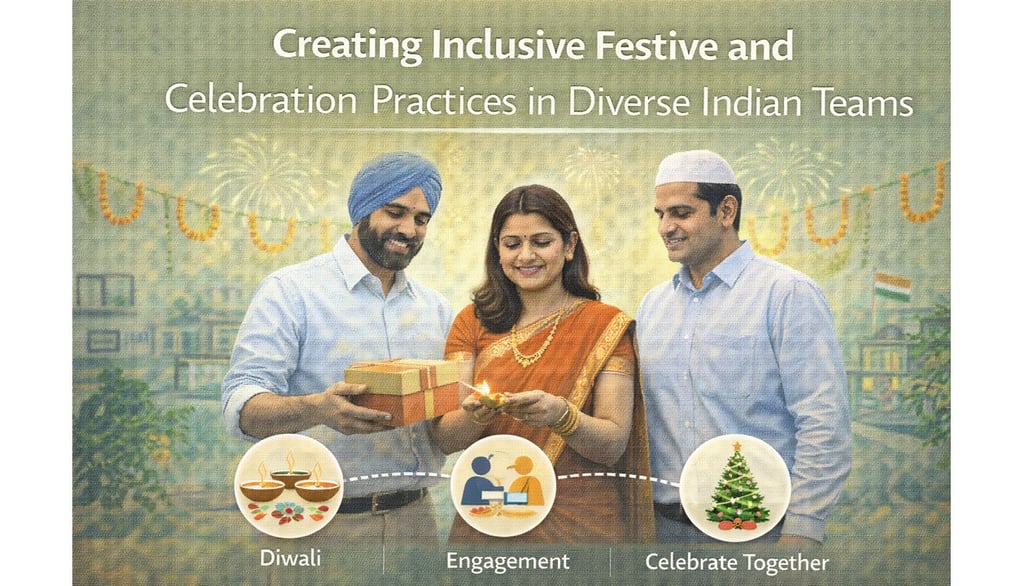
Festivals and celebrations are a major part of Indian life, and workplaces often embrace them to boost engagement and camaraderie. However, in culturally diverse Indian teams, traditional celebrations can unintentionally exclude certain employees or make participation feel compulsory rather than voluntary.
Creating inclusive celebration practices ensures that festivities enhance engagement, respect diversity, and reinforce culture without creating discomfort. This article outlines how HR can design celebrations that are meaningful and inclusive.
Why Celebrations Can Exclude
Exclusion in workplace celebrations usually happens subtly:
Emphasising one cultural or religious festival over others
Expecting everyone to participate or contribute
Offering celebrations that conflict with personal beliefs or commitments
Overlooking regional, generational, or lifestyle differences
Even well-intentioned events can create feelings of marginalisation if not thoughtfully planned.
Principles of Inclusive Celebrations
Inclusive workplace celebrations follow a few core principles:
Voluntary participation: Employees should feel free to join or abstain
Respect for diversity: All religious, regional, and cultural practices are acknowledged
Neutral activities: Focus on shared values, team spirit, and fun
Equity of recognition: No individual or group is prioritised unfairly
When principles are embedded, celebrations strengthen culture rather than alienate employees.
HR’s Role in Planning and Implementation
HR acts as both enabler and guardian of inclusivity:
Map team diversity before planning events
Rotate festivals and celebrations to represent different groups
Seek input from employees to design activities
Set guidelines for budget, participation, and conduct
Train managers to observe inclusion and prevent subtle bias
Inclusion is sustained when celebrations are structured, not left to ad hoc choices.
Practical Ideas for Inclusive Celebrations
Effective and realistic measures for Indian workplaces:
Celebrate festivals across religions and regions on rotation
Encourage voluntary potlucks with diverse food options
Focus on team-building games and recognition rather than only rituals
Send digital greetings for festivals not celebrated in-office
Acknowledge and appreciate personal milestones (birthdays, work anniversaries)
Small, consistent practices make every employee feel valued.
Balancing Tradition and Modern Work Practices
HR should ensure celebrations do not:
Disrupt core business activities
Pressure employees to participate financially or socially
Create divisions between groups
Clear communication about optional participation and purpose prevents resentment.
Conclusion
Festive and celebration practices are powerful tools for culture-building in Indian teams, but they must be inclusive. HR’s responsibility is to create a framework where festivities celebrate diversity, foster connection, and respect individual choices.
Inclusion in celebration is inclusion in culture.
HR Checklist: Inclusive Celebrations
🗹 Map team cultural, religious, and regional diversity
🗹 Rotate festivals and celebrations to represent different groups
🗹 Ensure participation is voluntary and respectful
🗹 Include activities that foster team spirit over ritual
🗹 Offer diverse food, greetings, and event formats
🗹 Communicate clear guidelines for conduct and budget
🗹 Train managers on inclusive facilitation
🗹 Recognise personal milestones alongside festivals
Inclusive Celebration Practices and HR Guidelines
Conclusion--
Effective labour law compliance depends on how well HR operations, payroll, and business processes work together. When compliance is embedded into everyday workflows, organisations reduce risk, improve accuracy, and build sustainable governance systems. HR teams that prioritise integration over isolation are better positioned to manage compliance confidently and consistently.
HireDesk India © 2026 | All Rights Reserved
"Thoughtful guidance for everyday HR"


Quick Links
Topics
Connect
_______________________________________________________________________________________________________________________________________________________________________________________
HireDesk is a free HR knowledge platform focused on practical, India-specific workplace guidance. We help HR professionals, managers, and learners navigate people practices with clarity, responsibility, and real-world relevance.