
Culture in Hybrid and Remote Teams: What Must Change for Indian Organisations
EMPLOYEE EXPERIENCE & CULTURE
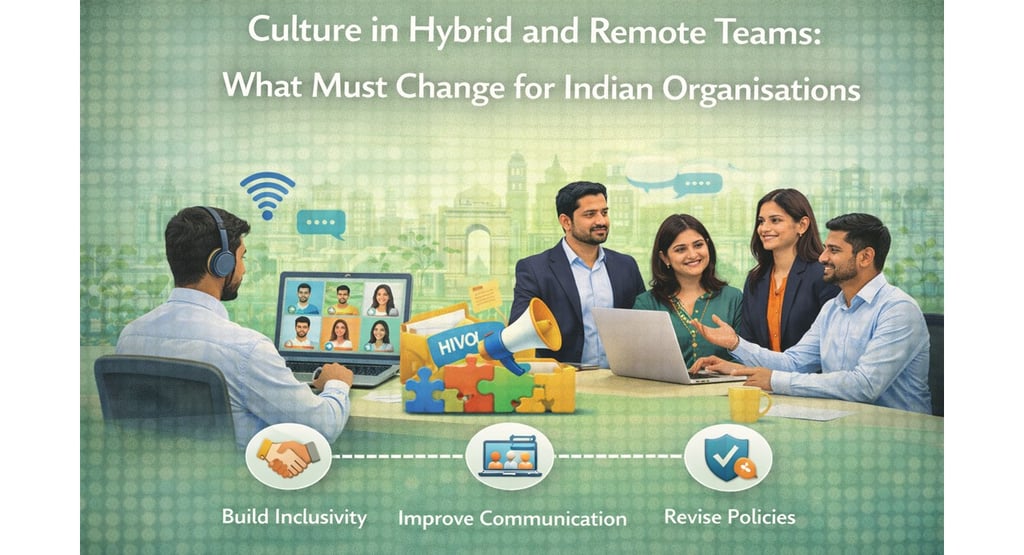
Hybrid and remote work are now a permanent feature of many Indian organisations. However, simply allowing employees to work from home does not automatically create a healthy culture. In many cases, old management habits and control-oriented practices have carried over into virtual settings, creating confusion, fatigue, and disengagement.
This article explains what must change for Indian organisations to build a strong, trust-based culture in hybrid and remote teams.
Why Traditional Culture Practices Fail in Remote Settings
Common challenges include:
Over-monitoring and micromanagement
Lack of clarity on availability and output
Reduced informal communication and bonding
Bias towards employees seen in office
Uneven manager capability in remote leadership
Without deliberate change, hybrid work amplifies existing cultural weaknesses.
What Must Change in Manager Behaviour
Culture in hybrid teams is shaped largely by managers:
Shift focus from hours to outcomes
Communicate expectations clearly
Respect boundaries and time zones
Build regular check-ins, not constant follow-ups
Treat remote and on-site employees equitably
Managers must be trained to lead without physical presence.
HR’s Role in Enabling Hybrid Culture
HR should move from policy-setting to behaviour-shaping:
Define hybrid work principles and norms
Coach managers on remote leadership skills
Design inclusive communication practices
Address proximity bias actively
Use feedback and data to refine practices
Hybrid culture succeeds only when HR intervenes early and consistently.
Practical Cultural Practices That Work
India-relevant, practical measures include:
Clear availability and response-time norms
Structured team rituals and virtual touchpoints
Transparent goal-setting and tracking
Inclusive meeting practices for remote participants
Regular pulse check-ins and feedback
Discipline and consistency matter more than tools.
Managing Trust and Accountability
Trust is the foundation of hybrid culture:
Avoid excessive surveillance tools
Set clear deliverables and timelines
Encourage open conversations about challenges
Address underperformance directly, not indirectly
Reinforce trust through leadership behaviour
Control weakens culture; clarity strengthens it.
Conclusion
Hybrid and remote work require Indian organisations to rethink how culture is built and sustained. HR’s role is to guide this shift by redefining norms, enabling managers, and ensuring fairness across work modes.
When trust, clarity, and inclusion are prioritised, hybrid culture becomes a strength rather than a risk.
HR Checklist: Strengthening Culture in Hybrid and Remote Teams
🗹 Define clear hybrid work principles and norms
🗹 Train managers in remote leadership
🗹 Shift performance focus to outcomes
🗹 Address proximity bias proactively
🗹 Standardise communication and meeting practices
🗹 Respect boundaries and time zones
🗹 Use feedback to refine hybrid practices
🗹 Reinforce trust through leadership behaviour
Hybrid Culture Challenges and HR Responses
Conclusion--
Effective labour law compliance depends on how well HR operations, payroll, and business processes work together. When compliance is embedded into everyday workflows, organisations reduce risk, improve accuracy, and build sustainable governance systems. HR teams that prioritise integration over isolation are better positioned to manage compliance confidently and consistently.
HireDesk India © 2026 | All Rights Reserved
"Thoughtful guidance for everyday HR"


Quick Links
Topics
Connect
_______________________________________________________________________________________________________________________________________________________________________________________
HireDesk is a free HR knowledge platform focused on practical, India-specific workplace guidance. We help HR professionals, managers, and learners navigate people practices with clarity, responsibility, and real-world relevance.