
Data Privacy and Ethics in HR Technology: What HR Must Safeguard
HR TECH & ANALYTICS
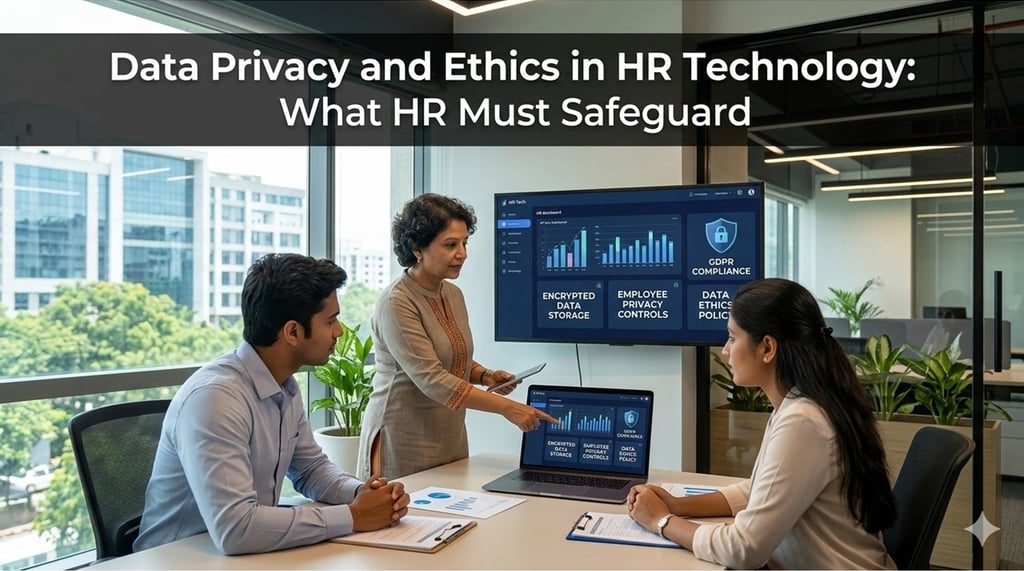
As HR functions increasingly rely on technology, analytics, and automation, the volume and sensitivity of employee data handled by HR have grown significantly. In Indian organisations, HR teams are custodians of personal, financial, health-related, and performance data, making data privacy and ethical usage critical responsibilities.
Beyond legal compliance, responsible handling of employee data directly affects trust, credibility, and organisational culture. This article outlines the importance of data privacy and ethics in HR technology, common risks, and practical safeguards HR must put in place.
Understanding HR Data and Its Sensitivity
HR data includes a wide range of information, such as:
Personal and demographic details
Payroll and statutory records
Performance appraisals and disciplinary records
Health and wellbeing-related information
Learning and career progression data
This data, if mishandled, can lead to legal exposure, reputational damage, and loss of employee trust.
Why Data Privacy and Ethics Matter in Indian Organisations
In the Indian context, organisations often operate with:
Large, diverse, and distributed workforces
Multiple HR systems and vendors
Varying levels of digital maturity
HR must therefore ensure that data is:
Collected for legitimate purposes
Used only for defined HR and business objectives
Accessible strictly on a need-to-know basis
Ethical data practices help reinforce fairness and transparency in HR decisions.
Common Privacy and Ethical Risks in HR Technology
HR teams should be alert to risks such as:
Excessive data collection without clear purpose
Inadequate access controls
Unclear communication on how data is used
Over-reliance on automated recommendations
Sharing data with third parties without adequate safeguards
Ethical risks often arise not from intent, but from lack of clarity and governance.
HR’s Role in Safeguarding Data Privacy and Ethics
HR plays a central role in:
Defining data usage policies and standards
Partnering with IT and legal teams on data protection measures
Reviewing HR technology vendors for compliance and security
Ensuring transparency with employees
Intervening when technology-driven decisions raise fairness concerns
HR must balance technological efficiency with human judgement and ethical responsibility.
Practical Safeguards HR Should Implement
Limit data collection to what is necessary
Clearly define access rights and approval mechanisms
Maintain accurate and up-to-date records
Regularly audit HR systems and data usage
Provide training to HR teams and managers on data handling
Establish escalation mechanisms for ethical concerns
These safeguards reduce risk and build employee confidence in HR systems.
Measuring Effectiveness of Data Privacy Practices
HR can assess effectiveness through:
Reduction in data incidents or breaches
Audit findings and compliance reviews
Employee feedback and trust indicators
Adherence to internal data governance standards
Success lies in consistent practice, not one-time compliance efforts.
Conclusion
Data privacy and ethics are foundational to responsible HR technology adoption. As Indian organisations continue to use analytics, AI, and automation, HR must ensure that employee data is protected, used fairly, and handled transparently.
By embedding ethical considerations into HR processes and decisions, HR can reinforce trust, ensure compliance, and support sustainable use of technology in people management.
Checklist: Data Privacy and Ethics in HR Technology
🗹 Identify all types of employee data collected across HR systems.
🗹 Define clear purposes for collecting and using each data type.
🗹 Restrict data access based on role and necessity.
🗹 Ensure HR technology vendors meet security and privacy standards.
🗹 Communicate transparently with employees about data usage.
🗹 Retain human oversight over technology-driven decisions.
🗹 Train HR teams and managers on responsible data handling.
🗹 Regularly review and audit HR data practices.
🗹 Establish clear escalation paths for privacy or ethical concerns.
Sample Table: HR Data Types and Privacy Safeguards
Conclusion--
Effective labour law compliance depends on how well HR operations, payroll, and business processes work together. When compliance is embedded into everyday workflows, organisations reduce risk, improve accuracy, and build sustainable governance systems. HR teams that prioritise integration over isolation are better positioned to manage compliance confidently and consistently.
HireDesk India © 2026 | All Rights Reserved
"Thoughtful guidance for everyday HR"


Quick Links
Topics
Connect
_______________________________________________________________________________________________________________________________________________________________________________________
HireDesk is a free HR knowledge platform focused on practical, India-specific workplace guidance. We help HR professionals, managers, and learners navigate people practices with clarity, responsibility, and real-world relevance.