
Demand Forecasting and HR Inputs
WORKFORCE PLANNING & MANPOWER
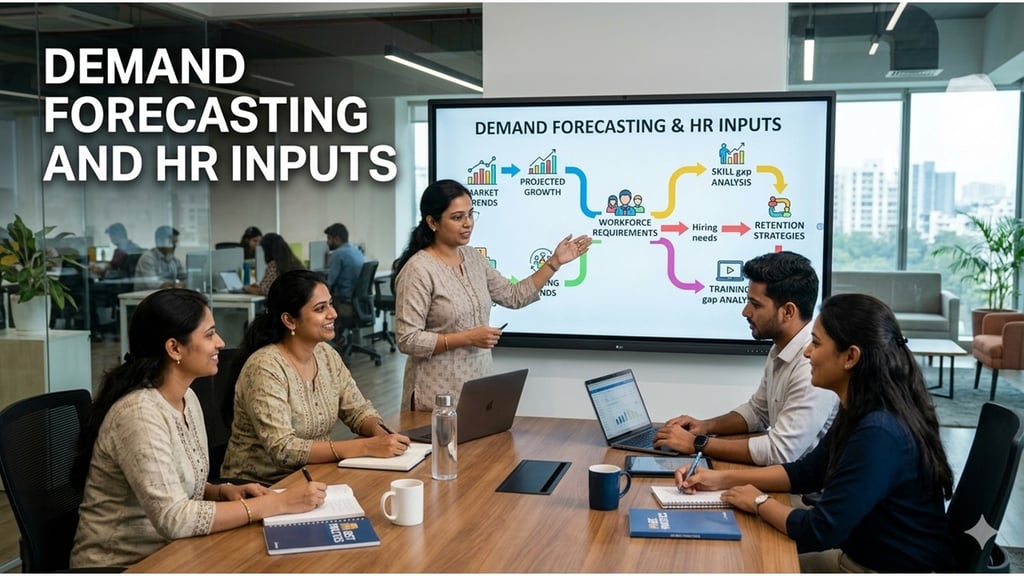
Organisations make workforce decisions based on anticipated demand for products, services, or projects. Accurate demand forecasting requires collaboration between business units and HR, as workforce availability and skills are key enablers of business plans.
For HR professionals, understanding what inputs to provide and how to interpret workforce data is essential for aligning manpower planning with organisational needs.
What Is Demand Forecasting in Workforce Planning?
Demand forecasting is the process of estimating the future workforce requirements to meet business objectives. It goes beyond headcount—it includes skills, capabilities, location, and timing.
HR provides critical inputs, ensuring that the organisation has the right people, with the right skills, in the right roles, at the right time.
HR Inputs That Support Demand Forecasting
1. Current Workforce Profile
HR provides data on:
Headcount by function, role, and location
Skills, experience, and qualifications
Career progression and promotion timelines
This forms the baseline for forecasting additional requirements.
2. Attrition Trends
Analysis of past voluntary and involuntary exits helps forecast potential gaps in the workforce.
Average tenure by role
Exit reasons and patterns
Impact of seasonal or project-based turnover
3. Internal Mobility and Succession Planning
HR insights on internal candidates available for redeployment or promotion help reduce reliance on external hiring.
Successor readiness
Internal transfer history
Training plans for role transitions
4. Recruitment Pipelines
Information on ongoing recruitment and talent acquisition timelines informs realistic workforce availability.
Open requisitions and time-to-fill
Candidate quality and offer acceptance rates
5. Skill Availability and Gaps
HR tracks the organisation’s skills inventory and identifies shortages that could affect future demand.
Core technical or functional skills
Emerging skills required by the business
Gap analysis reports
Light Checklist: HR Inputs for Demand Forecasting
☐ Current workforce profile reviewed and updated
☐ Attrition trends analysed by role and function
☐ Internal mobility and succession pipelines considered
☐ Recruitment status and timelines documented
☐ Skill gaps identified and aligned with business forecasts
Sample Table: HR Inputs for Demand Forecasting
Common Challenges
Incomplete or outdated HR data
Lack of coordination with business teams
Underestimating skill or geographic requirements
Forecasting without considering internal mobility potential
Addressing these challenges improves accuracy and relevance of demand forecasts.
Conclusion
HR plays a vital role in demand forecasting by providing accurate workforce data and insights. By integrating HR inputs such as skills, attrition, internal mobility, and recruitment pipelines, organisations can make informed manpower decisions aligned with business needs.
Effective HR contribution ensures workforce planning is strategic, proactive, and responsive to organisational goals.
Conclusion--
Effective labour law compliance depends on how well HR operations, payroll, and business processes work together. When compliance is embedded into everyday workflows, organisations reduce risk, improve accuracy, and build sustainable governance systems. HR teams that prioritise integration over isolation are better positioned to manage compliance confidently and consistently.
HireDesk India © 2026 | All Rights Reserved
"Thoughtful guidance for everyday HR"


Quick Links
Topics
Connect
_______________________________________________________________________________________________________________________________________________________________________________________
HireDesk is a free HR knowledge platform focused on practical, India-specific workplace guidance. We help HR professionals, managers, and learners navigate people practices with clarity, responsibility, and real-world relevance.