
Designing Effective Performance Review Cycles
PERFORMANCE & DEVELOPMENT

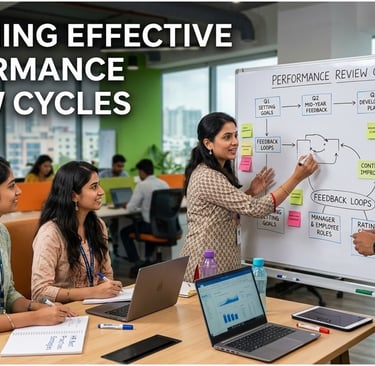
A well-structured performance review cycle ensures that performance management is consistent, predictable, and meaningful for both employees and managers. Poorly designed cycles can lead to rushed evaluations, unclear feedback, and disengagement.
This article outlines how Indian organisations can design effective performance review cycles that balance business needs, manager bandwidth, and employee development.
Why the Design of Review Cycles Matters
Performance review cycles influence:
Timeliness of feedback
Employee engagement and trust
Manager workload and effectiveness
Alignment with organisational goals
A well-timed, structured cycle ensures that performance management is not a once-a-year exercise but a continuous developmental process.
Key Considerations in Designing Performance Review Cycles
1. Cycle Frequency
Annual, biannual, or quarterly reviews should be determined based on role type and organisational complexity.
High-paced roles may benefit from more frequent check-ins, while stable operational roles may follow an annual review cycle.
2. Integration with Business Calendar
Align review cycles with business events like:
Budget planning
Promotions and compensation cycles
Strategic goal updates
This ensures performance outcomes influence organisational decisions in a timely manner.
3. Balance Between Formal and Informal Reviews
Formal reviews: Structured, documented, ratings-based
Informal reviews: Frequent, conversational, developmental
Balancing both prevents bottlenecks and supports continuous feedback.
4. Manager Preparedness
Managers must have sufficient time to prepare and conduct meaningful reviews.
Training on feedback delivery, rating calibration, and bias minimisation is essential.
5. Employee Engagement
Employees should understand the timeline, process, and expectations for reviews.
Transparency improves participation and reduces anxiety.
Sample View: Performance Review Cycle Design
Checklist: Effective Review Cycle Design
☐ Cycle frequency suits role type and business pace
☐ Review cycle aligns with organisational events
☐ Formal and informal reviews are balanced
☐ Managers are trained and prepared
☐ Employees are informed about expectations and timeline
☐ HR monitors and governs adherence to the schedule
Role of HR
HR ensures:
Review cycles are systematic and documented
Manager capacity is adequate
Rating consistency is maintained across teams
Feedback processes are smooth and unbiased
HR is the guardian of cycle integrity, ensuring that business and people objectives are aligned.
Key Takeaway
Designing an effective performance review cycle is more than scheduling evaluations. It requires alignment with business rhythm, manager readiness, and employee clarity to make performance management a meaningful and developmental process.
Conclusion--
Effective labour law compliance depends on how well HR operations, payroll, and business processes work together. When compliance is embedded into everyday workflows, organisations reduce risk, improve accuracy, and build sustainable governance systems. HR teams that prioritise integration over isolation are better positioned to manage compliance confidently and consistently.
HireDesk India © 2026 | All Rights Reserved
"Thoughtful guidance for everyday HR"


Quick Links
Topics
Connect
_______________________________________________________________________________________________________________________________________________________________________________________
HireDesk is a free HR knowledge platform focused on practical, India-specific workplace guidance. We help HR professionals, managers, and learners navigate people practices with clarity, responsibility, and real-world relevance.