
Designing Performance Frameworks for Indian Organisations
PERFORMANCE & DEVELOPMENT
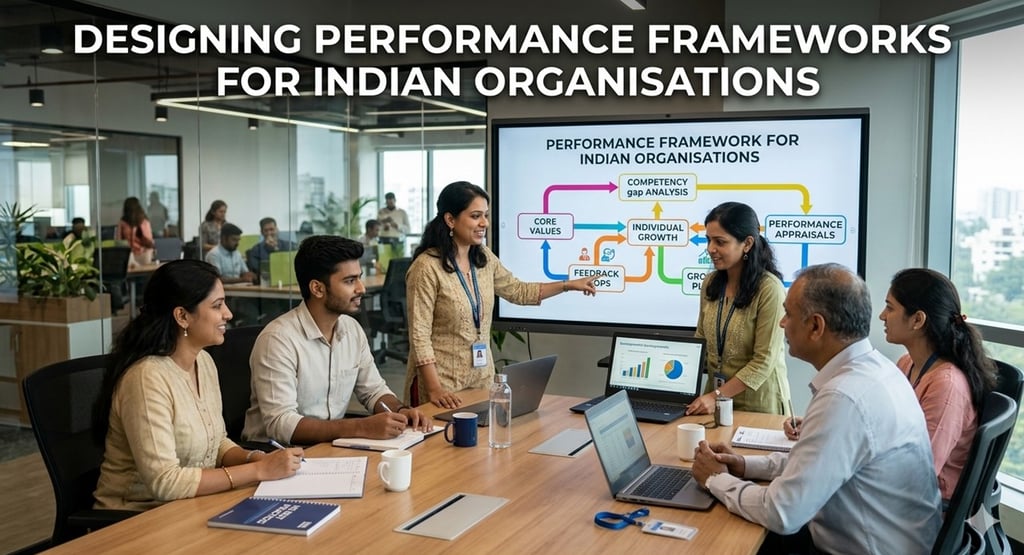
A performance framework provides the structure for measuring, managing, and improving employee performance. In Indian organisations, frameworks must balance business goals, cultural nuances, and employee development needs. A well-designed framework aligns individual efforts with organisational priorities, ensures fairness, and supports continuous learning.
Key Elements of a Performance Framework
Goal Setting: Clearly defined objectives linked to business strategy.
Competency Mapping: Identifying skills and behaviours expected for each role.
Measurement Criteria: Defining metrics for performance evaluation.
Feedback Mechanisms: Channels for ongoing communication and coaching.
Development Planning: Linking performance outcomes with training and career growth.
Governance: Ensuring consistency, transparency, and accountability.
Light Checklist: Implementing a Performance Framework
☐ Organisational objectives are clearly reflected in employee goals
☐ Role-specific competencies are documented and communicated
☐ Evaluation metrics are measurable, realistic, and consistent
☐ Managers are trained to provide regular feedback
☐ Development plans are linked to performance outcomes
☐ Review cycles and governance are defined and enforced
Sample Table: Framework Components Overview
Closing Note
A robust performance framework ensures that Indian organisations can align strategy, measure outcomes, and support employee development. By combining structured goals, competency mapping, continuous feedback, and transparent governance, organisations can create a culture of high performance and engagement.
Conclusion--
Effective labour law compliance depends on how well HR operations, payroll, and business processes work together. When compliance is embedded into everyday workflows, organisations reduce risk, improve accuracy, and build sustainable governance systems. HR teams that prioritise integration over isolation are better positioned to manage compliance confidently and consistently.
HireDesk India © 2026 | All Rights Reserved
"Thoughtful guidance for everyday HR"


Quick Links
Topics
Connect
_______________________________________________________________________________________________________________________________________________________________________________________
HireDesk is a free HR knowledge platform focused on practical, India-specific workplace guidance. We help HR professionals, managers, and learners navigate people practices with clarity, responsibility, and real-world relevance.