
Digital Recruitment Tools: Enhancing Hiring Efficiency
HR TECH & ANALYTICS
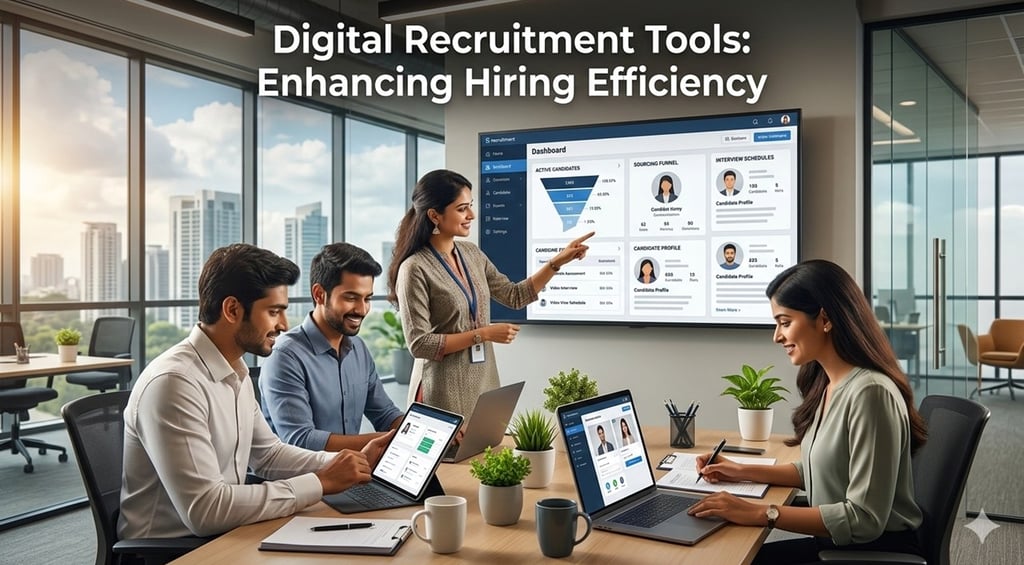
Recruitment has evolved significantly with the adoption of digital tools. For HR teams in Indian organisations, digital recruitment tools help manage high volumes of candidates, improve process consistency, and reduce manual effort. When used thoughtfully, these tools enhance hiring efficiency without replacing human judgement.
This article explains what digital recruitment tools are, how they are used in India, and the role HR plays in ensuring their effective adoption.
What Are Digital Recruitment Tools?
Digital recruitment tools are technology-enabled systems that support different stages of the hiring process. Common examples include:
Applicant Tracking Systems (ATS)
Online job portals and career pages
Resume screening tools
Interview scheduling platforms
Video interviewing solutions
Candidate assessment tools
These tools help HR teams manage applications, track hiring progress, and maintain structured recruitment records.
Why Indian Organisations Are Adopting Digital Hiring Tools
In the Indian context, recruitment often involves:
High applicant volumes
Multiple locations and business units
Diverse skill requirements
Tight hiring timelines
Digital recruitment tools support Indian organisations by:
Streamlining resume shortlisting
Reducing manual tracking and follow-ups
Improving coordination between HR and hiring managers
Ensuring documentation and audit readiness
Supporting scalability during expansion or seasonal hiring
For growing organisations, these tools help maintain process discipline even as hiring volumes increase.
Key Areas Where Digital Tools Improve Hiring Efficiency
1. Application Management
Applicant Tracking Systems centralise all applications, making it easier to search, filter, and shortlist candidates based on defined criteria.
2. Faster Shortlisting
Basic screening tools help reduce time spent on unsuitable profiles, allowing HR to focus on relevant candidates.
3. Interview Coordination
Automated scheduling reduces back-and-forth communication between candidates, HR, and interviewers.
4. Candidate Communication
Email templates and status updates ensure timely communication, improving the candidate experience.
5. Recruitment Reporting
Hiring data such as time-to-fill, source effectiveness, and offer acceptance rates become easier to track and analyse.
Role of HR in Using Recruitment Technology Effectively
HR plays a critical role in ensuring that recruitment tools add value rather than complexity.
Key HR responsibilities include:
Defining hiring workflows before selecting tools
Ensuring recruitment criteria are fair and job-relevant
Training hiring managers on system usage
Monitoring data accuracy and system discipline
Interpreting recruitment data, not just generating reports
Technology should support HR decisions, not replace professional judgement.
Common Challenges in Digital Recruitment
Despite the benefits, HR teams often face challenges such as:
Overdependence on keyword-based screening
Poor configuration of ATS workflows
Low adoption by hiring managers
Inconsistent data entry
Treating technology as a substitute for candidate interaction
Addressing these challenges requires continuous review, user training, and clarity on recruitment objectives.
Responsible Use of Recruitment Data
Recruitment data contains sensitive personal information. HR teams must ensure:
Candidate data is accessed only for legitimate purposes
Information is stored securely
Communication about data usage is transparent
Selection decisions remain unbiased and compliant
Ethical handling of recruitment data builds trust and protects organisational credibility.
Measuring the Effectiveness of Digital Recruitment Tools
HR can assess tool effectiveness through:
Reduction in time-to-hire
Improvement in shortlist quality
Hiring manager satisfaction
Candidate experience feedback
Process consistency across roles and locations
Efficiency should be measured through outcomes, not just system features.
A Practical Approach for Indian HR Teams
For most Indian organisations, a phased and practical approach works best:
Start with core recruitment needs
Avoid overly complex tools
Focus on usability and adoption
Review processes regularly
Balance automation with personal engagement
Recruitment technology should simplify hiring, not distance HR from candidates.
Conclusion
Digital recruitment tools play an important role in enhancing hiring efficiency for Indian organisations. When aligned with clear processes and supported by HR oversight, they help manage scale, improve consistency, and support informed hiring decisions.
Ultimately, successful recruitment depends on the right balance between technology, human judgement, and organisational values.
Conclusion--
Effective labour law compliance depends on how well HR operations, payroll, and business processes work together. When compliance is embedded into everyday workflows, organisations reduce risk, improve accuracy, and build sustainable governance systems. HR teams that prioritise integration over isolation are better positioned to manage compliance confidently and consistently.
HireDesk India © 2026 | All Rights Reserved
"Thoughtful guidance for everyday HR"


Quick Links
Topics
Connect
_______________________________________________________________________________________________________________________________________________________________________________________
HireDesk is a free HR knowledge platform focused on practical, India-specific workplace guidance. We help HR professionals, managers, and learners navigate people practices with clarity, responsibility, and real-world relevance.