
Diversity, Equity, and Inclusion in Practice: An HR Perspective
EMPLOYEE EXPERIENCE & CULTURE
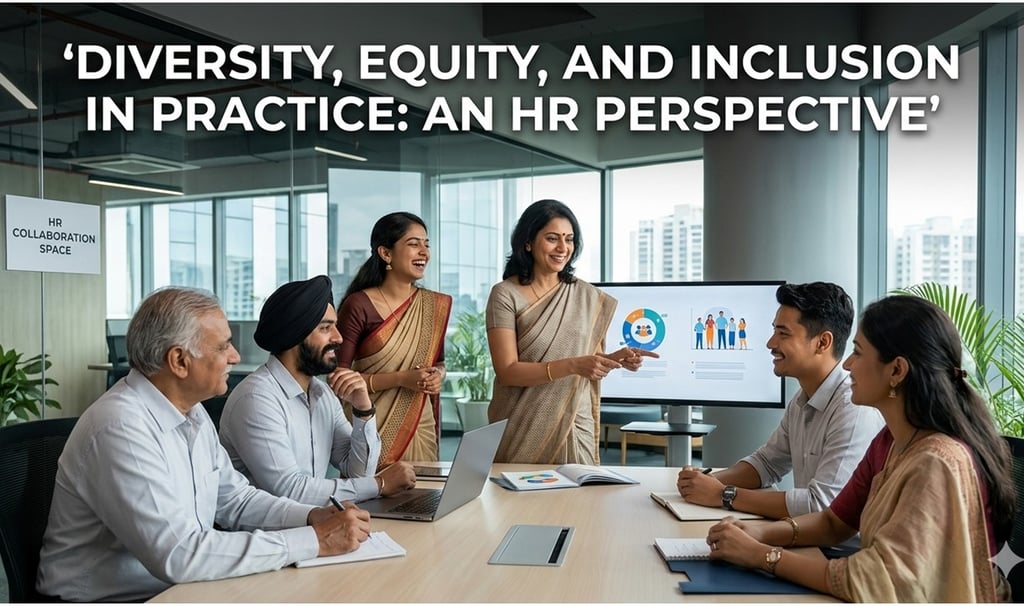
Diversity, Equity, and Inclusion (DEI) is often discussed in aspirational language, but its real impact is felt through everyday HR decisions, systems, and behaviours. In Indian workplaces, DEI must be approached with cultural sensitivity, legal awareness, and practical realism rather than imported frameworks or symbolic initiatives.
This article explains how HR can embed DEI into regular people practices without over-formalising or diluting its intent.
Understanding DEI Beyond Definitions
At a practical level:
Diversity relates to representation and differences
Equity focuses on fairness and access to opportunity
Inclusion reflects how safe and valued employees feel
DEI is not a standalone program—it is reflected in how work actually happens.
Where HR Influences DEI Most
HR shapes DEI through routine processes such as:
Hiring and selection decisions
Performance assessments and promotions
Policy interpretation and flexibility
Grievance handling and conflict resolution
Consistency and intent matter more than formal declarations.
Practical DEI Levers for Indian Workplaces
1. Hiring and Evaluation Practices
Structured interviews, clear criteria, and bias awareness help improve fairness.
2. Policy Design and Application
Policies must allow flexibility while being applied consistently across teams.
3. Manager Awareness and Behaviour
Managers play a central role in inclusion through daily interactions.
4. Safe Reporting and Resolution
Employees must trust that concerns will be heard and handled responsibly.
Common DEI Pitfalls to Avoid
Treating DEI as a branding exercise
Copying global frameworks without local context
Focusing only on visible diversity
Avoiding difficult conversations under the guise of neutrality
Such approaches weaken trust and effectiveness.
DEI Practice Checklist for HR
☐ Review hiring and evaluation consistency
☐ Ensure policies allow equitable access
☐ Build basic bias awareness among managers
☐ Maintain safe escalation channels
☐ Address issues promptly and confidentially
Conclusion
Effective DEI in Indian workplaces is built quietly—through fair systems, thoughtful leadership, and consistent HR practice. When DEI is embedded into everyday decisions, inclusion becomes a lived experience rather than a stated goal.
Conclusion--
Effective labour law compliance depends on how well HR operations, payroll, and business processes work together. When compliance is embedded into everyday workflows, organisations reduce risk, improve accuracy, and build sustainable governance systems. HR teams that prioritise integration over isolation are better positioned to manage compliance confidently and consistently.
Related Articles
HireDesk India © 2026 | All Rights Reserved
"Thoughtful guidance for everyday HR"


Quick Links
Topics
Connect
_______________________________________________________________________________________________________________________________________________________________________________________
HireDesk is a free HR knowledge platform focused on practical, India-specific workplace guidance. We help HR professionals, managers, and learners navigate people practices with clarity, responsibility, and real-world relevance.