
Documentation, Eligibility, and Joining Formalities
RECRUITMENT AND HIRING
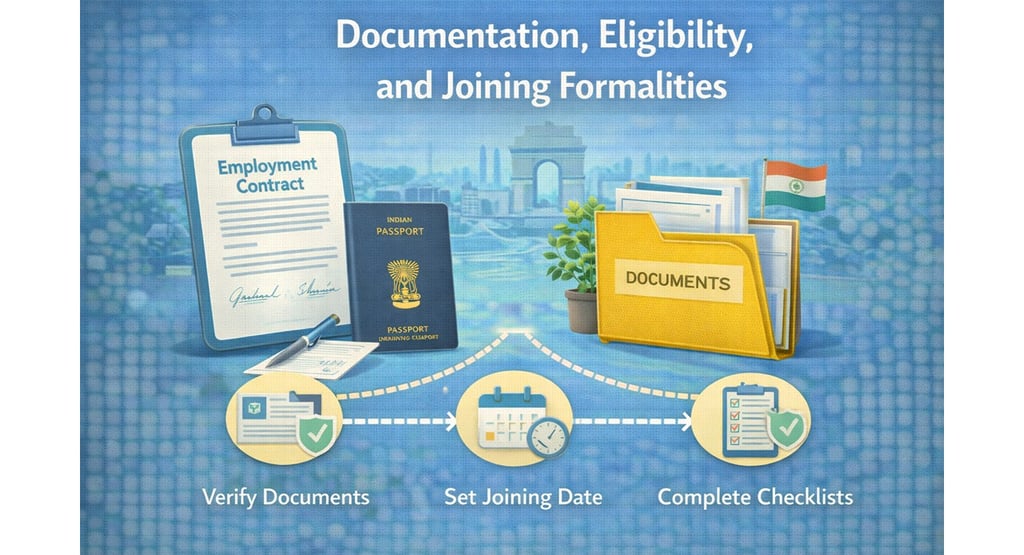
Documentation, eligibility checks, and joining formalities are the final yet crucial steps in the Indian recruitment process. Even after successful interviews, negotiations, and background verification, incomplete or delayed formalities can cause confusion, compliance risks, and early attrition.
HR’s role is to ensure that joining is smooth, compliant, and sets the right tone for the new hire’s experience. This requires structured processes, clear communication, and attention to legal and operational requirements.
Indian Realities in Joining Formalities
Joining formalities in India are influenced by:
Diverse employment types: permanent, contract, trainee, or apprentice
Statutory requirements: PF, ESI, gratuity, insurance
Candidate documentation variability, especially for migrant or blue-collar workers
Educational and professional certification verification requirements
Organisational policies for ID cards, access, and asset allocation
HR must navigate these complexities to avoid errors and delays.
Core Components of Joining Formalities
1. Employment Eligibility and Verification
Before the first day of work, HR must confirm:
Candidate identity and age verification (Aadhaar, PAN, passport, voter ID)
Right to work: visa or local work eligibility for non-citizens
Completion of background verification and reference checks
Confirmation of educational qualifications and certifications
This ensures legal compliance and organisational protection.
2. Offer Acceptance and Appointment Letter
Formalisation includes:
Signed offer letter with clear CTC, designation, and reporting manager
Appointment letter with joining date and role clarity
Acknowledgement of company policies and code of conduct
Clear documentation prevents future disputes.
3. Statutory Compliance Documentation
HR must collect and process documents for:
Provident Fund (PF) enrolment
Employee State Insurance (ESI) registration
Bank account details for salary transfer
PAN and tax declaration forms
Medical or fitness certificates if applicable
Timely collection avoids payroll and compliance delays.
4. Organisational Formalities
Issuance of employee ID, access cards, and IT credentials
Orientation and induction scheduling
Asset allocation (laptop, uniform, tools) where relevant
Introduction to reporting managers and teams
Structured onboarding fosters engagement and operational readiness.
5. Tracking and Record Management
HR must maintain:
Centralised joining checklist for each hire
Digitally scanned and securely stored documents
Follow-ups for missing or delayed paperwork
Audit-ready records for internal and statutory purposes
Good record-keeping reduces operational risk and simplifies audits.
HR’s Role in Managing Joining Formalities
HR ensures that:
Candidates are guided through every step proactively
Delays or discrepancies are identified and resolved quickly
Joining experience is professional and welcoming
Legal and policy compliance is strictly maintained
Data and documentation are securely stored for future reference
This creates a seamless transition from candidate to employee.
Conclusion
Proper management of documentation, eligibility, and joining formalities ensures compliance, reduces early attrition, and sets a positive tone for new employees. HR’s structured approach in India is critical for operational continuity, legal adherence, and an effective onboarding experience.
🗹 Documentation & Joining Formalities Checklist
🗹 Verify candidate identity, age, and eligibility
🗹 Ensure background and reference checks are completed
🗹 Obtain signed offer and appointment letters
🗹 Collect PF, ESI, bank, and tax documents
🗹 Check educational and professional certificates
🗹 Complete medical or fitness requirements where applicable
🗹 Provide access credentials, ID cards, and assets
🗹 Track all documents and maintain audit-ready records
Documentation and Joining Formalities Overview
Conclusion--
Effective labour law compliance depends on how well HR operations, payroll, and business processes work together. When compliance is embedded into everyday workflows, organisations reduce risk, improve accuracy, and build sustainable governance systems. HR teams that prioritise integration over isolation are better positioned to manage compliance confidently and consistently.
HireDesk India © 2026 | All Rights Reserved
"Thoughtful guidance for everyday HR"


Quick Links
Topics
Connect
_______________________________________________________________________________________________________________________________________________________________________________________
HireDesk is a free HR knowledge platform focused on practical, India-specific workplace guidance. We help HR professionals, managers, and learners navigate people practices with clarity, responsibility, and real-world relevance.