
Driving Team Performance Through Effective Goal Alignment
PERFORMANCE & DEVELOPMENT

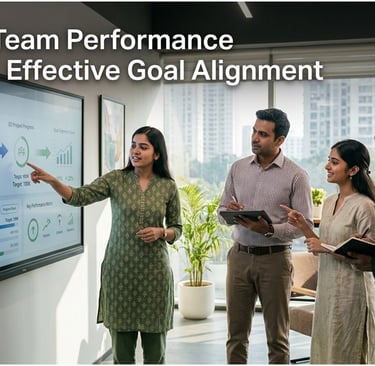
Individual performance matters, but organisational success depends on teams working towards shared objectives. Misaligned goals can result in duplication, confusion, and underperformance. Effective goal alignment ensures that every team member’s contribution supports broader business priorities.
This article explains how HR and managers can structure goal-setting processes to maximise team performance and organisational impact.
Why Goal Alignment Matters
When goals are misaligned:
Teams may work at cross-purposes
High individual performance does not translate into business results
Accountability becomes unclear
Engagement drops due to perceived inequity
Aligned goals create clarity, focus, and collective ownership.
Key Steps to Achieve Goal Alignment
1. Cascade Organisational Objectives
Start with top-level strategic objectives.
Break them down into departmental and team goals.
Ensure every team goal contributes directly to business priorities.
2. Involve Team Members in Goal Setting
Encourage participation in defining team and individual goals.
Increases commitment and ownership.
Helps identify potential overlaps or gaps early.
3. Set SMART Goals
Goals should be Specific, Measurable, Achievable, Relevant, and Time-bound.
Ensures clarity and ease of evaluation.
4. Monitor Progress Regularly
Frequent check-ins help identify blockers and course-correct.
Maintains visibility on how team efforts contribute to outcomes.
5. Align Rewards and Recognition
Reward contributions that advance team and organisational objectives.
Reinforces alignment and shared accountability.
Sample View: Goal Alignment Process
Checklist: Ensuring Effective Team Goal Alignment
☐ Organisational objectives are clearly communicated
☐ Team members are involved in defining goals
☐ Goals are SMART and measurable
☐ Progress is monitored and feedback is provided regularly
☐ Rewards and recognition reinforce aligned contributions
☐ HR supports standardised goal-setting frameworks
Role of HR
HR ensures that goal alignment is systematic, transparent, and measurable:
Provides goal-setting frameworks and templates
Trains managers on alignment techniques
Monitors cross-team alignment and outcomes
Facilitates integration with performance reviews and recognition programs
Key Takeaway
Team performance thrives when goals are clearly aligned with organisational priorities. Structured goal-setting, regular monitoring, and recognition of aligned contributions strengthen accountability, engagement, and business results.
Conclusion--
Effective labour law compliance depends on how well HR operations, payroll, and business processes work together. When compliance is embedded into everyday workflows, organisations reduce risk, improve accuracy, and build sustainable governance systems. HR teams that prioritise integration over isolation are better positioned to manage compliance confidently and consistently.
HireDesk India © 2026 | All Rights Reserved
"Thoughtful guidance for everyday HR"


Quick Links
Topics
Connect
_______________________________________________________________________________________________________________________________________________________________________________________
HireDesk is a free HR knowledge platform focused on practical, India-specific workplace guidance. We help HR professionals, managers, and learners navigate people practices with clarity, responsibility, and real-world relevance.