e-Learning, Microlearning, and Mobile Learning Tools: Choosing the Right Mix for Indian Organisations
HR TECH & ANALYTICS
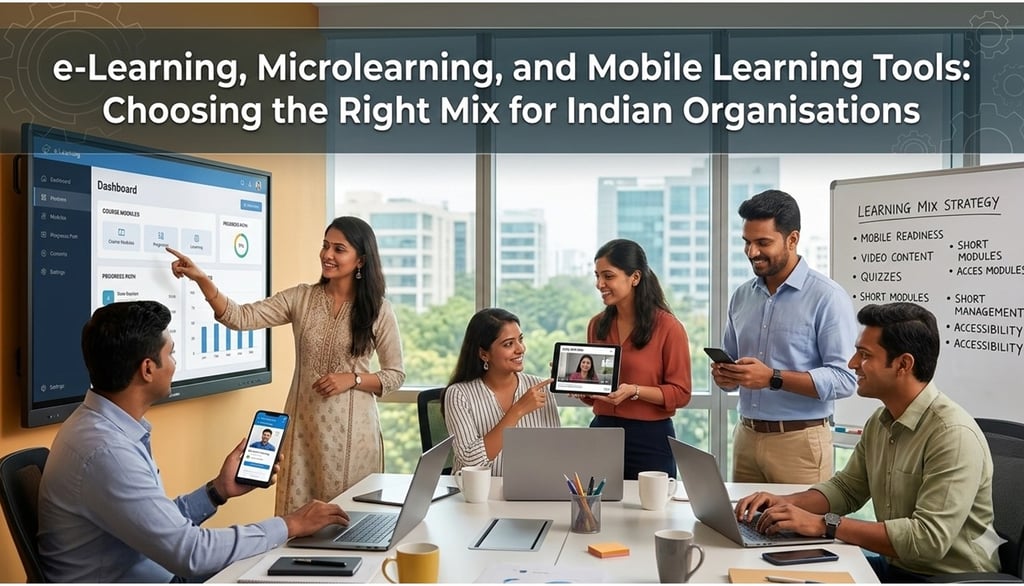
Learning delivery in Indian organisations has evolved significantly over the last decade. Classroom training, while still relevant, is no longer sufficient to meet the pace of skill changes, workforce scale, and diverse learner needs. As a result, HR teams increasingly rely on digital learning approaches such as e-learning, microlearning, and mobile learning.
Each of these learning tools serves a distinct purpose. The challenge for HR is not choosing one over the other, but understanding how to use the right combination based on organisational context, workforce profile, and learning objectives.
Understanding the Three Learning Approaches
e-Learning
e-Learning refers to structured digital learning programmes delivered through Learning Management Systems (LMS) or similar platforms. These typically include courses, assessments, and certifications.
It is commonly used for:
Compliance and statutory training
Functional and technical skill development
Organisation-wide learning programmes
Microlearning
Microlearning involves delivering learning content in small, focused modules that address a single concept or skill. These modules are designed for quick consumption and easy recall.
Typical formats include:
Short videos
Infographics
Quizzes
Scenario-based learning
Mobile Learning
Mobile learning focuses on enabling access to learning content through smartphones and tablets. It supports anytime, anywhere learning, especially for distributed or frontline workforces.
Mobile learning often complements e-learning and microlearning rather than replacing them.
Why These Tools Matter in the Indian Context
Indian organisations operate with:
Large and geographically dispersed workforces
A mix of white-collar, frontline, and shop-floor employees
Varying levels of digital literacy
Time constraints on learners
Digital learning tools allow HR to scale learning without disrupting operations and provide flexibility for employees to learn at their own pace.
How HR Can Decide the Right Learning Mix
The effectiveness of learning tools depends on how well they align with learning needs.
e-Learning works best for structured knowledge and mandatory programmes.
Microlearning supports reinforcement, behavioural change, and just-in-time learning.
Mobile learning improves accessibility and adoption, especially for non-desk roles.
Most organisations benefit from a blended approach rather than relying on a single method.
Integrating Learning Tools with HR Systems
For learning to translate into performance, integration is critical. Learning platforms should ideally connect with:
Performance management systems
Skill and competency frameworks
Career development pathways
This enables HR to track learning outcomes, identify skill gaps, and align development efforts with business priorities.
Challenges in Using Digital Learning Tools
HR teams commonly face issues such as:
Low completion rates
Content overload without clear priorities
Poor mobile usability
Lack of linkage between learning and performance outcomes
Addressing these challenges requires thoughtful design, learner communication, and managerial support.
HR’s Role in Driving Learning Adoption
HR must go beyond platform implementation and focus on:
Communicating the purpose of learning
Curating relevant content
Training managers to reinforce learning
Reviewing data to improve effectiveness
Technology enables learning, but HR enables adoption.
Measuring Learning Effectiveness
Effectiveness should be assessed not only by completion rates, but also by:
Knowledge retention
Behavioural application
Performance improvement
Skill readiness
Simple metrics, reviewed consistently, often provide better insights than complex dashboards.
Conclusion
e-Learning, microlearning, and mobile learning tools each play an important role in modern learning ecosystems. In Indian organisations, their value lies in thoughtful combination, relevance to business needs, and ease of access for employees.
When designed with clarity and supported by managers, these tools help HR build continuous learning habits rather than one-time training events.
Checklist: Using Digital Learning Tools Effectively
🗹 Clearly define learning objectives before choosing tools.
🗹 Match learning format to the nature of the skill or knowledge.
🗹 Use microlearning for reinforcement and application.
🗹 Ensure mobile accessibility for distributed workforces.
🗹 Avoid content overload; prioritise relevance.
🗹 Integrate learning platforms with performance systems where possible.
🗹 Enable managers to support and reinforce learning.
🗹 Track learning effectiveness beyond completion rates.
🗹 Review learner feedback regularly.
🗹 Update content periodically to remain current.
Sample Table: Comparison of Digital Learning Approaches
Conclusion--
Effective labour law compliance depends on how well HR operations, payroll, and business processes work together. When compliance is embedded into everyday workflows, organisations reduce risk, improve accuracy, and build sustainable governance systems. HR teams that prioritise integration over isolation are better positioned to manage compliance confidently and consistently.
HireDesk India © 2026 | All Rights Reserved
"Thoughtful guidance for everyday HR"


Quick Links
Topics
Connect
_______________________________________________________________________________________________________________________________________________________________________________________
HireDesk is a free HR knowledge platform focused on practical, India-specific workplace guidance. We help HR professionals, managers, and learners navigate people practices with clarity, responsibility, and real-world relevance.