
Employee Engagement and Retention Strategies in Factories: Practical HR Guide
INDUSTRIAL RELATIONS & FACTORY HR
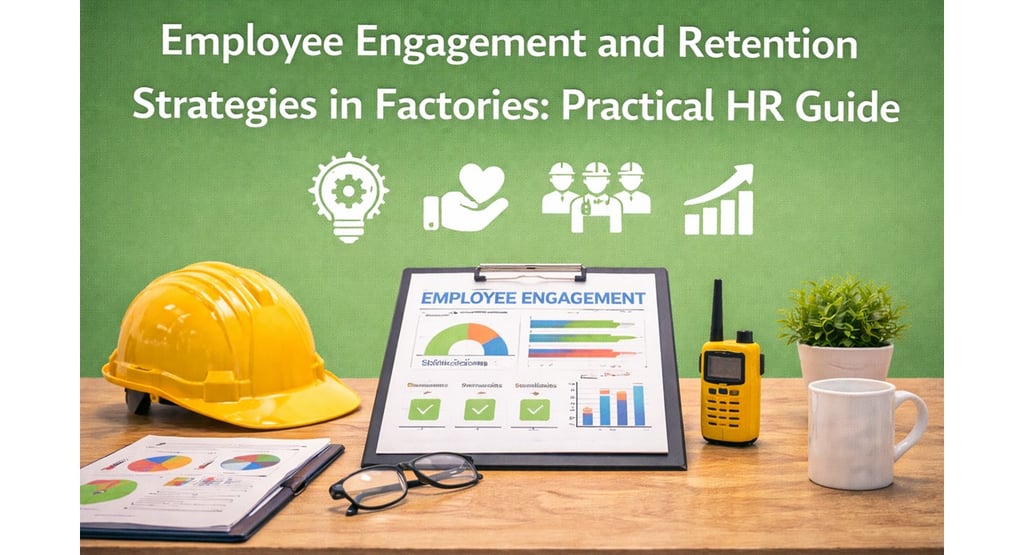
Employee engagement and retention are critical for factory operations in India. High attrition, low morale, and poor engagement can disrupt production, increase training costs, and affect industrial harmony.
Factory HR teams play a pivotal role in building trust, improving motivation, and creating a stable workforce. Engagement is not just about perks—it is about recognition, growth opportunities, safe working conditions, and meaningful communication.
This guide explains how HR can implement practical engagement and retention strategies in factories.
Why Engagement Matters in Factories
Ensures consistent productivity and reduces absenteeism
Reduces attrition and retraining costs
Promotes safety and compliance, as engaged workers follow SOPs
Strengthens industrial relations by improving trust and transparency
Engaged employees are less likely to participate in disputes or grievances.
Key Engagement Strategies
Recognition and Reward Programs
Incentivise productivity, attendance, safety compliance
Acknowledge contributions in team meetings or via notice boards
Career Development and Upskilling
Skill development aligned with modern machinery or technology
Cross-training and internal mobility opportunities
Health, Safety, and Welfare Initiatives
Safe workplace and proper PPE
Access to canteen, drinking water, restrooms, and health check-ups
Participative Communication
Worker forums, suggestion schemes, and regular feedback
Transparent decision-making regarding transfers, shifts, and policies
Team Building and Morale Activities
Annual events, small celebrations, and recognition of milestones
Encourages camaraderie and reduces conflict
Retention Measures
Monitor turnover patterns and identify root causes
Provide competitive wages and timely benefits
Offer flexible shift options where possible
Address grievances promptly and fairly
Recognise long-term service through awards or certificates
Retention efforts reduce HR and operational disruptions.
HR Best Practices
Collect employee feedback regularly
Use data-driven insights to identify disengagement early
Maintain transparent records of rewards, recognition, and grievances
Align engagement initiatives with industrial relations and compliance requirements
HR should act as both policy enforcer and employee advocate.
Common Challenges
Resistance from supervisors unfamiliar with engagement practices
Limited budget for recognition or welfare programs
High union activity requiring careful alignment of initiatives
Difficulty in reaching all shifts or departments consistently
HR must adapt strategies to practical realities of factory operations.
Conclusion
Employee engagement and retention in factories are practical tools to improve productivity, morale, and industrial harmony. By implementing structured recognition, training, communication, and welfare measures, HR ensures a stable, motivated workforce.
Well-executed engagement strategies reduce attrition, improve compliance, and strengthen the organisation’s reputation as an employer of choice.
🗹 Factory HR Checklist: Engagement & Retention
🗹 Implement recognition and reward programs
🗹 Align training and upskilling with operational needs
🗹 Maintain a safe and healthy workplace
🗹 Establish participative communication channels
🗹 Organise team-building and morale activities
🗹 Monitor attrition trends and address root causes
🗹 Provide competitive wages and benefits
🗹 Document initiatives and outcomes for transparency
Employee Engagement Strategies in Factories – Key HR Responsibility Matrix
Conclusion--
Effective labour law compliance depends on how well HR operations, payroll, and business processes work together. When compliance is embedded into everyday workflows, organisations reduce risk, improve accuracy, and build sustainable governance systems. HR teams that prioritise integration over isolation are better positioned to manage compliance confidently and consistently.
HireDesk India © 2026 | All Rights Reserved
"Thoughtful guidance for everyday HR"


Quick Links
Topics
Connect
_______________________________________________________________________________________________________________________________________________________________________________________
HireDesk is a free HR knowledge platform focused on practical, India-specific workplace guidance. We help HR professionals, managers, and learners navigate people practices with clarity, responsibility, and real-world relevance.