
Employee Engagement Initiatives That Actually Work
EMPLOYEE EXPERIENCE & CULTURE
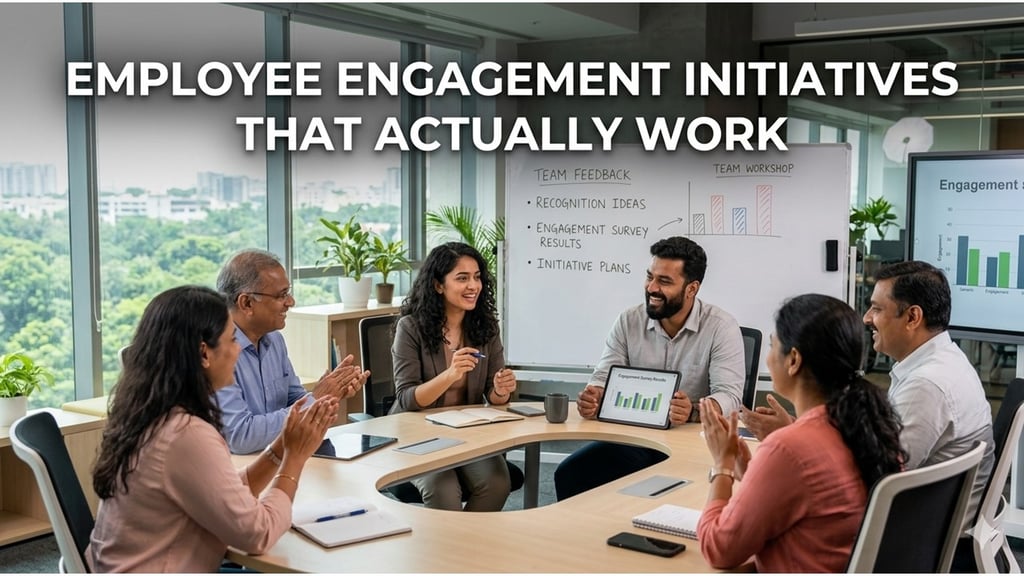
Employee engagement initiatives are most effective when they address real workplace needs rather than surface-level motivation. In Indian organisations, engagement efforts often fail not due to lack of intent, but due to misalignment with operational realities, leadership behaviour, or employee expectations.
This article focuses on engagement initiatives that HR can realistically design, implement, and sustain.
Why Many Engagement Initiatives Fall Short
Common reasons include:
One-size-fits-all programs across diverse teams
Over-reliance on events rather than daily practices
Limited manager involvement
Poor follow-through on feedback
Engagement cannot be “run” by HR alone—it must be embedded in how work happens.
What Actually Drives Engagement at Work
1. Role Clarity and Expectations
Employees engage better when they clearly understand:
What is expected of them
How success is measured
How their role contributes to outcomes
2. Manager Behaviour
Daily interactions with managers matter more than annual surveys or events. Supportive, consistent managers significantly improve engagement.
3. Recognition That Feels Genuine
Recognition works when it is:
Timely
Specific
Linked to real contributions
Generic or forced recognition loses credibility quickly.
Practical Engagement Initiatives HR Can Sustain
Regular manager check-ins
Structured feedback conversations
Simple recognition frameworks
Learning access tied to roles
Clear communication during change
These initiatives scale better than high-cost, high-visibility programs.
Measuring Engagement Meaningfully
Instead of overloading surveys:
Use short pulse checks
Track participation and follow-through
Observe behavioural indicators such as attrition, absenteeism, and internal mobility
Measurement without action weakens trust.
Engagement Initiative Checklist for HR
☐ Identify engagement drivers by employee segment
☐ Enable managers with simple tools
☐ Keep initiatives easy to sustain
☐ Communicate purpose and outcomes
☐ Review effectiveness periodically
Conclusion
Employee engagement improves when HR focuses less on events and more on everyday work experiences. Sustainable engagement comes from consistency, credibility, and manager ownership.
Conclusion--
Effective labour law compliance depends on how well HR operations, payroll, and business processes work together. When compliance is embedded into everyday workflows, organisations reduce risk, improve accuracy, and build sustainable governance systems. HR teams that prioritise integration over isolation are better positioned to manage compliance confidently and consistently.
HireDesk India © 2026 | All Rights Reserved
"Thoughtful guidance for everyday HR"


Quick Links
Topics
Connect
_______________________________________________________________________________________________________________________________________________________________________________________
HireDesk is a free HR knowledge platform focused on practical, India-specific workplace guidance. We help HR professionals, managers, and learners navigate people practices with clarity, responsibility, and real-world relevance.