
Employee Referrals: Designing and Governing Referral Programmes
RECRUITMENT AND HIRING
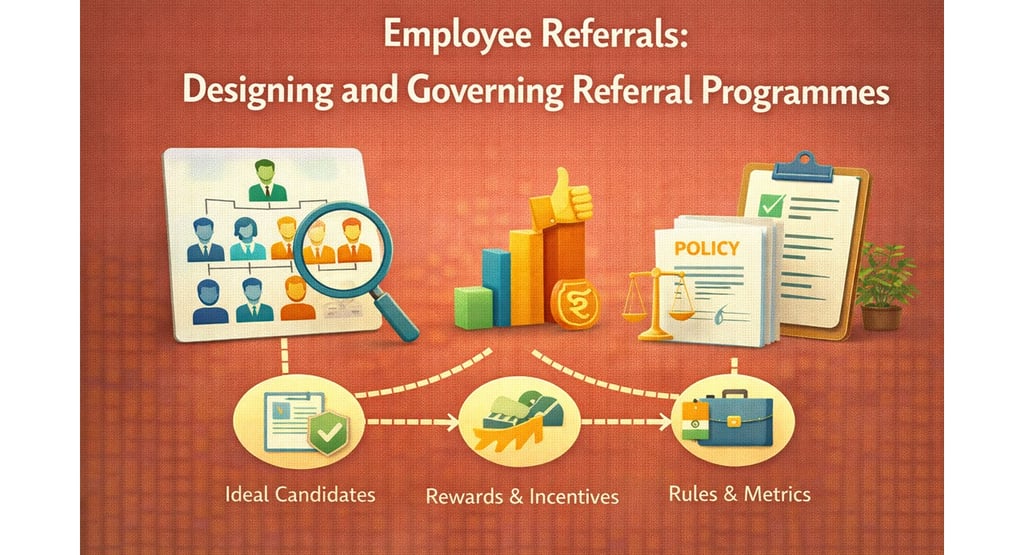
Employee referrals are one of the most effective and trusted channels for hiring in India. Candidates sourced through referrals often have better cultural fit, higher retention rates, and quicker onboarding. Yet, in many Indian organisations, referral programmes are informal, inconsistently applied, or poorly incentivised, reducing their potential value.
A well-structured referral programme balances speed, quality, cost, and fairness. HR plays a critical role in designing and governing the programme so it supports organisational hiring goals without bias or misuse.
Referral Programmes in the Indian Context
Employee referral programmes in India have unique considerations:
Cultural emphasis: Personal networks carry significant weight in hiring decisions
Cost efficiency: Referrals often reduce recruitment costs compared to agencies
Retention: Referred candidates tend to stay longer
Risk: Over-reliance can reduce diversity if networks are homogeneous
Administration: Timely tracking and reward disbursement is often weak
Understanding these realities ensures HR can design programmes that are fair, transparent, and effective.
Core Components of an Effective Referral Programme
1. Programme Design
A referral programme should clearly define:
Eligible roles (all roles or select positions)
Referral process and timelines
Reward structure (monetary or non-monetary)
Eligibility criteria for employees and referrals
HR should ensure simplicity and clarity so employees understand how to participate and what to expect.
2. Incentives and Rewards
In India, financial incentives are common, but recognition or non-monetary rewards can also be motivating.
Best practices:
Tie rewards to candidate joining and retention (e.g., after 3-6 months)
Ensure fairness across levels and departments
Communicate the reward structure clearly to all employees
This prevents misunderstandings or disputes and ensures sustained participation.
3. Governance and Fairness
Referral programmes require clear governance to prevent misuse:
Maintain a transparent tracking system for referrals
Monitor gender, location, and role diversity in referred candidates
Prevent conflicts of interest, e.g., referrals of friends for senior management without proper validation
HR should approve all final offers independently
Fair governance ensures referrals support business objectives while maintaining integrity.
4. Integration with Recruitment Processes
Referrals must seamlessly integrate with the organisation’s broader hiring processes:
Shortlisted referrals should follow the same screening and interview standards
Maintain documentation and approvals as with other hires
Track success metrics, including time-to-hire, quality, and retention
This ensures referrals enhance recruitment efficiency rather than bypassing controls.
HR’s Practical Perspective
HR’s responsibilities include:
Designing the programme in consultation with management
Communicating the programme clearly to all employees
Monitoring effectiveness and adjusting incentives
Ensuring fairness, transparency, and compliance
Linking referral outcomes to broader workforce planning
A well-governed programme strengthens both hiring efficiency and employee engagement.
Conclusion
Employee referrals are a high-value recruitment channel in India when designed and governed properly. Clear rules, fair incentives, and integration with standard recruitment processes make referrals a strategic tool rather than an ad hoc practice.
HR’s role is critical in balancing speed, quality, and fairness, ensuring referrals support organisational hiring goals sustainably.
🗹 Referral Programme Checklist
🗹 Define eligible roles for referrals
🗹 Establish a clear referral process and timelines
🗹 Set transparent incentive and reward structures
🗹 Link rewards to candidate joining and retention
🗹 Communicate programme rules to all employees
🗹 Track referrals systematically in HR systems
🗹 Ensure fair evaluation and compliance with recruitment standards
🗹 Monitor diversity and prevent network biases
🗹 Review and adjust the programme periodically
Employee Referral Programme Overview
Conclusion--
Effective labour law compliance depends on how well HR operations, payroll, and business processes work together. When compliance is embedded into everyday workflows, organisations reduce risk, improve accuracy, and build sustainable governance systems. HR teams that prioritise integration over isolation are better positioned to manage compliance confidently and consistently.
HireDesk India © 2026 | All Rights Reserved
"Thoughtful guidance for everyday HR"


Quick Links
Topics
Connect
_______________________________________________________________________________________________________________________________________________________________________________________
HireDesk is a free HR knowledge platform focused on practical, India-specific workplace guidance. We help HR professionals, managers, and learners navigate people practices with clarity, responsibility, and real-world relevance.