Employee Self-Service Portals: Benefits and Best Practices
HR TECH & ANALYTICS
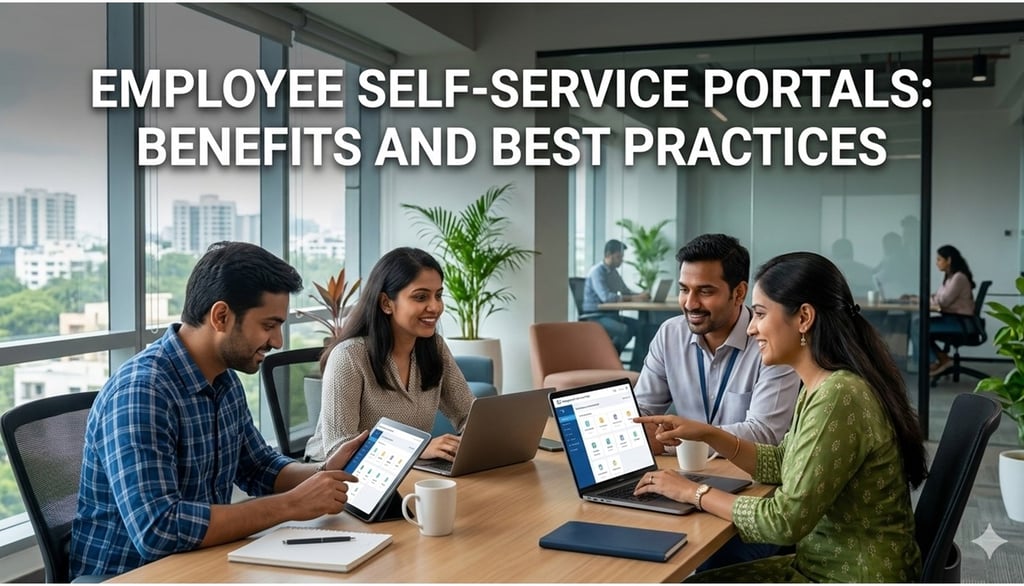
Employee Self-Service (ESS) portals are an important component of modern HR technology. They allow employees to access HR information and complete routine tasks independently, without depending on HR for every request.
For Indian organisations managing growing and geographically distributed workforces, ESS portals help improve efficiency, accuracy, and employee experience while freeing HR teams to focus on higher-value work.
What Is an Employee Self-Service Portal?
An Employee Self-Service portal is a digital platform that enables employees to:
View and update personal information
Apply for leave and view leave balances
Access payslips and tax-related documents
Check attendance and shift details
Submit HR requests and approvals
Access company policies and announcements
The portal acts as a single point of access for employees to interact with HR systems.
Why Employee Self-Service Matters in Indian Organisations
In the Indian context, HR teams often handle high volumes of routine queries related to payroll, leave, and attendance. ESS portals help address these challenges by:
Reducing dependency on HR for basic information
Improving data accuracy through employee updates
Supporting multi-location and remote workforces
Ensuring timely access to payslips and statutory documents
Enhancing transparency in HR processes
ESS portals are particularly valuable in organisations with large employee bases or shift-based operations.
Key Benefits of Employee Self-Service Portals
1. Improved HR Efficiency
Routine administrative tasks are automated, allowing HR teams to focus on strategic activities such as engagement, capability building, and workforce planning.
2. Better Data Accuracy
Employees updating their own information reduces errors and outdated records, improving the reliability of HR data.
3. Enhanced Employee Experience
Easy access to information increases transparency and reduces frustration caused by delays or manual follow-ups.
4. Faster Turnaround Time
Leave approvals, document access, and HR requests are processed quicker through automated workflows.
5. Consistency and Compliance
Standardised processes help maintain consistency and proper documentation across the organisation.
Common Features of ESS Portals
Typical ESS portals include:
Personal profile management
Leave and attendance management
Payroll and tax document access
HR request tracking
Policy and communication sections
Mobile access for on-the-go employees
The exact feature set should align with organisational needs and workforce maturity.
HR’s Role in Implementing ESS Portals
HR plays a central role in ensuring ESS portals deliver value:
Defining which processes should be employee-driven
Ensuring content accuracy and clarity
Training employees and managers on portal usage
Monitoring adoption and addressing usage gaps
Ensuring data privacy and access controls
HR must ensure the portal remains a support tool, not a barrier to human interaction.
Best Practices for Using Employee Self-Service Portals
Keep the interface simple and intuitive
Limit the number of mandatory fields
Ensure mobile accessibility
Provide clear instructions and FAQs
Regularly update policies and documents
Maintain alternate support channels for exceptions
Adoption improves when employees find the portal easy and reliable.
Common Challenges in ESS Adoption
Some challenges HR teams may face include:
Low usage due to lack of awareness or training
Resistance from employees unfamiliar with digital tools
Incomplete or outdated content
Over-automation without human support
These challenges can be addressed through communication, training, and periodic review.
Responsible Use of Employee Data
ESS portals handle sensitive personal and payroll information. HR teams must ensure:
Role-based access controls
Secure login and authentication
Transparent communication on data usage
Compliance with data protection norms
Responsible data handling builds trust and confidence among employees.
Measuring the Effectiveness of ESS Portals
HR can review the success of ESS portals through:
Reduction in HR helpdesk queries
Adoption and login frequency
Turnaround time for requests
Employee feedback and satisfaction
The true value lies in usability and consistency, not feature count.
Conclusion
Employee Self-Service portals play a key role in improving HR efficiency and employee experience in Indian organisations. When implemented thoughtfully, they support transparency, accuracy, and faster service delivery.
By following best practices and maintaining a balance between automation and human support, HR teams can ensure ESS portals remain a practical and trusted HR tool.
Checklist: Employee Self-Service Portals: Benefits and Best Practices
🗹 Provide employees with intuitive access to personal HR data.
🗹 Ensure the portal supports key processes like leave, attendance, and payroll.
🗹 Maintain robust data security and privacy controls.
🗹 Integrate with existing HRMS for consistency.
🗹 Offer training and guidance for portal usage.
🗹 Monitor adoption and resolve user issues promptly.
🗹 Use feedback to improve portal functionality and user experience.
Conclusion--
Effective labour law compliance depends on how well HR operations, payroll, and business processes work together. When compliance is embedded into everyday workflows, organisations reduce risk, improve accuracy, and build sustainable governance systems. HR teams that prioritise integration over isolation are better positioned to manage compliance confidently and consistently.
HireDesk India © 2026 | All Rights Reserved
"Thoughtful guidance for everyday HR"


Quick Links
Topics
Connect
_______________________________________________________________________________________________________________________________________________________________________________________
HireDesk is a free HR knowledge platform focused on practical, India-specific workplace guidance. We help HR professionals, managers, and learners navigate people practices with clarity, responsibility, and real-world relevance.