
Employee Wellbeing at Work: What HR Can Realistically Influence
EMPLOYEE EXPERIENCE & CULTURE
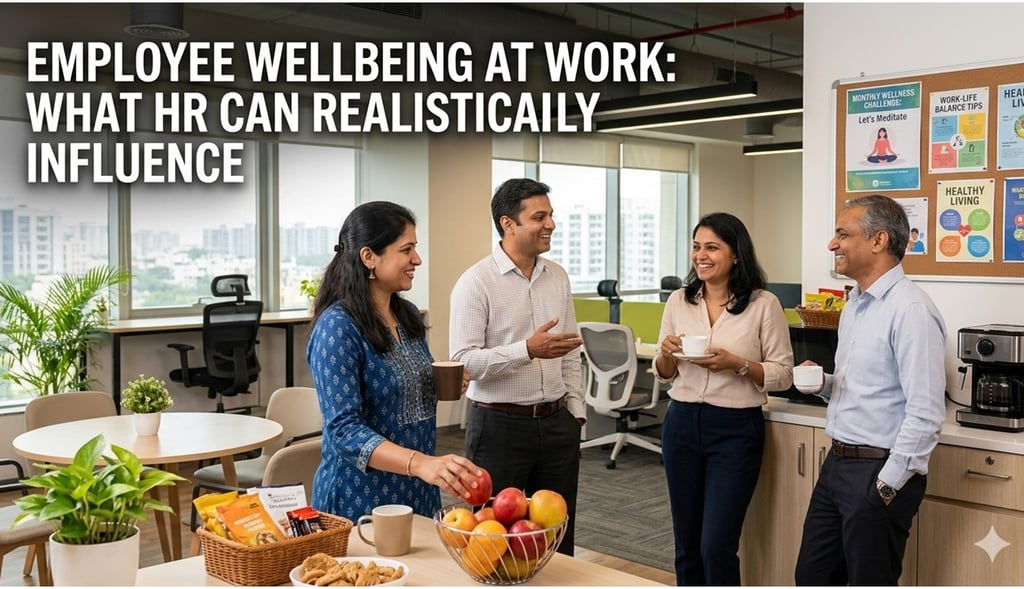
Employee wellbeing is increasingly recognised as a core HR responsibility, yet it is often misunderstood as a collection of wellness activities or benefits. In reality, wellbeing at work is shaped by workload design, manager behaviour, clarity, and fairness—areas where HR has meaningful influence.
This article explains how HR can approach employee wellbeing in a grounded, sustainable way.
Understanding Employee Wellbeing in Context
Employee wellbeing goes beyond physical health to include:
Mental and emotional wellbeing
Workload balance and role clarity
Psychological safety
Access to support and flexibility
Wellbeing is not about eliminating stress, but about managing it responsibly.
HR’s Practical Role in Wellbeing
HR contributes to wellbeing by:
Designing realistic roles and expectations
Supporting managers in people leadership
Ensuring policies are humane and consistent
Creating safe channels for concerns
Wellbeing improves when systems support people—not just when programs exist.
Everyday HR Levers That Affect Wellbeing
1. Workload and Role Design
Unclear roles and unrealistic expectations are major wellbeing stressors.
2. Manager Capability
Supportive managers reduce burnout more effectively than wellness campaigns.
3. Policy Interpretation
How leave, flexibility, and performance policies are applied matters more than how they are written.
4. Psychological Safety
Employees must feel safe to speak up without fear of negative consequences.
What to Avoid in Wellbeing Initiatives
Treating wellbeing as an HR-only responsibility
Offering wellness activities without addressing root causes
Over-surveying without follow-up
Positioning wellbeing as a productivity tool alone
Such approaches reduce credibility.
Wellbeing Orientation Checklist for HR
☐ Review workload expectations and role clarity
☐ Enable managers to spot early burnout signals
☐ Ensure flexibility policies are applied fairly
☐ Provide clear escalation and support channels
☐ Act visibly on wellbeing-related feedback
Conclusion
Employee wellbeing improves when HR focuses on daily work realities rather than surface-level solutions. Sustainable wellbeing is built through clarity, fairness, and supportive leadership—not isolated initiatives.
Conclusion--
Effective labour law compliance depends on how well HR operations, payroll, and business processes work together. When compliance is embedded into everyday workflows, organisations reduce risk, improve accuracy, and build sustainable governance systems. HR teams that prioritise integration over isolation are better positioned to manage compliance confidently and consistently.
Related Articles
HireDesk India © 2026 | All Rights Reserved
"Thoughtful guidance for everyday HR"


Quick Links
Topics
Connect
_______________________________________________________________________________________________________________________________________________________________________________________
HireDesk is a free HR knowledge platform focused on practical, India-specific workplace guidance. We help HR professionals, managers, and learners navigate people practices with clarity, responsibility, and real-world relevance.