
Employee Wellbeing in Indian Workplaces: Practical Measures Beyond Wellness Webinars
EMPLOYEE EXPERIENCE & CULTURE
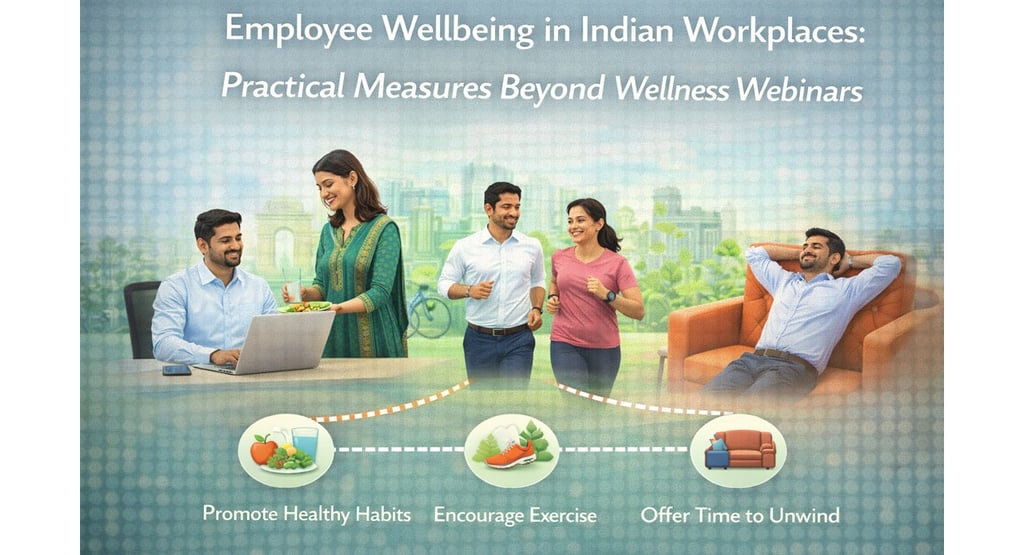
Employee wellbeing in many Indian organisations is reduced to occasional webinars, yoga sessions, or wellness emails. While these initiatives have value, they rarely address the everyday pressures employees actually face — long hours, unclear expectations, constant urgency, and limited manager support.
True wellbeing is experienced in daily work practices, not in isolated programmes. This article explains how HR can move beyond symbolic wellness initiatives and implement practical, sustainable wellbeing measures suited to Indian workplaces.
Why Wellness Efforts Often Miss the Mark
Common reasons include:
Over-focus on events instead of work design
Lack of manager ownership
One-size-fits-all programmes
Stigma around mental health discussions
No follow-through after initiatives
Employees disengage when wellbeing feels performative.
What Wellbeing Really Means at Work
In Indian organisations, employee wellbeing includes:
Reasonable workloads and clear priorities
Psychological safety and respectful behaviour
Predictable schedules where possible
Support during personal or family challenges
Access to help without fear of judgement
Wellbeing is about reducing harm before adding benefits.
HR’s Role in Practical Wellbeing Design
HR must anchor wellbeing in systems, not slogans.
Key HR actions include:
Setting expectations on working hours and availability
Training managers on empathetic leadership
Reviewing workload distribution
Providing confidential support channels
Normalising conversations around stress and burnout
Manager behaviour determines wellbeing outcomes.
Low-Cost, High-Impact Wellbeing Measures
Practical measures suited to Indian contexts:
Clear escalation and priority-setting norms
Meeting discipline and break norms
Flexible leave usage during personal emergencies
Manager check-ins beyond task updates
Respect for off-hours communication boundaries
Consistency matters more than scale.
Measuring Wellbeing Without Intrusion
HR can assess wellbeing through:
Pulse surveys focused on workload and support
Attrition and absenteeism patterns
Manager feedback and skip-level insights
Usage trends of support resources
Data should guide action, not surveillance.
Conclusion
Employee wellbeing in India cannot be outsourced to vendors or limited to occasional programmes. It must be built into how work is planned, managed, and reviewed. HR’s responsibility is to create conditions where employees can perform sustainably — not just survive.
Wellbeing improves when everyday work becomes humane.
HR Checklist: Embedding Practical Wellbeing at Work
🗹 Address workload and role clarity issues
🗹 Set norms for working hours and availability
🗹 Train managers on empathetic people management
🗹 Provide confidential support channels
🗹 Encourage regular, non-judgemental check-ins
🗹 Respect personal and family commitments
🗹 Track wellbeing indicators responsibly
🗹 Act visibly on feedback received
Wellbeing Focus Areas and HR Interventions
Conclusion--
Effective labour law compliance depends on how well HR operations, payroll, and business processes work together. When compliance is embedded into everyday workflows, organisations reduce risk, improve accuracy, and build sustainable governance systems. HR teams that prioritise integration over isolation are better positioned to manage compliance confidently and consistently.
HireDesk India © 2026 | All Rights Reserved
"Thoughtful guidance for everyday HR"


Quick Links
Topics
Connect
_______________________________________________________________________________________________________________________________________________________________________________________
HireDesk is a free HR knowledge platform focused on practical, India-specific workplace guidance. We help HR professionals, managers, and learners navigate people practices with clarity, responsibility, and real-world relevance.