
Employer Branding for SMEs: Attracting Talent Without Big Budgets
SME HR OPERATIONS
Introduction--
Once a candidate accepts an offer, the period between acceptance and joining becomes a critical phase in the recruitment lifecycle. This pre-joining window influences whether a candidate actually joins, how prepared they feel on Day One, and how quickly they settle into the organisation. For HR, effective pre-joining engagement and onboarding planning are essential to convert offers into confident, committed employees.
This article outlines practical approaches HR teams can adopt to manage pre-joining engagement and establish strong onboarding foundations—without overcomplicating the process.
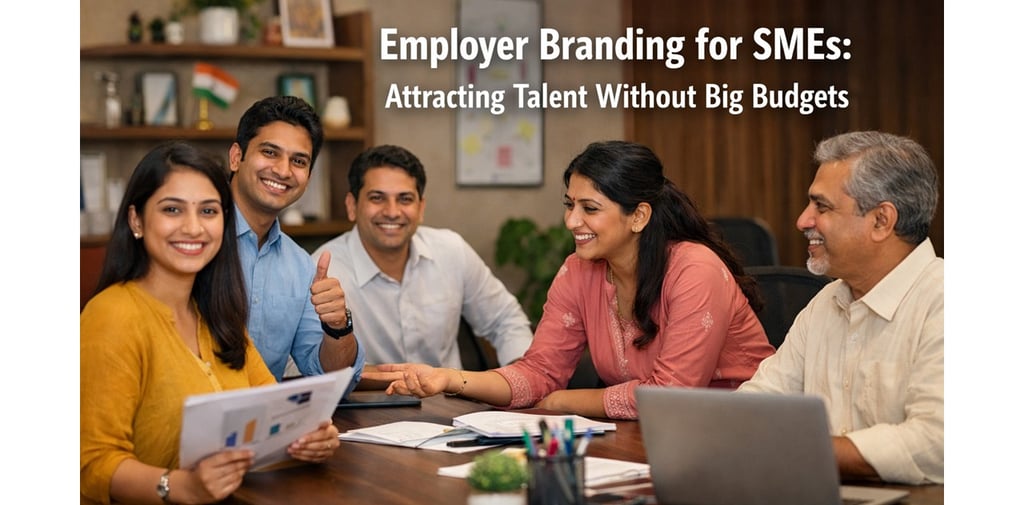
Employer branding is often misunderstood by Indian SMEs as a marketing exercise that requires large budgets, glossy campaigns, and social media teams. In reality, employer branding in SMEs is shaped far more by everyday employee experience than by external communication.
For SMEs, employer brand is what candidates hear during interviews, what employees say to peers, and how managers behave daily. This article explains how SMEs can build a credible employer brand without heavy spending, by focusing on fundamentals HR can actually control.
What Employer Branding Really Means for SMEs
In an SME context, employer branding is:
How fairly employees are treated
How managers communicate and decide
How transparent HR processes are
How exits are handled
What employees say informally
It is not about slogans — it is about consistency between promise and practice.
Why SMEs Struggle With Employer Branding
Common challenges include:
No clear people practices
Inconsistent interview and onboarding experience
Over-promising roles or growth
Poor exit handling
Managers acting independently without alignment
These gaps damage credibility more than low compensation ever will.
Start With Internal Experience Before External Branding
SMEs should focus inward before going outward.
HR should ensure:
Clear job roles and expectations
Timely payroll and statutory compliance
Respectful manager behaviour
Basic learning and growth visibility
Fair handling of grievances and exits
A stable internal environment creates organic employer branding.
Candidate Experience Matters More Than Reach
Even with limited hiring volumes, SMEs must manage candidate experience carefully.
Simple but effective actions include:
Clear job descriptions
Structured interviews
Honest role communication
Timely interview feedback
Professional offer and joining communication
Candidates remember how they were treated, even if they are rejected.
Leveraging Employees as Brand Ambassadors
In SMEs, employees are the strongest branding channel.
HR can:
Encourage employee referrals
Recognise employees publicly
Share internal success stories informally
Ensure exiting employees leave respectfully
Positive word-of-mouth is more powerful than paid branding.
Founder and Leadership Visibility
In SMEs, founders heavily influence employer perception.
Leadership should:
Communicate transparently
Demonstrate fairness and accountability
Support HR processes consistently
Avoid bypassing systems
Leadership behaviour sets the tone for employer reputation.
Conclusion
Employer branding for SMEs is built quietly, not loudly. When HR focuses on fair processes, respectful management, and honest communication, SMEs naturally attract talent that fits their culture. Strong employer brands do not require big budgets — they require discipline and integrity.
Checklist: Building Employer Brand in SMEs
🗹 Ensure basic HR processes work reliably
🗹 Train managers on candidate and employee interaction
🗹 Communicate roles and growth honestly
🗹 Maintain professional interview and onboarding practices
🗹 Encourage and track employee referrals
🗹 Handle exits with dignity and clarity
🗹 Avoid over-promising during hiring
🗹 Align leadership behaviour with HR values
Low-Cost Employer Branding Levers for SMEs
Conclusion--
Effective labour law compliance depends on how well HR operations, payroll, and business processes work together. When compliance is embedded into everyday workflows, organisations reduce risk, improve accuracy, and build sustainable governance systems. HR teams that prioritise integration over isolation are better positioned to manage compliance confidently and consistently.
HireDesk India © 2026 | All Rights Reserved
"Thoughtful guidance for everyday HR"


Quick Links
Topics
Connect
_______________________________________________________________________________________________________________________________________________________________________________________
HireDesk is a free HR knowledge platform focused on practical, India-specific workplace guidance. We help HR professionals, managers, and learners navigate people practices with clarity, responsibility, and real-world relevance.