
Employer Branding from a Hiring Perspective
Employer branding influences how potential candidates perceive an organisation as a place to work. In India, this perception is shaped less by marketing campaigns and more by real hiring experiences, word of mouth, and visibility on job portals and social platforms.
RECRUITMENT AND HIRING
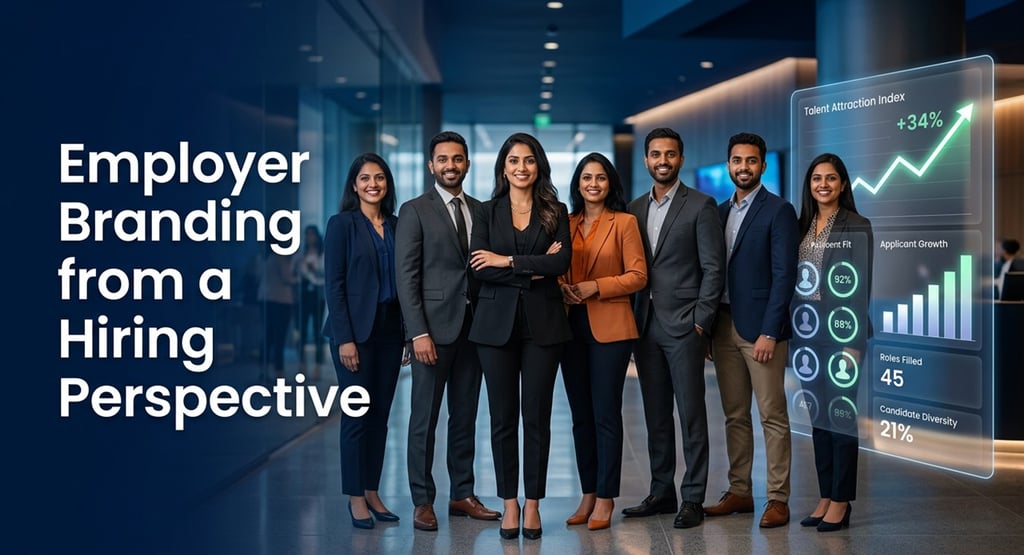

Employer branding influences how potential candidates perceive an organisation as a place to work. In India, this perception is shaped less by marketing campaigns and more by real hiring experiences, word of mouth, and visibility on job portals and social platforms. For HR, employer branding is not a separate activity—it is a direct outcome of recruitment practices.
A weak hiring process damages employer brand faster than any external communication can repair.
What Employer Branding Means in Indian Hiring
From a hiring perspective, employer branding reflects:
How roles are positioned and described
How candidates are treated during recruitment
What employees say about their work experience
The organisation’s consistency and credibility
In India, candidates often rely on informal references and online reviews before applying.
How Hiring Practices Shape Employer Brand
Job Descriptions and Role Clarity
Clear, honest job descriptions:
Attract relevant candidates
Reduce mismatched applications
Build early trust
Overstated roles or vague descriptions weaken credibility.
Recruiter and Interviewer Behaviour
Candidates closely observe:
Professionalism of recruiters
Interviewer preparedness
Respect for candidate time
These interactions strongly influence employer perception.
Transparency in Communication
Timely updates, clear feedback, and honest conversations create:
Trust, even when candidates are rejected
Positive word of mouth
Long-term employer goodwill
Silence damages brand reputation.
Common Employer Branding Gaps in India
Overreliance on External Image
Some organisations focus on:
Career page design
Social media posts
Awards and rankings
While neglecting basic recruitment discipline.
Inconsistent Candidate Treatment
Different candidates experiencing different standards leads to:
Confusion
Negative reviews
Credibility loss
Consistency matters more than scale.
Disconnect Between Promise and Reality
When hiring messages do not match workplace reality, it results in:
Early attrition
Low engagement
Brand erosion
Honesty is critical.
HR’s Role in Strengthening Employer Brand
Aligning Hiring Messaging with Reality
HR should ensure:
Role previews reflect actual work
Growth narratives are realistic
Challenges are acknowledged appropriately
This sets the right expectations.
Process Discipline and Accountability
Employer branding improves when HR enforces:
Structured hiring processes
Defined communication standards
Interviewer accountability
Brand is built through execution, not slogans.
Using Feedback and Data
HR should track:
Candidate feedback
Offer acceptance rates
Early attrition trends
These indicators reflect employer brand health.
Employer Branding Without Heavy Spend
In the Indian context, strong employer branding can be built through:
Consistent candidate experience
Fair and respectful hiring practices
Clear and timely communication
These require discipline, not large budgets.
Conclusion
Employer branding in India is shaped primarily by recruitment behaviour and candidate experience. HR leaders can strengthen employer brand by focusing on honest communication, structured hiring processes, and consistent treatment of candidates. A credible employer brand is earned through everyday hiring practices.
🗹 Employer Branding from Hiring Checklist
🗹 Ensure job descriptions are clear and realistic
🗹 Train recruiters and interviewers on candidate interaction
🗹 Maintain consistent hiring communication standards
🗹 Avoid overpromising roles or growth
🗹 Provide timely closure to candidates
🗹 Monitor candidate feedback and reviews
🗹 Track offer acceptance and early attrition
🗹 Align employer messaging with workplace reality
Hiring Practices and Employer Brand Impact
Conclusion--
Effective labour law compliance depends on how well HR operations, payroll, and business processes work together. When compliance is embedded into everyday workflows, organisations reduce risk, improve accuracy, and build sustainable governance systems. HR teams that prioritise integration over isolation are better positioned to manage compliance confidently and consistently.
HireDesk India © 2026 | All Rights Reserved
"Thoughtful guidance for everyday HR"


Quick Links
Topics
Connect
_______________________________________________________________________________________________________________________________________________________________________________________
HireDesk is a free HR knowledge platform focused on practical, India-specific workplace guidance. We help HR professionals, managers, and learners navigate people practices with clarity, responsibility, and real-world relevance.