
Equal Remuneration and Gender Pay Compliance: HR Perspective
COMPLIANCE & LABOUR LAWS
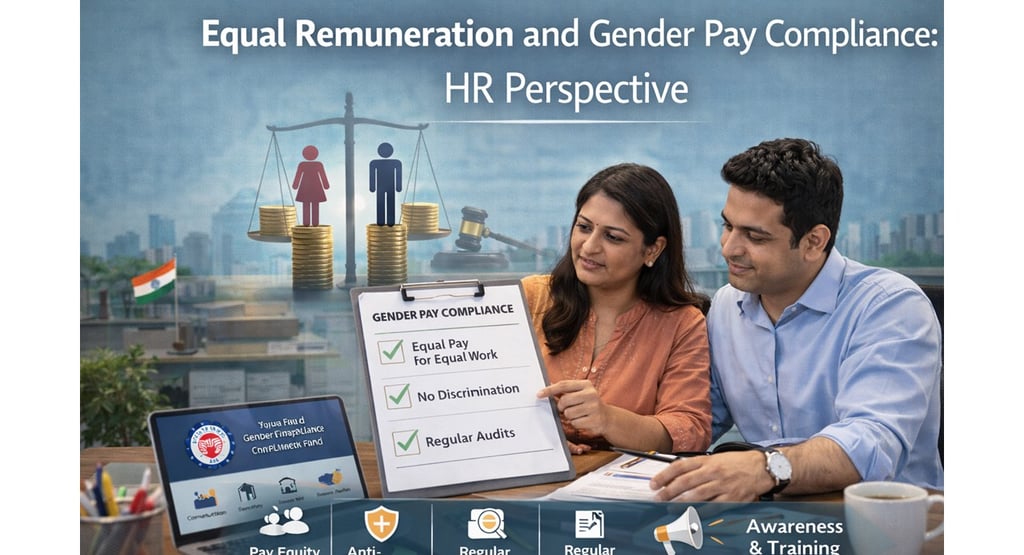
Equal pay compliance in India is no longer a theoretical principle—it is a statutory and reputational obligation. The Equal Remuneration Act, 1976 (and corresponding provisions under the new labour codes when enforced) requires employers to ensure equal pay for equal work, irrespective of gender.
For HR teams, gender pay compliance goes beyond fixing base salaries. It involves job evaluation, wage structuring, promotion practices, and documentation discipline. Many organisations face risk not due to intent, but due to inconsistent role definitions and legacy pay decisions.
This article explains the legal requirements and practical HR controls needed to manage equal remuneration and gender pay compliance.
Legal Framework HR Must Be Aware Of
Equal remuneration obligations arise from:
Equal Remuneration Act, 1976
Relevant provisions under the Code on Wages (once notified)
Judicial interpretations on “same work or work of similar nature”
HR must focus on substance of work performed, not just job titles.
What Does “Equal Work” Mean in Practice?
Work is considered equal when it involves:
Similar skill, effort, and responsibility
Similar working conditions
No material differences affecting job value
Minor differences in designation or reporting lines do not justify pay disparity.
Areas Where HR Faces Practical Risk
1. Role-Based Pay Inconsistencies
Pay gaps often arise due to:
Ad hoc salary negotiations
Legacy compensation structures
Location-based adjustments not properly documented
HR must be able to justify every pay differential objectively.
2. Promotion and Increment Practices
Unequal:
Increment percentages
Promotion timelines
Performance rating interpretations
can indirectly lead to gender-based pay gaps, even without explicit bias.
3. Allowances and Variable Pay
While equal remuneration primarily focuses on wages, allowances and incentives that form part of remuneration must also follow parity principles when linked to the same role.
HR Execution: Controls That Matter
To ensure compliance, HR should:
Maintain clear job descriptions and role matrices
Use structured salary bands
Conduct periodic gender pay reviews
Document reasons for pay variations
Align performance management with objective criteria
Equal pay compliance is tested on records and rationale, not intent.
Handling Complaints and Inspections
HR should:
Treat pay parity complaints seriously
Investigate and document findings promptly
Cooperate during labour inspections
Correct gaps proactively instead of defending legacy errors
Early correction significantly reduces legal and reputational exposure.
Conclusion
Equal remuneration compliance requires systematic HR discipline, not one-time corrections. Transparent job architecture, objective pay structures, and periodic audits are the strongest safeguards against gender pay risk.
For HR, equal pay is both a legal responsibility and a marker of organisational fairness.
HR Compliance Action Checklist: Equal Remuneration
🗹 Identify roles involving same or similar work
🗹 Standardise job descriptions and role evaluations
🗹 Align pay structures and salary bands objectively
🗹 Review gender-wise pay data periodically
🗹 Document justification for pay differences, if any
🗹 Ensure increments and promotions follow defined criteria
🗹 Monitor allowances and variable pay parity
🗹 Address employee complaints promptly and fairly
🗹 Maintain records for inspections and audits
Equal Remuneration Compliance: HR Control Areas
Conclusion--
Effective labour law compliance depends on how well HR operations, payroll, and business processes work together. When compliance is embedded into everyday workflows, organisations reduce risk, improve accuracy, and build sustainable governance systems. HR teams that prioritise integration over isolation are better positioned to manage compliance confidently and consistently.
HireDesk India © 2026 | All Rights Reserved
"Thoughtful guidance for everyday HR"


Quick Links
Topics
Connect
_______________________________________________________________________________________________________________________________________________________________________________________
HireDesk is a free HR knowledge platform focused on practical, India-specific workplace guidance. We help HR professionals, managers, and learners navigate people practices with clarity, responsibility, and real-world relevance.