
Essential HR Policies for Indian SMEs: What to Document and Why
SME HR OPERATIONS
Introduction--
Once a candidate accepts an offer, the period between acceptance and joining becomes a critical phase in the recruitment lifecycle. This pre-joining window influences whether a candidate actually joins, how prepared they feel on Day One, and how quickly they settle into the organisation. For HR, effective pre-joining engagement and onboarding planning are essential to convert offers into confident, committed employees.
This article outlines practical approaches HR teams can adopt to manage pre-joining engagement and establish strong onboarding foundations—without overcomplicating the process.
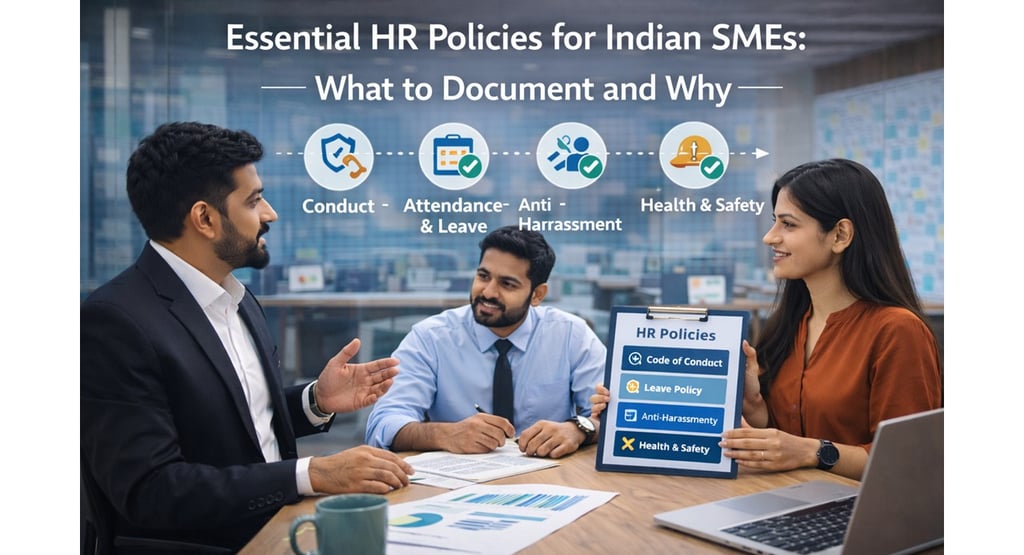
In many Indian SMEs, people practices run on verbal instructions and founder decisions. While this may work in the early stages, lack of documented HR policies often leads to confusion, inconsistency, and legal risk as the organisation grows.
HR policies are not about bureaucracy. For SMEs, they provide clarity, fairness, and compliance — without restricting flexibility. This article explains which HR policies Indian SMEs must document, which ones can remain light, and why each policy matters from a practical HR perspective.
Why HR Policies Matter for Indian SMEs
HR policies help SMEs:
Set clear expectations for employees and managers
Ensure compliance with Indian labour laws
Reduce disputes, grievances, and ad hoc decisions
Maintain consistency as teams grow
Protect the organisation during inspections or disputes
Well-written SME policies should be simple, readable, and practical, not copied from large corporate manuals.
Core HR Policies Every SME Should Have
1. Employment Terms and Conditions
This policy defines the basics of employment:
Working hours and weekly offs
Probation and confirmation
Notice period and termination terms
Applicability of Shops & Establishments Act
For SMEs, clarity here avoids misunderstandings and legal disputes.
2. Attendance and Leave Policy
Attendance and leave policies help manage productivity and payroll accuracy. They should clearly state:
Working hours and attendance rules
Types of leave (earned, casual, sick)
Leave approval process
Carry forward and encashment rules
This policy is closely linked to payroll and statutory compliance.
3. Code of Conduct and Workplace Behaviour
A code of conduct sets expectations on:
Professional behaviour
Workplace discipline
Ethical conduct
Conflict of interest
Even small teams benefit from having behaviour expectations documented rather than implied.
4. Payroll and Salary Administration Policy
This policy explains:
Salary structure components
Pay cycle and salary credit timelines
Statutory deductions (PF, ESI, TDS)
Payslip and payroll query handling
It builds trust and reduces payroll-related grievances.
5. POSH Policy (Where Applicable)
Under Indian law, organisations with 10 or more employees must have a POSH policy. SMEs should ensure:
Clear definition of sexual harassment
Complaint redressal mechanism
Internal Committee details
Confidentiality and non-retaliation
Even where headcount is below threshold, documenting intent and conduct expectations is advisable.
6. Disciplinary Action and Misconduct Policy
This policy outlines:
What constitutes misconduct
Disciplinary process and principles
Fair enquiry and documentation
Possible penalties
It helps SMEs handle difficult situations objectively and legally.
What SMEs Should Avoid Over-Documenting
Not every HR process needs a detailed policy. SMEs can keep the following light or guideline-based:
Performance management frameworks
Learning and development programs
Career progression paths
These can evolve as the organisation matures.
HR’s Practical Role in Policy Implementation
HR should ensure policies are:
Written in simple language
Explained during onboarding
Easily accessible to employees
Applied consistently across teams
Policies that are not followed in practice damage HR credibility more than having no policies at all.
Conclusion
For Indian SMEs, HR policies are about clarity, compliance, and consistency, not complexity. Documenting a small set of essential policies, aligned with Indian laws and organisational reality, helps HR support business growth while minimising risk.
Start small, keep policies practical, and refine them as the organisation evolves.
Checklist: HR Policy Essentials for SMEs
🗹 Identify mandatory policies required under Indian labour laws
🗹 Prioritise clarity over legal jargon
🗹 Keep policies concise and readable
🗹 Align attendance and leave rules with payroll processes
🗹 Document disciplinary and misconduct handling clearly
🗹 Ensure POSH policy compliance where applicable
🗹 Communicate policies during onboarding
🗹 Apply policies consistently across teams
🗹 Review policies periodically as the SME grows
Essential HR Policies for Indian SMEs
Conclusion--
Effective labour law compliance depends on how well HR operations, payroll, and business processes work together. When compliance is embedded into everyday workflows, organisations reduce risk, improve accuracy, and build sustainable governance systems. HR teams that prioritise integration over isolation are better positioned to manage compliance confidently and consistently.
HireDesk India © 2026 | All Rights Reserved
"Thoughtful guidance for everyday HR"


Quick Links
Topics
Connect
_______________________________________________________________________________________________________________________________________________________________________________________
HireDesk is a free HR knowledge platform focused on practical, India-specific workplace guidance. We help HR professionals, managers, and learners navigate people practices with clarity, responsibility, and real-world relevance.